Intellectual Property (IP) is a critical asset for businesses of all sizes. However, managing IP effectively can take time and effort. This is where AI Tools for Intellectual Property Management come into play. By leveraging artificial intelligence, businesses can streamline their IP processes, enhance efficiency, and gain a competitive edge. This blog post will explore how AI transforms IP management, from automated patent searches and trademark monitoring to copyright infringement detection and IP valuation. By utilizing task management software with AI tools for IP management, businesses can streamline their workflows, track progress, and ensure that all aspects of their IP management strategy are effectively executed and monitored.
How can AI be used in Intellectual Property Management?
Artificial intelligence (AI) is revolutionizing how businesses approach IP management. Here are some key ways AI is being leveraged:
Automated Patent Searches:
AI algorithms can rapidly analyze vast databases of patents, scientific literature, and other relevant information to identify prior art, reducing the time and cost associated with patent searches.
Enhanced Patent Drafting:
AI can assist in drafting patent applications by analyzing existing patents, identifying key features, and generating concise and accurate claims.
Trademark Monitoring and Enforcement:
AI-powered tools can continuously monitor online platforms and marketplaces for trademark infringements, enabling faster detection and response.
Copyright Infringement Detection:
AI algorithms can analyze images, audio, and video content to identify instances of copyright infringement with high accuracy.
IP Valuation:
AI models can analyze market trends, competitive landscapes, and other factors to provide more accurate valuations of IP assets.
Risk Assessment:
AI can help identify potential risks associated with IP, such as infringement lawsuits or challenges to patent validity.
Types of AI Tools for Intellectual Property Management
Machine Learning (ML) algorithms:
These versatile tools power a wide range of IP management applications.
Patent Classification:
ML models can categorize patents based on their technology, helping organize and search vast patent databases.
Prior Art Search:
ML algorithms can efficiently analyze massive datasets to identify relevant prior art, which is crucial for assessing novelty and patentability.
Infringement Detection:
ML models can compare patent claims to accused products or technologies to identify potential infringement.
Natural Language Processing (NLP) models:
NLP excels at analyzing textual information, making it invaluable for IP management.
Patent Analysis:
NLP can extract key information from patent documents, such as claim language, inventor details, and technology keywords.
Legal Agreement Analysis:
NLP can analyze contracts, licenses, and other legal documents to identify key terms and clauses related to IP rights.
Competitive Intelligence:
NLP can analyze news articles, research papers, and other publications to gather insights into competitor activities and emerging technologies.
Computer Vision:
This area of AI focuses on image and video analysis, offering unique capabilities for IP protection.
Copyright Infringement Detection:
Computer vision algorithms can compare images and videos to detect plagiarism or unauthorized use of copyrighted material.
Trademark Monitoring:
Computer vision can analyze images and videos to identify instances of trademark infringement, such as counterfeit products or unauthorized use of brand logos.
AI Tools for Intellectual Property Management
Anaqua

With integrated AI-powered analytics, Anaqua provides a unified platform for managing intellectual property, including patents, trademarks, and copyrights.
Pros:
- Comprehensive IP management features
- AI insights for portfolio optimization
- User-friendly interface
Cons:
- Expensive for small firms
- Complex initial setup
Pricing Package:
Custom pricing based on organization size and requirements.
Social Media:
- Facebook: Anaqua on Facebook
- Twitter: @AnaquaIP
- LinkedIn: Anaqua on LinkedIn
- YouTube: Anaqua YouTube Channel
Contact Information:
- Email: [email protected]
- Contact Number: +1 (617) 375-5808
IAMIP

IAMIP simplifies IP portfolio management with AI-powered patent search and monitoring tools, enabling organizations to track innovations and competitors effectively.
Pros:
- Advanced patent search capabilities
- Real-time monitoring of IP activities
- Cloud-based and scalable solution
Cons:
- Limited trademark management features
- Requires training for optimal use
Pricing Package:
Subscription-based pricing; contact IAMIP for details.
Social Media:
- Facebook: IAMIP on Facebook
- Twitter: @IAMIPPlatform
- LinkedIn: IAMIP on LinkedIn
- YouTube: IAMIP YouTube Channel
Contact Information:
- Email: [email protected]
- Contact Number: +46 (0) 850 092 401
IPfolio

IPfolio is a cloud-based intellectual property management tool designed to help organizations efficiently manage, track, and protect their IP assets.
Pros:
- Customizable workflows
- Seamless collaboration for IP teams
- Integration with enterprise tools
Cons:
- Limited AI-driven analytics
- Not ideal for large-scale portfolios
Pricing Package:
Custom pricing is based on the number of users and portfolio size.
Social Media:
- Twitter: @ipfolio
- LinkedIn: IPfolio on LinkedIn
Contact Information:
- Email: [email protected]
- Contact Number: +1 (408) 466-1100
PatSnap
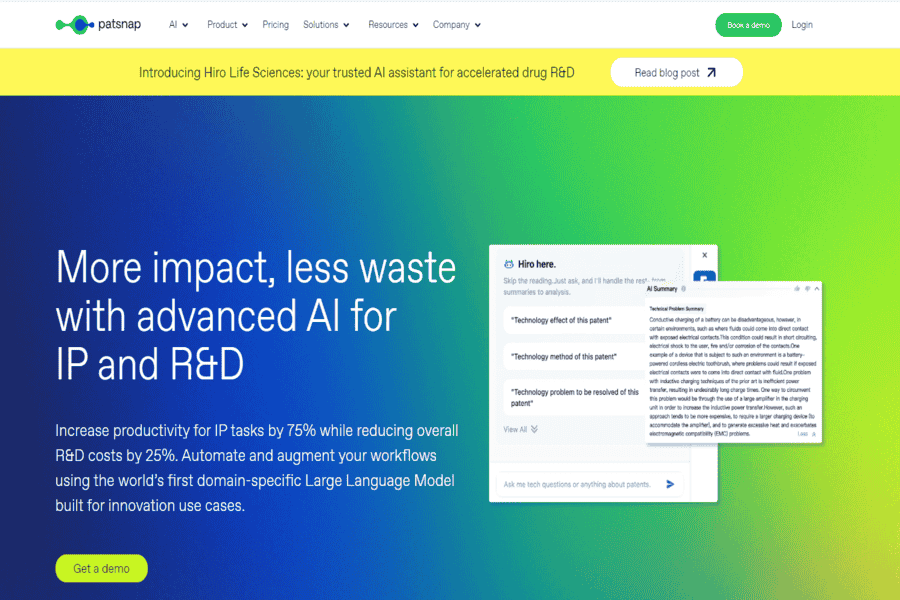
PatSnap leverages AI to provide insights into patents, R&D activities, and competitive intelligence, empowering organizations to make informed IP decisions.
Pros:
- Extensive patent database
- Predictive analytics for innovation trends
- Competitive benchmarking features
Cons:
- Complex for beginners
- High cost for advanced analytics
Pricing Package:
Custom pricing based on feature requirements.
Social Media:
- Facebook: PatSnap on Facebook
- Instagram: PatSnap on Instagram
- Twitter: @PatSnap
- LinkedIn: PatSnap on LinkedIn
- YouTube: PatSnap YouTube Channel
Contact Information:
- Email: [email protected]
- Contact Number: +44 (0) 20 3608 7964
TrademarkNow
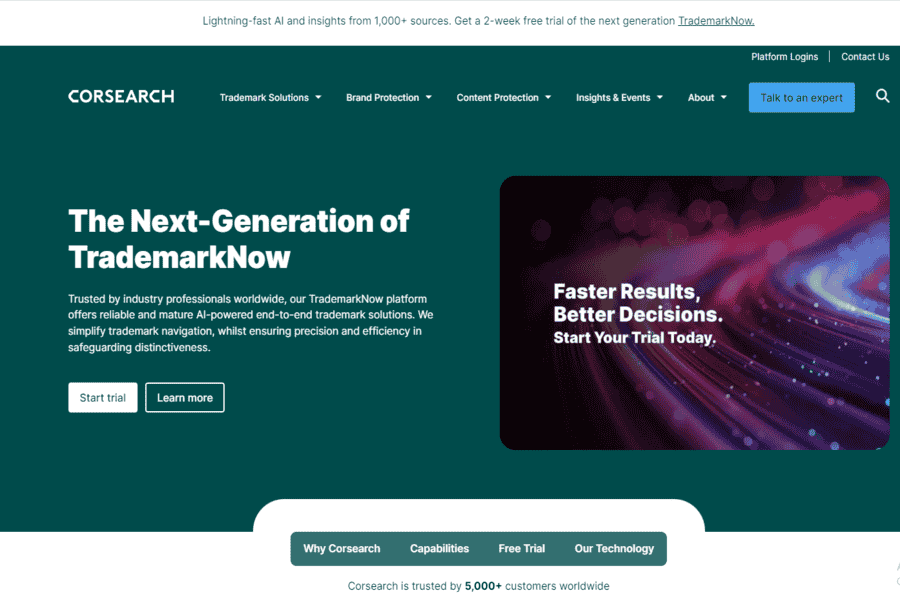
TrademarkNow uses AI to provide fast and accurate trademark search, registration, and monitoring, helping organizations safeguard their brand assets.
Pros:
- AI-powered trademark search and analysis
- Time-saving automation for IP professionals
- Global trademark database
Cons:
- Focused mainly on trademarks
- Limited integration with broader IP tools
Pricing Package:
Subscription-based; pricing varies based on search volume and features.
Social Media:
- Facebook: TrademarkNow on Facebook
- Twitter: @TrademarkNow
- LinkedIn: TrademarkNow on LinkedIn
- YouTube: TrademarkNow YouTube Channel
Contact Information:
- Email: [email protected]
- Contact Number: +358 (0) 50 389 7460
Clarivate Analytics

Clarivate Analytics offers an advanced suite of AI-powered tools for managing the IP lifecycle, including patent search, analysis, and portfolio management.
Pros:
- Extensive global patent and trademark databases
- AI-driven insights for competitive intelligence
- Scalable for small and large enterprises
Cons:
- High cost for premium features
- Requires training for advanced functionalities
Pricing Package:
Tailored pricing based on organization needs.
Social Media:
- Facebook: Clarivate on Facebook
- Twitter: @Clarivate
- LinkedIn: Clarivate on LinkedIn
- YouTube: Clarivate YouTube Channel
Contact Information:
- Email: [email protected]
- Contact Number: +1 (800) 336-4474
Questel
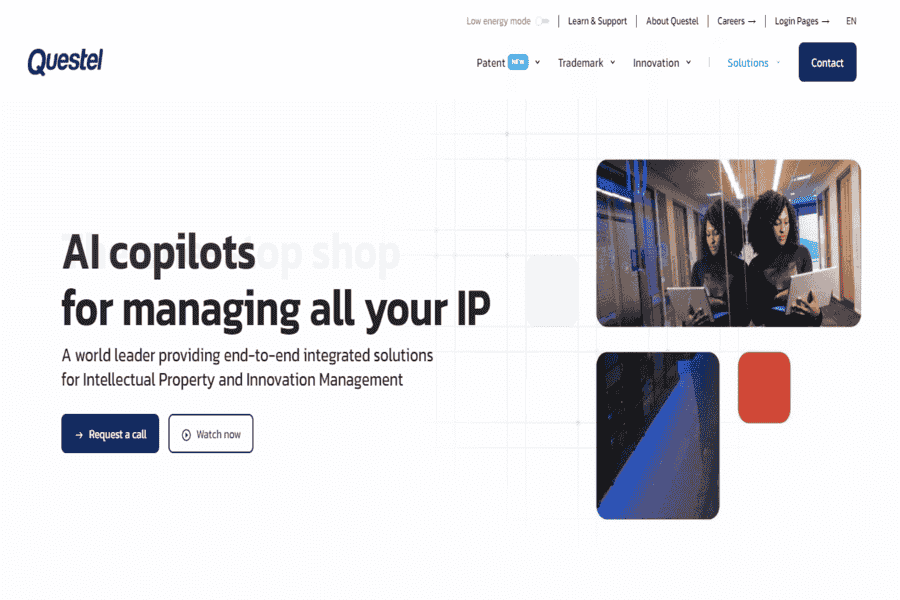
Questel provides an integrated IP management platform with AI-powered solutions for patent search, analytics, and cost management.
Pros:
- User-friendly and customizable interface
- AI tools for prior art searches and risk assessment
- Focused on cost-effective IP management
Cons:
- Limited tools for trademark management
- Higher pricing for advanced modules
Pricing Package:
Subscription-based pricing; contact Questel for details.
Social Media:
- Facebook: Questel on Facebook
- Twitter: @Questel
- LinkedIn: Questel on LinkedIn
- YouTube: Questel YouTube Channel
Contact Information:
- Email: [email protected]
- Contact Number: +33 (0) 1 80 18 11 00
IPwe

IPwe uses blockchain and AI technologies to simplify patent transactions, manage IP portfolios, and provide valuation insights.
Pros:
- Combines AI with blockchain for transparency
- Efficient patent valuation and monetization
- Global patent coverage
Cons:
- Primarily focused on patent management
- Emerging technology with fewer integrations
Pricing Package:
Custom pricing: contact IPwe for more information.
Social Media:
- Facebook: IPwe on Facebook
- Twitter: @IPweGlobal
- LinkedIn: IPwe on LinkedIn
- YouTube: IPwe YouTube Channel
Contact Information:
- Email: [email protected]
- Contact Number: +1 (202) 938-0030
Innography
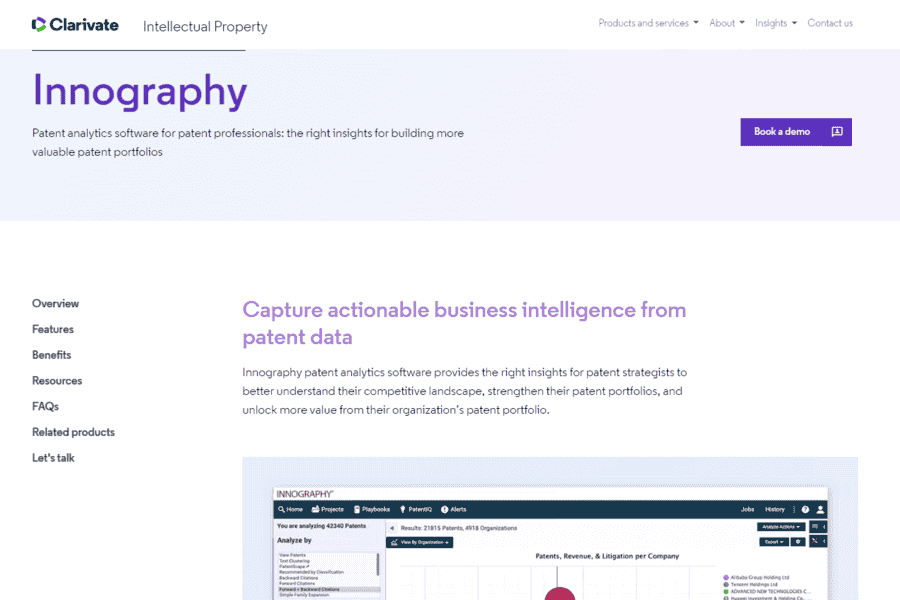
Innography is an AI-driven IP analytics platform that provides actionable insights for portfolio management and competitive analysis.
Pros:
- Advanced visualization and analytics tools
- Easy integration with existing IP systems
- AI-driven recommendations for strategy development
Cons:
- Limited trademark functionality
- Pricing may be high for small firms
Pricing Package:
Contact Innography for pricing details.
Social Media:
- Twitter: @Innography
- LinkedIn: Innography on LinkedIn
Contact Information:
- Email: [email protected]
- Contact Number: +1 (512) 551-4000
Alt Legal
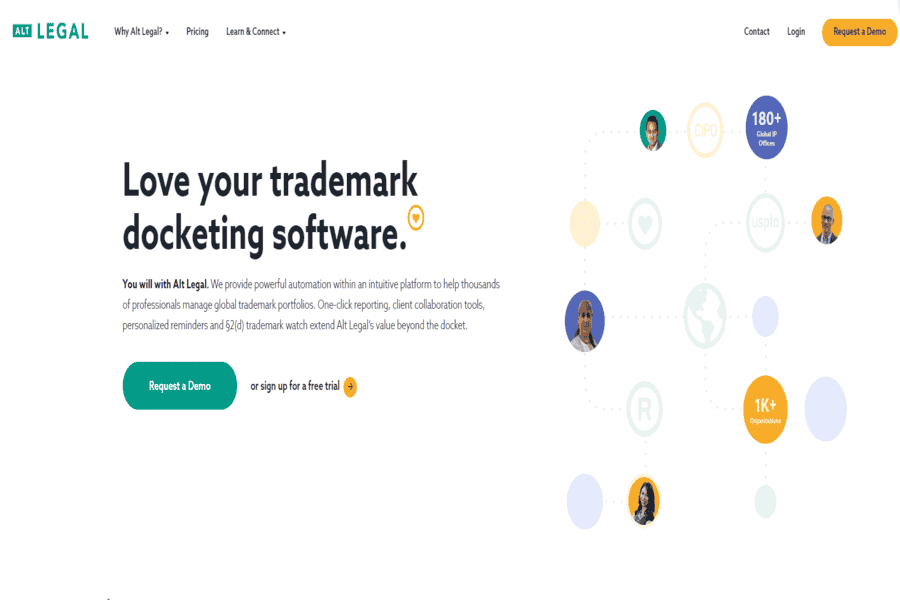
Alt Legal uses AI to automate IP docketing, trademark monitoring, and filing processes, enabling law firms and enterprises to manage IP portfolios seamlessly.
Pros:
- Easy-to-use interface
- Automated trademark updates and alerts
- Cloud-based and scalable
Cons:
- Primarily focused on trademarks
- Limited support for patent management
Pricing Package:
Subscription-based pricing; contact Alt Legal for details.
Social Media:
- Facebook: Alt Legal on Facebook
- Twitter: @AltLegal
- LinkedIn: Alt Legal on LinkedIn
- YouTube: Alt Legal YouTube Channel
Contact Information:
- Email: [email protected]
- Contact Number: +1 (646) 664-4850
PatentSight
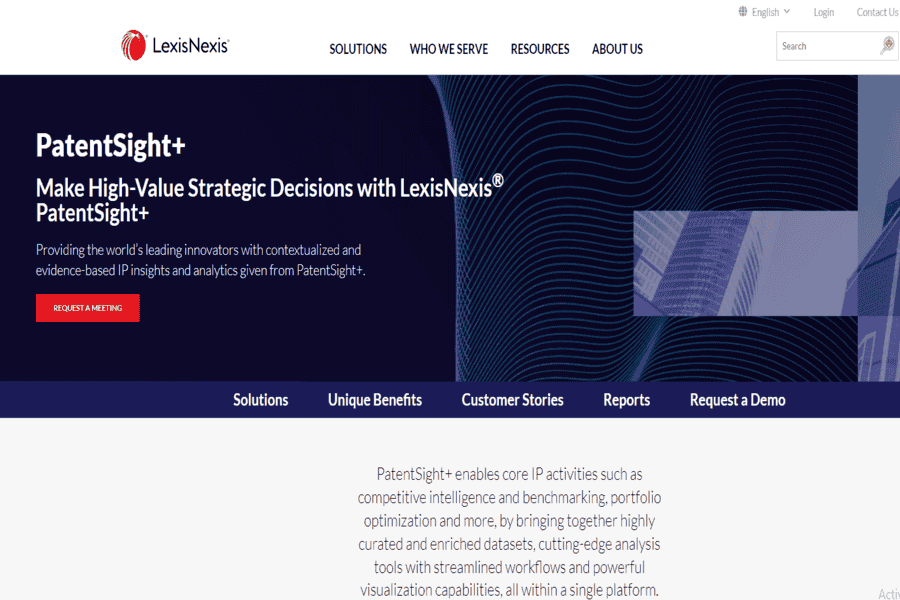
PatentSight provides advanced analytics to evaluate patent portfolios, offering actionable insights for competitive intelligence and strategic decision-making.
Pros:
- Comprehensive patent quality analysis
- Supports strategic portfolio optimization
- AI-driven insights for innovation trends
Cons:
- Focused primarily on patents
- High pricing for small businesses
Pricing Package:
Custom pricing based on requirements.
Social Media:
- Twitter: @PatentSight
- LinkedIn: PatentSight on LinkedIn
Contact Information:
- Email: [email protected]
- Contact Number: +49 (0) 228 226 399 0
CPA Global
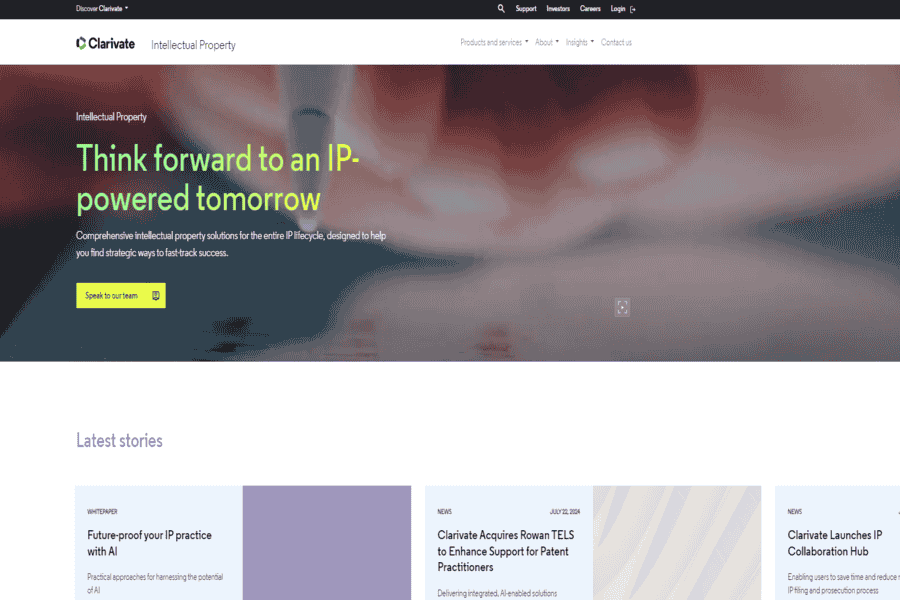
CPA Global offers a full suite of AI-powered IP management tools to simplify patent filing, trademark tracking, and cost management.
Pros:
- End-to-end IP lifecycle management
- Advanced analytics for portfolio insights
- Global IP compliance support
Cons:
- Limited customization for smaller enterprises
- Steeper learning curve for new users
Pricing Package:
Based on subscription and service requirements.
Social Media:
- Facebook: CPA Global on Facebook
- Twitter: @CPAGlobal
- LinkedIn: CPA Global on LinkedIn
- YouTube: CPA Global YouTube Channel
Contact Information:
- Email: [email protected]
- Contact Number: +44 (0) 20 7549 5000
Darts-IP
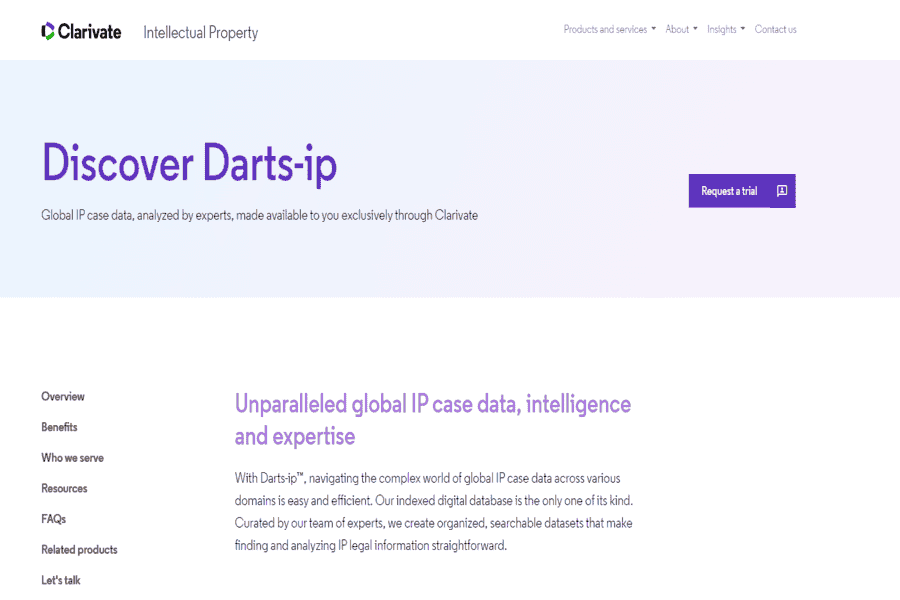
Darts-ip provides AI-powered litigation analytics to help organizations understand IP case outcomes, trends, and legal strategies.
Pros:
- A comprehensive database of IP litigation cases
- AI-driven case law analysis
- Useful for risk assessment and strategy planning
Cons:
- Limited tools for portfolio management
- Requires subscription for full access
Pricing Package:
Subscription-based; contact for details.
Social Media:
- Facebook: Darts-ip on Facebook
- Twitter: @DartsIP
- LinkedIn: Darts-ip on LinkedIn
Contact Information:
- Email: [email protected]
- Contact Number: +32 (0) 2 675 52 50
TM Cloud

TM Cloud is a platform designed for trademark management, offering AI-driven tools for filing, tracking, and monitoring trademarks.
Pros:
- Specialized in trademark management
- Cloud-based for easy accessibility
- Customizable alerts and reminders
Cons:
- Limited support for patents and copyrights
- Pricing may be high for startups
Pricing Package:
Subscription plans; pricing available upon request.
Social Media:
- Twitter: @TMCloud
- LinkedIn: TM Cloud on LinkedIn
Contact Information:
- Email: [email protected]
- Contact Number: +1 (510) 593-9424
PatSeer
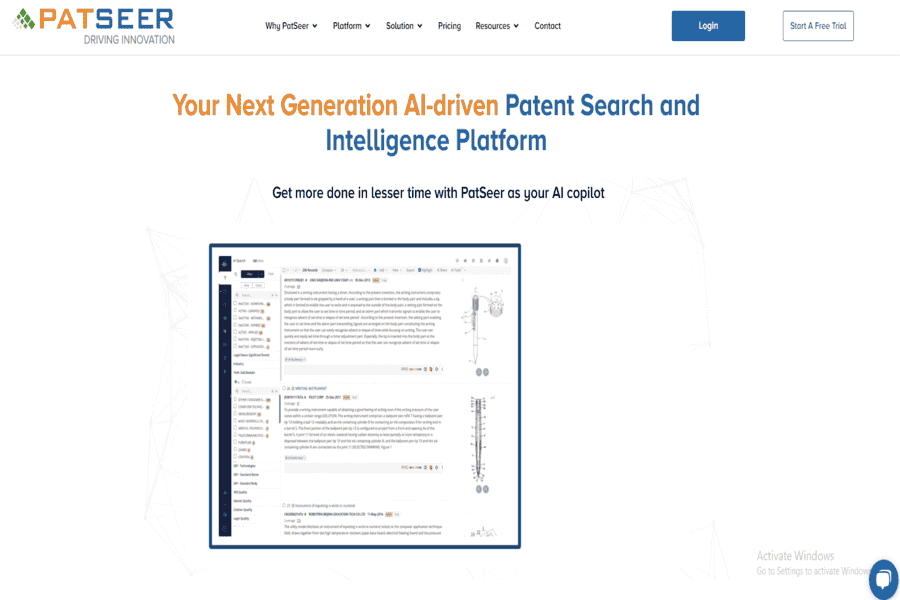
PatSeer is a patent research and analytics platform that leverages AI to help businesses perform advanced searches, visualize trends, and manage IP portfolios.
Pros:
- Advanced search and analysis tools
- Visualization of patent landscapes
- Scalable for teams and organizations of all sizes
Cons:
- Primarily patent-focused
- Complex interface for beginners
Pricing Package:
Flexible pricing based on user and feature needs.
Social Media:
- Twitter: @PatSeer
- LinkedIn: PatSeer on LinkedIn
- YouTube: PatSeer YouTube Channel
Contact Information:
- Email: [email protected]
- Contact Number: +91 (20) 6620 4100
Markify
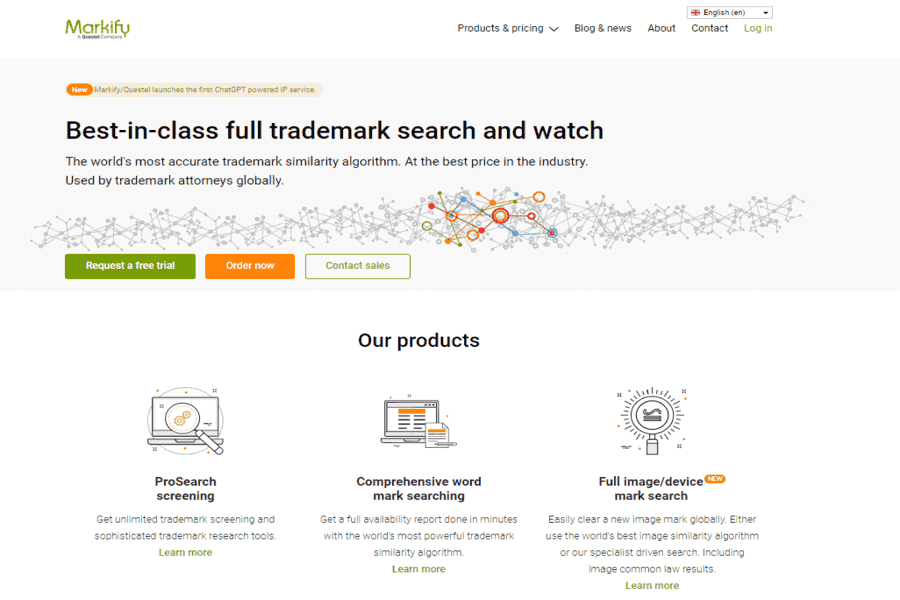
Markify uses AI to provide comprehensive trademark search and monitoring services, helping organizations avoid conflicts and protect their brands.
Pros:
- Easy-to-use interface for trademark searches
- AI-driven monitoring with regular alerts
- Extensive global trademark database
Cons:
- Focused on trademarks; limited patent tools
- Advanced features require premium plans
Pricing Package:
Subscription-based pricing; contact for details.
Social Media:
- Facebook: Markify on Facebook
- Twitter: @Markify
- LinkedIn: Markify on LinkedIn
Contact Information:
- Email: [email protected]
IPfolio
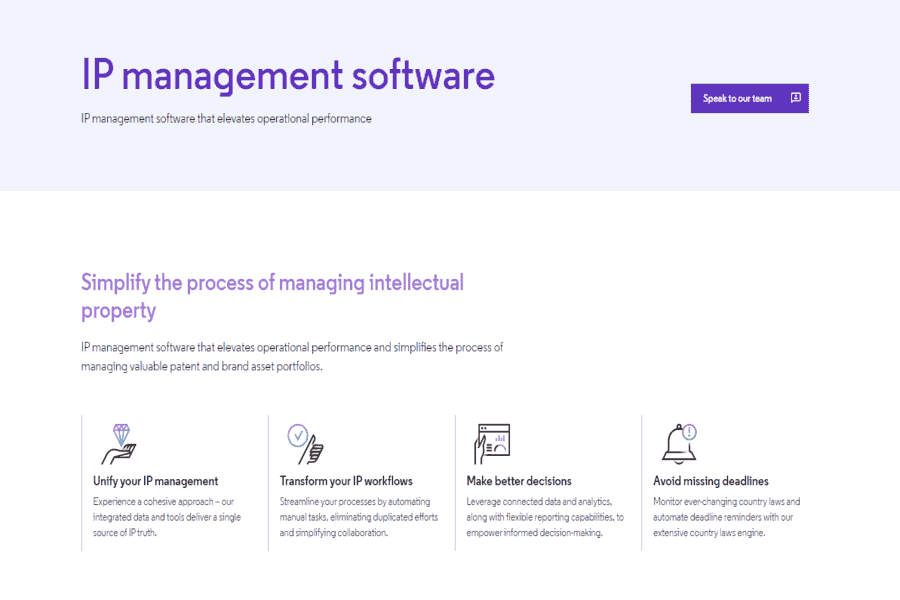
IPfolio offers AI-powered tools for managing intellectual property portfolios. Its focus is on collaboration, cost management, and strategic insights.
Pros:
- Centralized IP portfolio management
- Integration with enterprise software (e.g., Salesforce)
- AI-driven cost tracking and projections
Cons:
- Primarily designed for enterprise clients
- Limited tools for trademark monitoring
Pricing Package:
Custom pricing; contact for a quote.
Social Media:
- Facebook: IPfolio on Facebook
- Twitter: @IPfolio
- LinkedIn: IPfolio on LinkedIn
- YouTube: IPfolio YouTube Channel
Contact Information:
- Email: [email protected]
- Contact Number: +1 (650) 353-7733
PatentCAM

PatentCAM offers AI-based visualization and categorization tools for patent portfolios, simplifying data analysis and strategic planning.
Pros:
- Intuitive patent categorization and visualization
- AI-powered recommendations for IP strategy
- User-friendly interface for teams
Cons:
- Limited scope outside patents
- Requires customization for advanced use cases
Pricing Package:
Contact PatentCAM for pricing details.
Contact Information:
- Email: [email protected]
IPRally
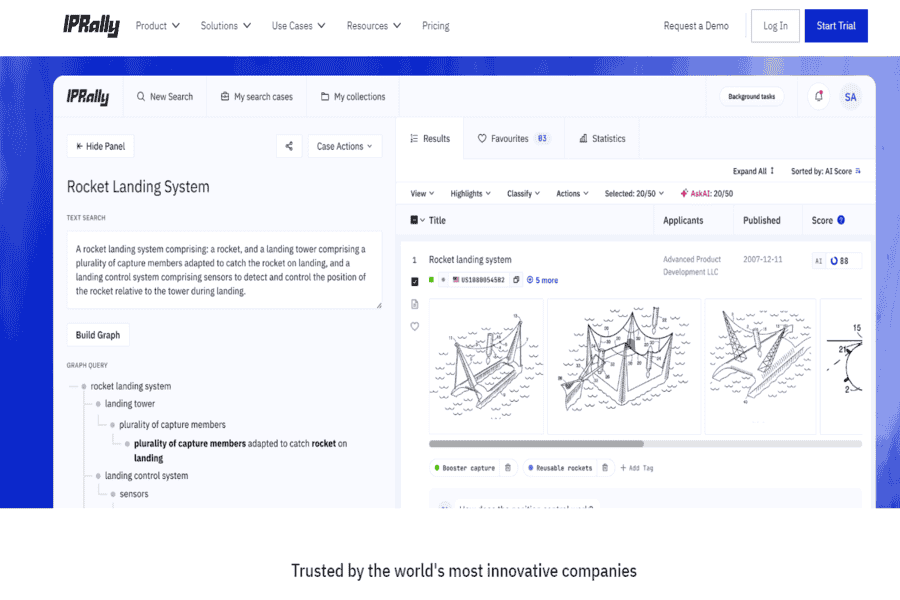
IPRally is an AI-driven patent search platform that uses graph-based technology to deliver precise and relevant search results.
Pros:
- Graph-based AI ensures accurate searches
- Fast and user-friendly interface
- Ideal for prior art and novelty searches
Cons:
- Primarily focused on patents
- Limited support for portfolio management
Pricing Package:
Subscription-based; pricing available on request.
Social Media:
- Twitter: @IPRally
- LinkedIn: IPRally on LinkedIn
Contact Information:
- Email: [email protected]
Rightsline

Rightsline offers IP rights and royalty management solutions, using AI to effectively track, analyze, and monetize intellectual property assets.
Pros:
- Comprehensive rights and royalty management
- AI-driven analytics for IP monetization
- Scalable for various industries
Cons:
- Primarily focused on rights and royalties
- Higher pricing for large portfolios
Pricing Package:
Custom pricing; contact Rightsline for details.
Social Media:
- Facebook: Rightsline on Facebook
- Twitter: @Rightsline
- LinkedIn: Rightsline on LinkedIn
Contact Information:
- Email: [email protected]
- Contact Number: +1 (424) 644-4254
Benefits of Using AI in Intellectual Property Management
Increased Efficiency:
AI automates time-consuming tasks like patent searches, data analysis, and initial infringement screening. This frees up valuable human resources to focus on higher-level strategic activities, such as developing new technologies, negotiating licensing agreements, and managing IP litigation.
Improved Accuracy:
AI algorithms can process vast amounts of data with exceptional speed and accuracy, minimizing the risk of human error. For example, AI-powered patent search tools can more precisely identify relevant prior art than manual searches, reducing the risk of patent invalidity.
Reduced Costs:
By automating routine tasks and minimizing the risk of errors, AI can significantly reduce the overall costs associated with IP management. This includes lower legal fees, reduced research costs, and minimized risks of costly litigation.
Enhanced Decision-Making:
AI provides valuable data-driven insights that can inform critical IP management decisions. For example, AI-powered analytics can help businesses assess the value of their IP portfolio, identify potential risks, and optimize their IP strategies for maximum ROI.
Competitive Advantage:
By effectively leveraging AI, businesses can gain a significant competitive edge.
Stronger IP Protection:
AI-powered tools help businesses identify and protect their valuable intellectual property more effectively, reducing the risk of infringement and maximizing the value of their innovations.
Faster Time-to-Market:
By streamlining the IP process, AI can help businesses introduce new products and services to the marketplace more quickly, gaining a competitive advantage.
Improved Innovation:
AI can help businesses identify new opportunities for innovation by analyzing market trends, competitive landscapes, and emerging technologies.
Challenges for AI in Intellectual Property Management
Data Quality and Bias:
The Importance of High-Quality Data:
AI models are only as good as the data they are trained on. Inaccurate, incomplete, or biased data can lead to inaccurate results, misleading predictions, and flawed decision-making.
Addressing Bias:
Ensuring that training data is diverse, representative, and free from biases is crucial. This requires careful data selection, cleaning, and ongoing monitoring to identify and mitigate potential biases.
Explainability:
The “Black Box” Problem:
Some AI models, particularly deep learning models, are often called “black boxes” because their decision-making processes can be difficult to understand. This lack of transparency can be a significant concern in areas like IP management, where it’s crucial to understand the rationale behind decisions related to patent validity, infringement claims, and IP valuation.
The Need for Explainable AI (XAI):
Developing “explainable AI” techniques is crucial to address this challenge. XAI aims to make AI models more transparent and understandable, allowing users to understand the reasoning behind their decisions.
Ethical Considerations:
Data Privacy:
AI models often rely on large amounts of data, raising concerns about privacy and security. It’s essential to ensure that data is collected, used, and stored in compliance with relevant privacy regulations.
Job Displacement:
Automating tasks through AI can lead to job displacement in certain areas of IP management. It’s crucial to develop strategies for reskilling and upskilling the workforce to adapt to the changing landscape.
Misuse of AI:
Concerns about the potential misuse of AI in IP management, such as the development of AI tools that could generate fraudulent patent applications or infringe on intellectual property rights, exist. To prevent this, it’s important to establish ethical guidelines and safeguards.
Future Trends of AI in Intellectual Property Management
Integration with Blockchain:
Secure and Immutable Records:
Blockchain technology offers a decentralized and tamper-proof ledger for recording IP ownership and transactions. This can enhance transparency, security, and efficiency in managing IP rights.
Improved Trust and Authenticity:
By leveraging blockchain, businesses can establish a verifiable and immutable record of IP ownership, increasing trust and authenticity in IP transactions and reducing the risk of fraud.
Facilitating Global IP Management:
Blockchain can facilitate seamless and secure transfer of IP rights across borders, streamlining global IP management processes.
Explainable AI (XAI):
Building Trust and Transparency:
As AI models become more complex, the need for explainability increases. XAI techniques aim to make AI models more transparent and understandable, allowing users to understand the reasoning behind their decisions.
Improving Decision-Making:
Explainable AI can help build trust in AI-powered IP management tools by providing clear and understandable explanations for patent validity, infringement claims, and IP valuation decisions.
Enhancing Accountability:
XAI can enhance accountability by providing clear explanations for AI-driven decisions, making identifying and addressing potential biases or errors easier.
Edge AI:
Real-time IP Protection:
Deploying AI models on edge devices (like smartphones and IoT devices) can enable faster and more efficient real-time IP protection.
Enhanced Brand Protection:
Edge AI can quickly detect and respond to trademark infringements, such as counterfeit products or unauthorized use of brand logos, at the point of sale or distribution.
Improved Copyright Enforcement:
Edge AI can quickly identify and block the distribution of copyrighted content, such as pirated movies or music, on devices and networks.
Conclusion
In conclusion, AI Tools for Intellectual Property Management are rapidly changing how businesses approach IP protection and utilization. By embracing these technologies, companies can unlock significant benefits, including increased efficiency, reduced costs, and improved decision-making. While challenges such as data bias and explainability need to be addressed, the future of IP management is undoubtedly intertwined with AI. As AI evolves, we expect even more innovative solutions to emerge, further empowering businesses to safeguard their intellectual assets and drive innovation.