If you want a no code AI platform and you’re moving data between apps, Make is the highest-rated in our catalogue at $9 a month. Stack AI is the one built for a business team with no engineers at all.
All nine below let someone who can’t write code ship something real. Eight of the nine have a free tier, so the cost of finding out is an afternoon rather than a budget line.
How this list is ordered, and what it leaves out
These nine are ordered by our editorial rating, then by whether a free plan exists, then by starting price. That rating comes from reviewing each product’s features, pricing and positioning against the rest of our agent tooling catalogue.
One exclusion is worth explaining because it outranks everything here. Pipedream rates 4.6, and its own tagline reads “real code inline, built by and for developers”. That’s the opposite of no-code, so it sits out.
Plenty of others matched the keyword and answer different questions: browser bots, security operations, support chat, business process suites. Matching the phrase isn’t the same as letting a non-developer build something.
Zapier and n8n belong to this category rather than to agents, which is why our AI agents roundup deliberately left them out. Read the two together if you’re deciding between building and buying.
| Platform | Rating | Free plan | From | Best for |
|---|---|---|---|---|
| Make | 4.5 | Yes | $9 | Complex branching logic |
| Gumloop | 4.5 | Yes | $37 | Steps that need judgement |
| Stack AI | 4.4 | Yes | Free | Teams with no engineers |
| Latenode | 4.4 | Yes | $19 | Dropping into code midway |
| MindStudio | 4.4 | Yes | $20 | Publishing what you build |
| Softr | 4.4 | Yes | $49 | Internal business apps |
| Dify | 4.4 | Yes | $59 | Shipping to production |
| Langflow | 4.2 | Yes | Free | Open source and self-hosted |
| Cassidy | 4.2 | Trial | On request | Answers from your own docs |
1. Make
Make began as Integromat in 2015. Celonis, the process-mining company, bought it in 2020 for more than a hundred million dollars and renamed it in 2022, which puts a large enterprise business behind it.
Its builder draws workflows as circular flow diagrams rather than a linear list of steps. You can see the data structure at every step, which is what makes complicated branching legible instead of guesswork.
That visual model is the reason to pick it over a simpler tool. When a workflow has to fork three ways and rejoin, a linear list stops describing what’s happening and a diagram keeps up.
A free tier exists and paid plans start near $9 a month. Two costs: the diagram interface takes longer to learn than a linear builder, and operation-based pricing is harder to forecast than a flat monthly fee.
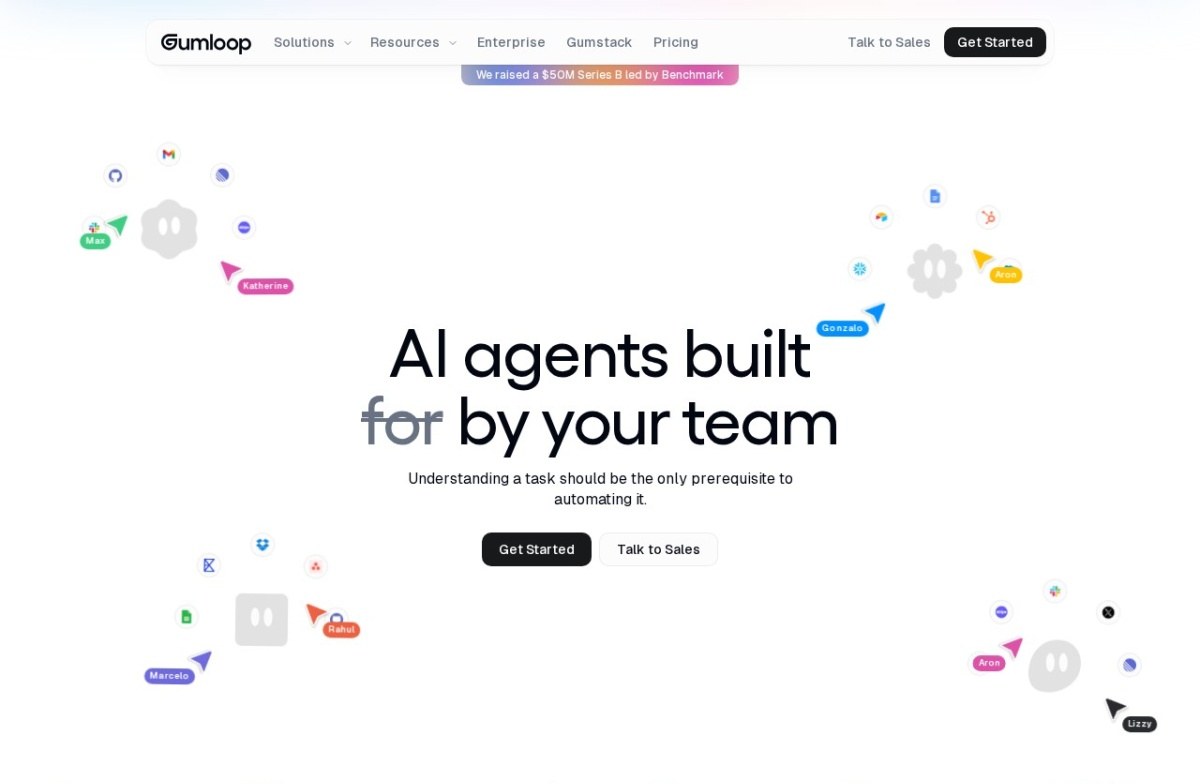
2. Gumloop
Gumloop builds from nodes like most automation tools, with one difference: reasoning is a node type. It launched in 2023 and raised a $50 million round.
A node can pull a fact out of messy text, make a judgement call or write something. It sits in the same canvas as the steps that move data, where most tools bolt that on as a separate service.
A template marketplace covers the common patterns, and the whole thing is aimed at operations and growth teams rather than engineers. That focus shows in which integrations exist and which don’t.
A free tier exists, with paid plans from $37 a month. It’s newer, so the integration library is smaller than established rivals, and reasoning nodes add both cost and waiting time over a purely mechanical step.
3. Stack AI
Stack AI aims at a specific gap inside bigger companies. An operations, legal or people team needs an internal tool and can’t get engineering time to build one. It started in 2022.
The typical build is a document assistant. It answers from your own files rather than the open web, so a policy lookup returns your policy, which is the only version that matters internally.
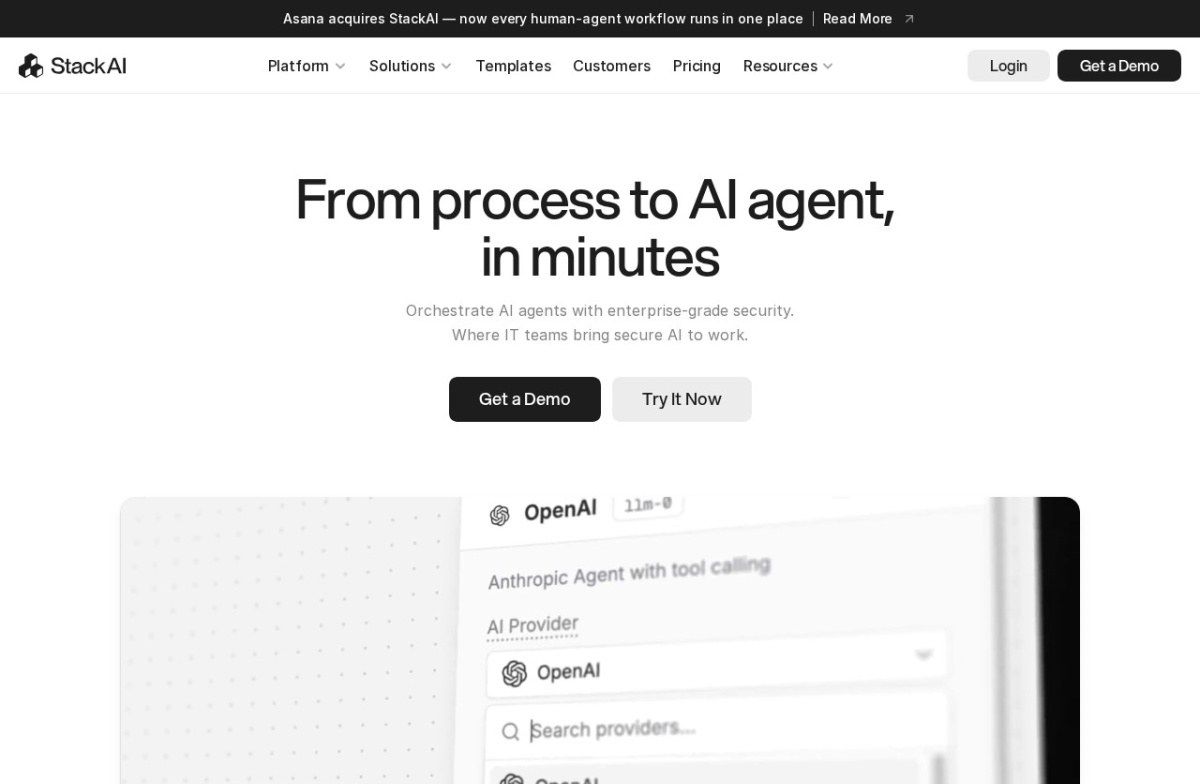
Its site now carries a banner reading that Asana has acquired StackAI, which our listing hasn’t caught up with. Treat the roadmap as Asana’s from here rather than independent.
There’s a free tier with enterprise pricing through sales. Two limits: it’s built for internal tools rather than customer-facing products, and output quality tracks how well your documents were organised in the first place.
4. Latenode
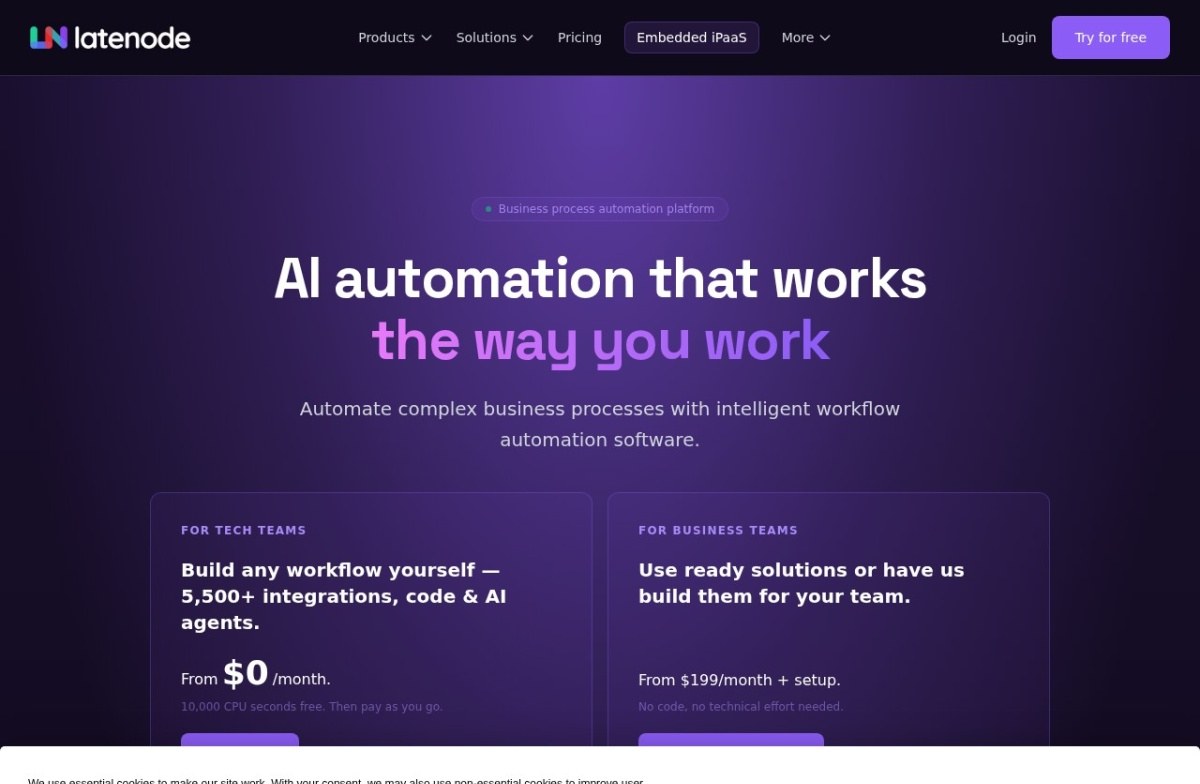
Latenode looks like every other visual builder until a step needs something the blocks can’t express. NOCODE LTD has run it since 2022.
At that point it drops into a real code editor inside the step, rather than making you abandon the platform for a developer one. The workflow stays in one place and one person can still own it.
That hybrid suits the common case where 90% of a workflow is standard and one step is awkward. Its own site quotes 5,500-plus integrations alongside the code option.
A free tier covers limited runs, with paid plans from $19 a month. The catch is in the promise: the escape hatch needs real programming knowledge, so the no-code framing only holds until you use it.
5. MindStudio
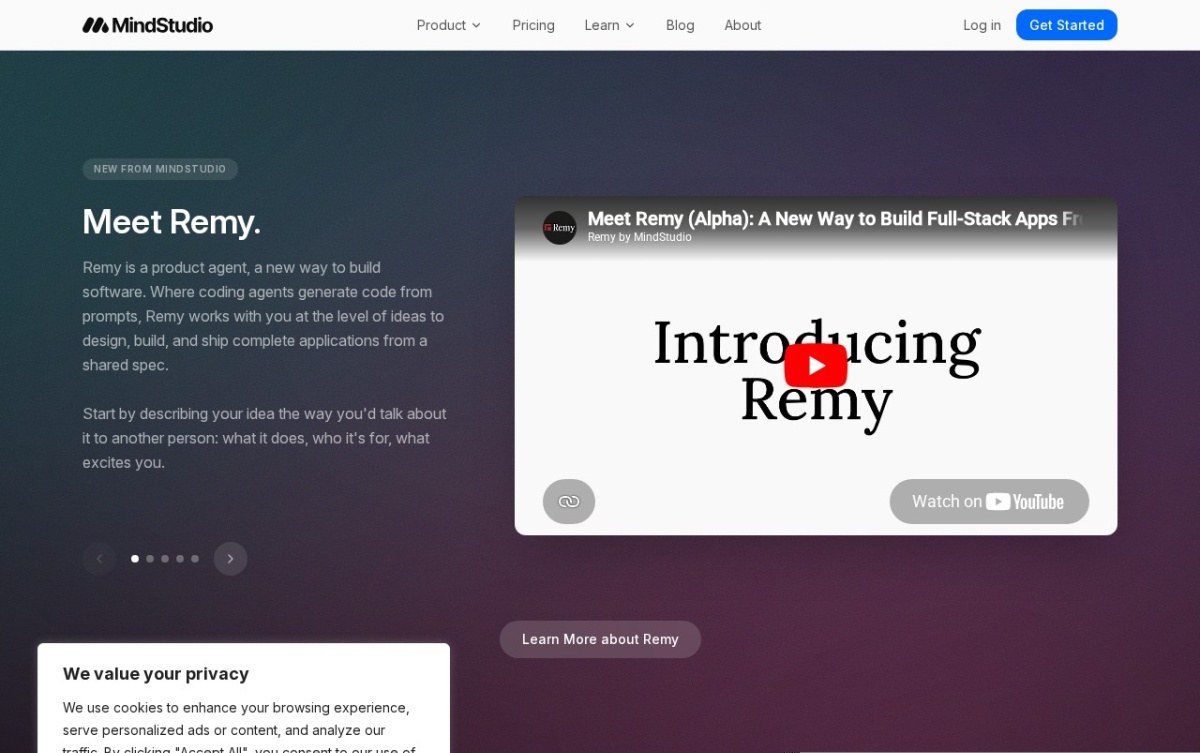
MindStudio covers the usual ground, connecting sources, defining behaviour, testing responses, and then adds a step most rivals skip entirely. YouAi has built it since 2023.
You can publish a finished agent to a marketplace and charge for it. That turns an internal build into something that might pay for itself, which changes who bothers making one.
Testing and iteration tools sit between building and publishing, so an agent gets exercised before anyone outside sees it. The platform handles internal tools and distributable products from the same editor.
A free tier exists, with paid plans from $20 a month. The marketplace is worth nothing if your agent is purely internal, and it’s a newer platform with a shorter record than the established names here.
6. Softr
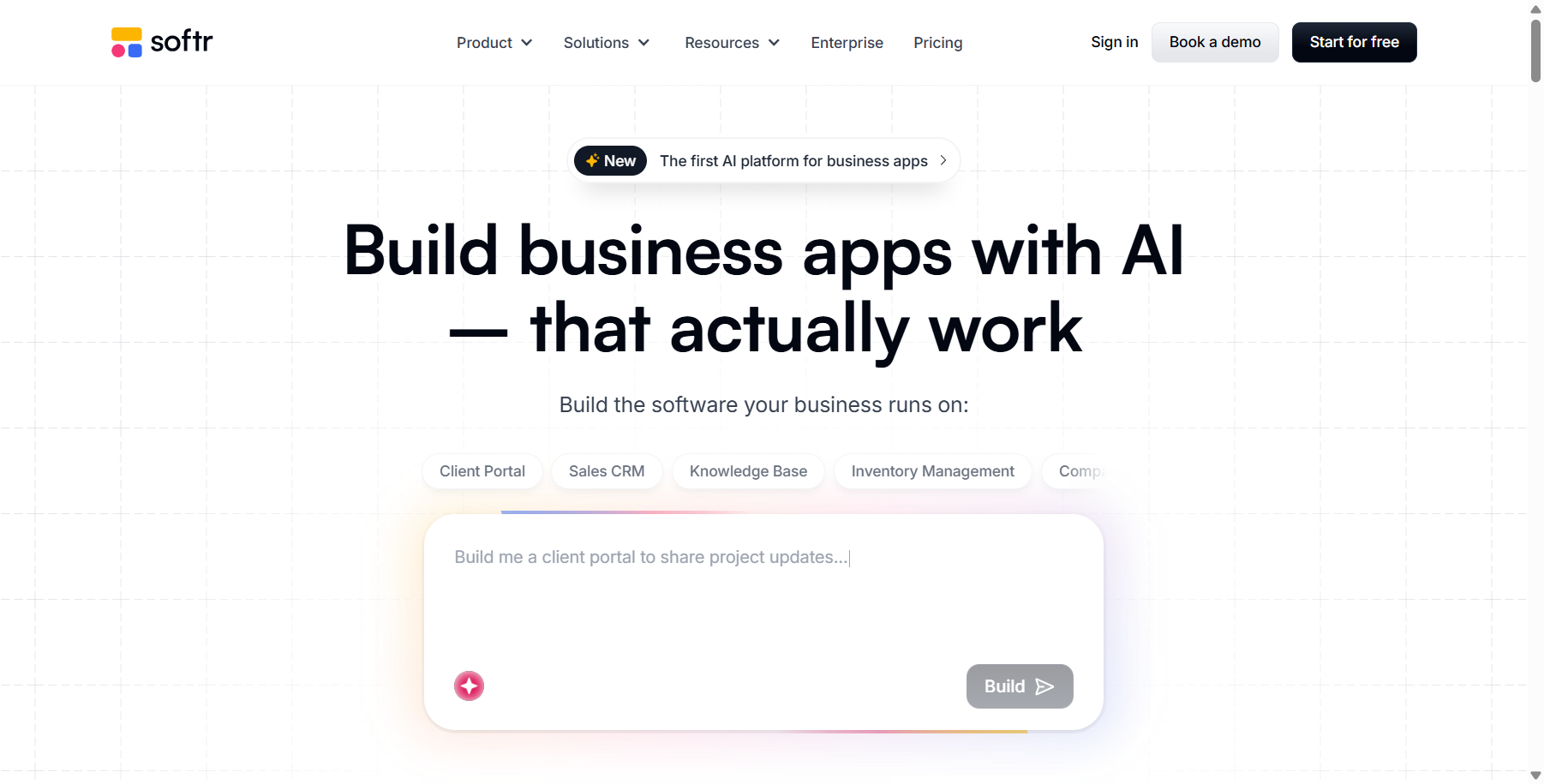
Softr takes a plain-language description of the app you need and returns a working interface, database and workflow. Founded in Berlin in 2019, it raised a $13.5 million round led by FirstMark Capital.
It’s the one here aimed at applications rather than automations. Client portals, internal tools and simple business systems are the output, with a visual editor for refining whatever the generator produced.
Agents can run against the connected data on a schedule, and it supports models from three providers rather than locking you to one. That matters when a provider changes its pricing.
A free tier exists, with paid plans from $49 a month. Two costs: credits are capped per plan, so heavy use forces an upgrade past the headline price, and it suits structured business apps rather than anything performance-sensitive.
7. Dify
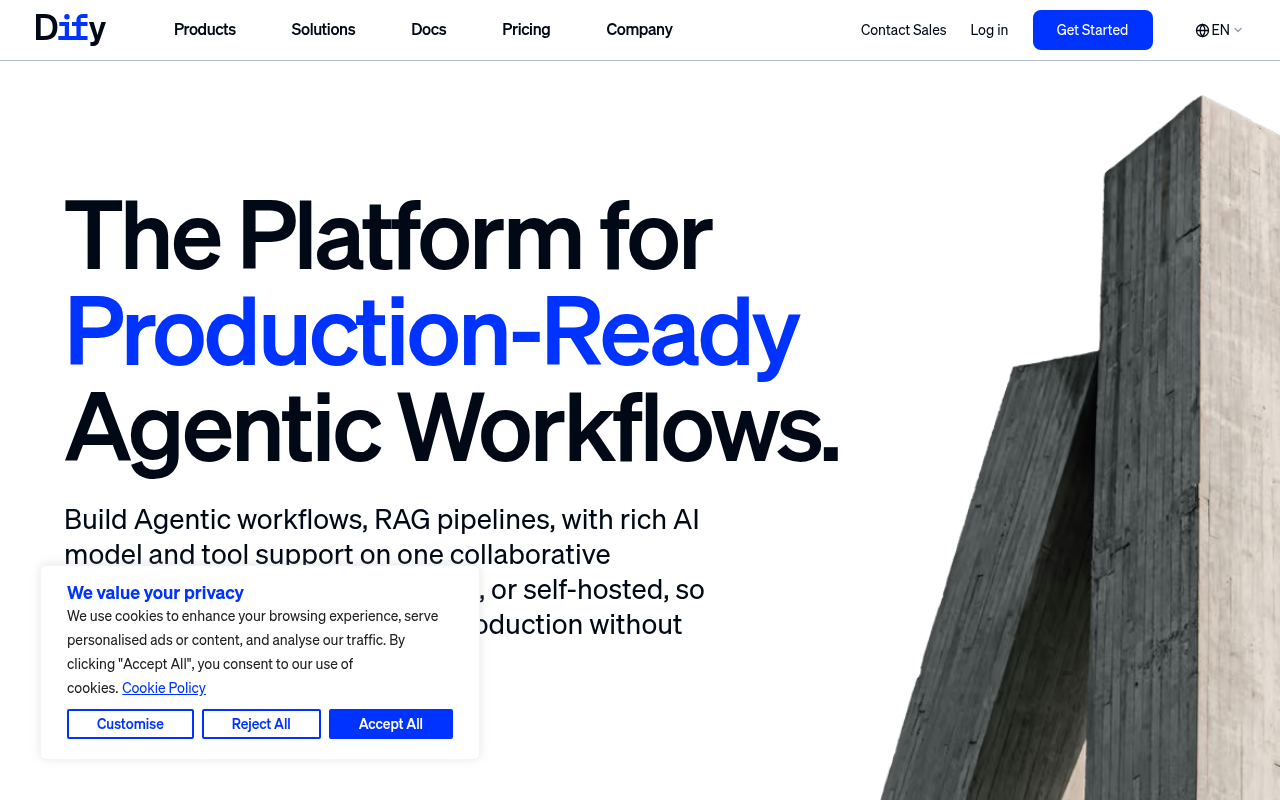
Dify goes further than a flow visualiser. LangGenius has built it since 2023 as an open-source platform covering prompt management, retrieval pipelines, agent orchestration and monitoring.
The distinguishing part is what happens after you build. Production monitoring and usage tracking are built in, and one click deploys to an endpoint or an embeddable chat widget.
It also self-hosts fully, which decides it for anyone whose data can’t sit on someone else’s cloud. That combination is why it reads as a platform rather than a builder.
A free tier exists, with managed cloud plans from $59 a month. The scope cuts both ways: it’s more complex than a single-purpose builder, and the value only lands if you ship rather than prototype.
8. Langflow
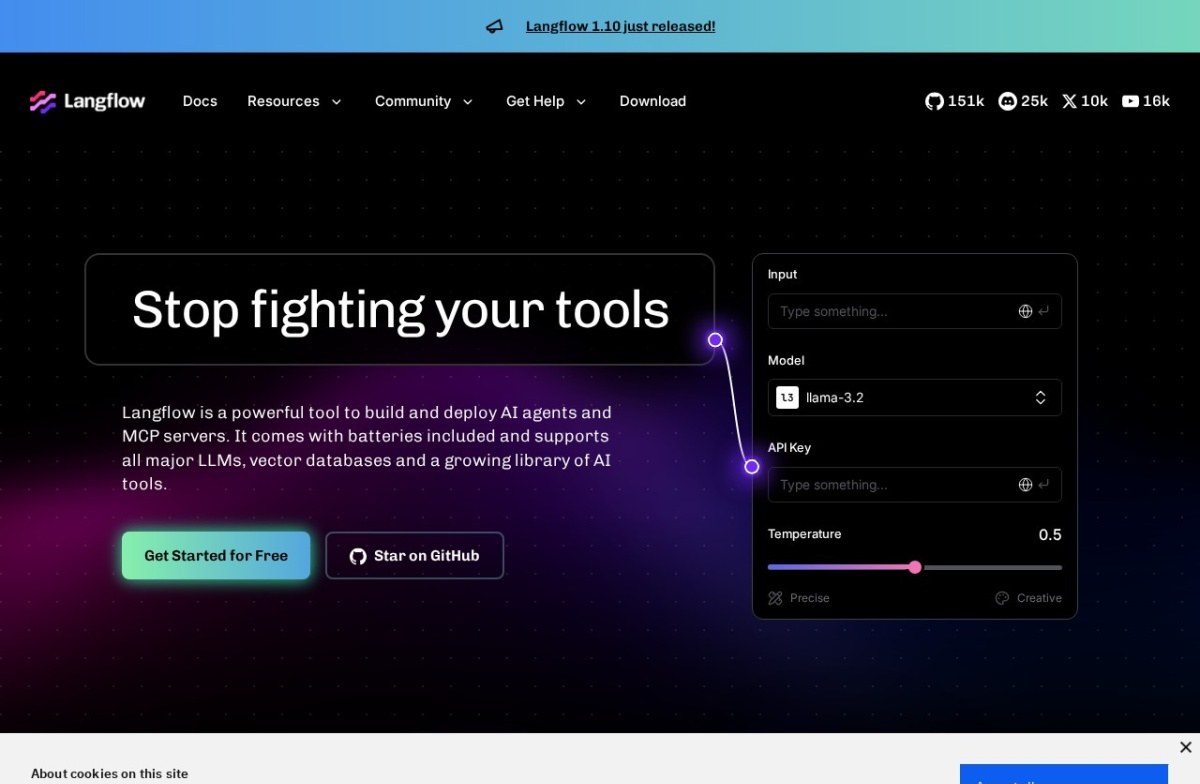
Langflow began as an independent open-source project for building applications visually. DataStax acquired the company behind it in 2024 and folded it into a broader stack.
Despite that, it stayed free, open and framework-agnostic. Its own site reports six-figure star and download counts, which is the practical measure of whether an open-source tool has a community behind it.
Integration with DataStax’s own database is available and optional. That optionality is the thing to watch, since it’s the usual route by which an acquired open-source tool starts steering you somewhere.
It’s free. Two things to weigh: corporate ownership raises a fair question about long-term independence, and it overlaps closely with other visual builders doing the same job.
9. Cassidy
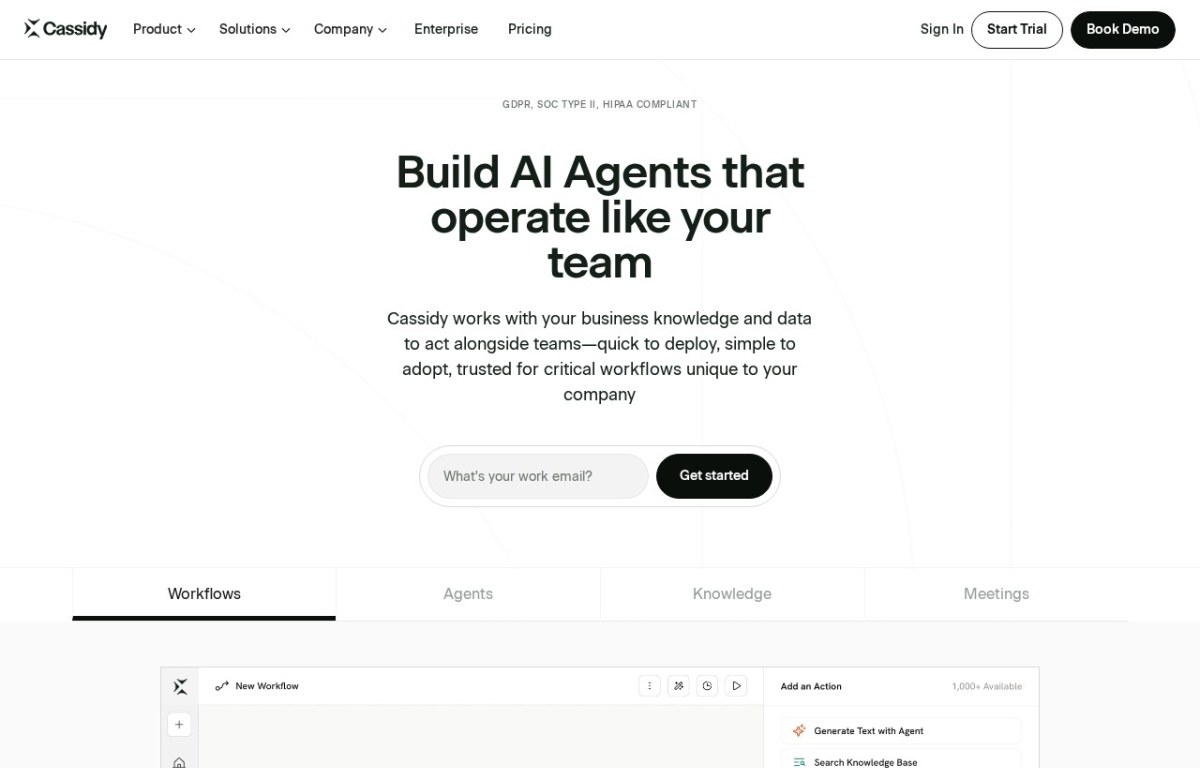
Cassidy grounds assistants in one company’s own documents, wikis and tools rather than general knowledge. It started in 2023.
Its distinguishing choice is where the answer appears. A large share of deployments live inside Slack, so the answer arrives in the conversation that raised the question rather than in another tab.
A no-code builder handles custom processes on top of that, connecting to the internal tools and knowledge bases a company already runs. The assistant reflects your policies, not generic ones.
Our listing flags it as having a free plan while its own limitations say there’s no free tier, only a trial. Treat it as trial-based until you confirm. Value also depends on how well your documentation is organised.
How we rate these
Our rating comes from reading each product’s features, pricing and positioning against the rest of the category. We then check the product is still live and still sold as described. It isn’t a lab score.
The thing worth measuring would be whether a non-developer on your team shipped something. No benchmark answers that, because it depends on the person and the workflow far more than on the builder.
So treat the order as a shortlist. Each listing carries its own last-reviewed date, and eight of these nine cost nothing to try, which answers the question faster than any ranking.
What to check before you commit
Six questions decide whether a build survives its author leaving. None is about the model underneath.
- Price: a flat monthly fee, or per-operation billing that moves with volume
- Credits: whether AI steps draw on a separate capped allowance above the plan price
- Escape: what happens at the step the visual blocks can’t express
- Servers: vendor cloud only, or self-hosting for data that can’t leave
- Owner: who maintains the workflow when the person who built it moves on
- Exit: whether the logic is portable, or locked in the vendor’s canvas
How to choose between them
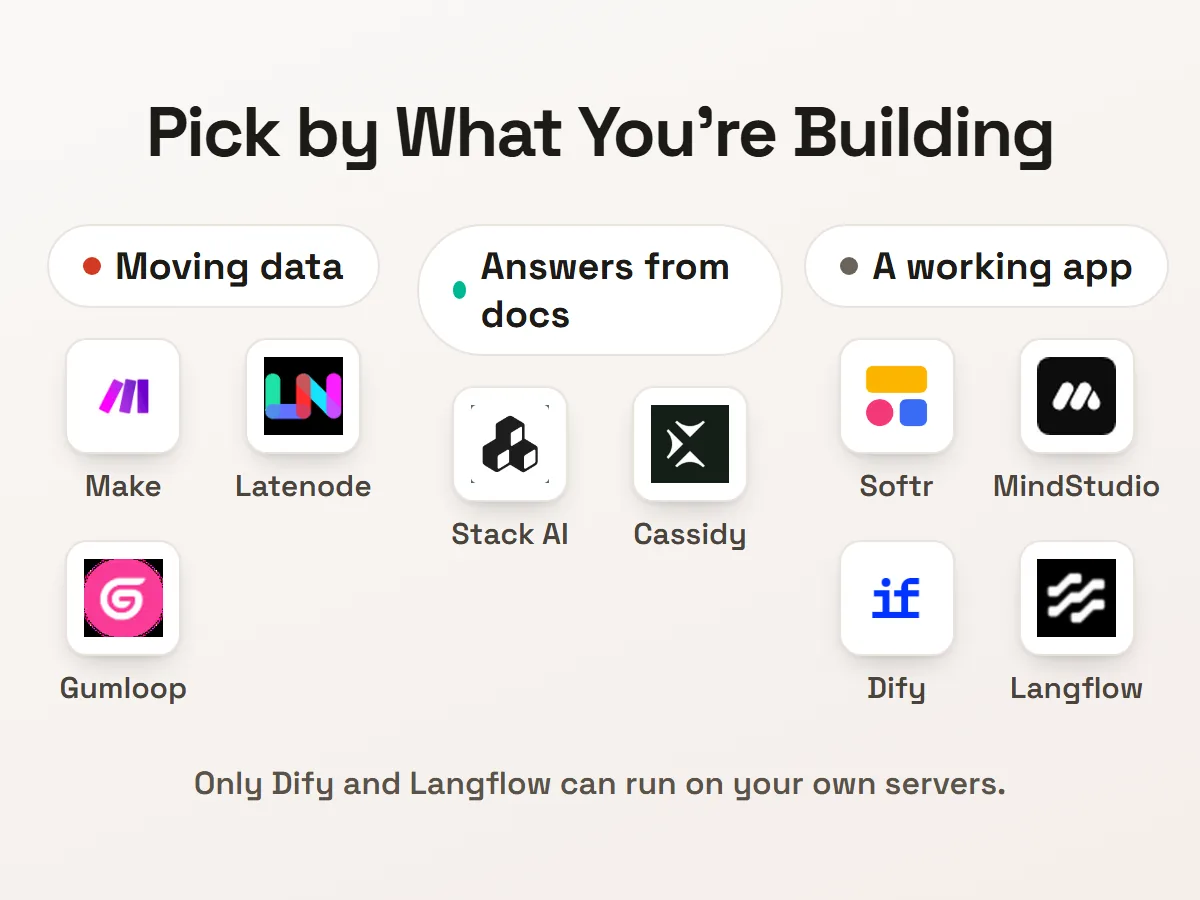
Start with what you’re building. Moving data between apps points at Make, and an internal question-answering tool points at Stack AI or Cassidy. A real application points at Softr.
Then ask who maintains it in six months. The best no-code build is one a second person can open and understand, which favours a legible canvas over a clever one stuffed with custom steps.
If your data can’t leave your own infrastructure, the list shortens to Dify and Langflow, both of which self-host. That single constraint decides more purchases here than any feature does.
For the wider picture, our roundups of AI workflow automation tools and robotic process automation cover the rule-based end of this, where nothing needs a model at all.
Questions buyers ask
What is a no code AI platform?
A no code AI platform lets someone build an AI-powered workflow, agent or application by arranging steps visually rather than writing code. The model work happens inside a step you configure. What you assemble around it is the product.
Which of these are free?
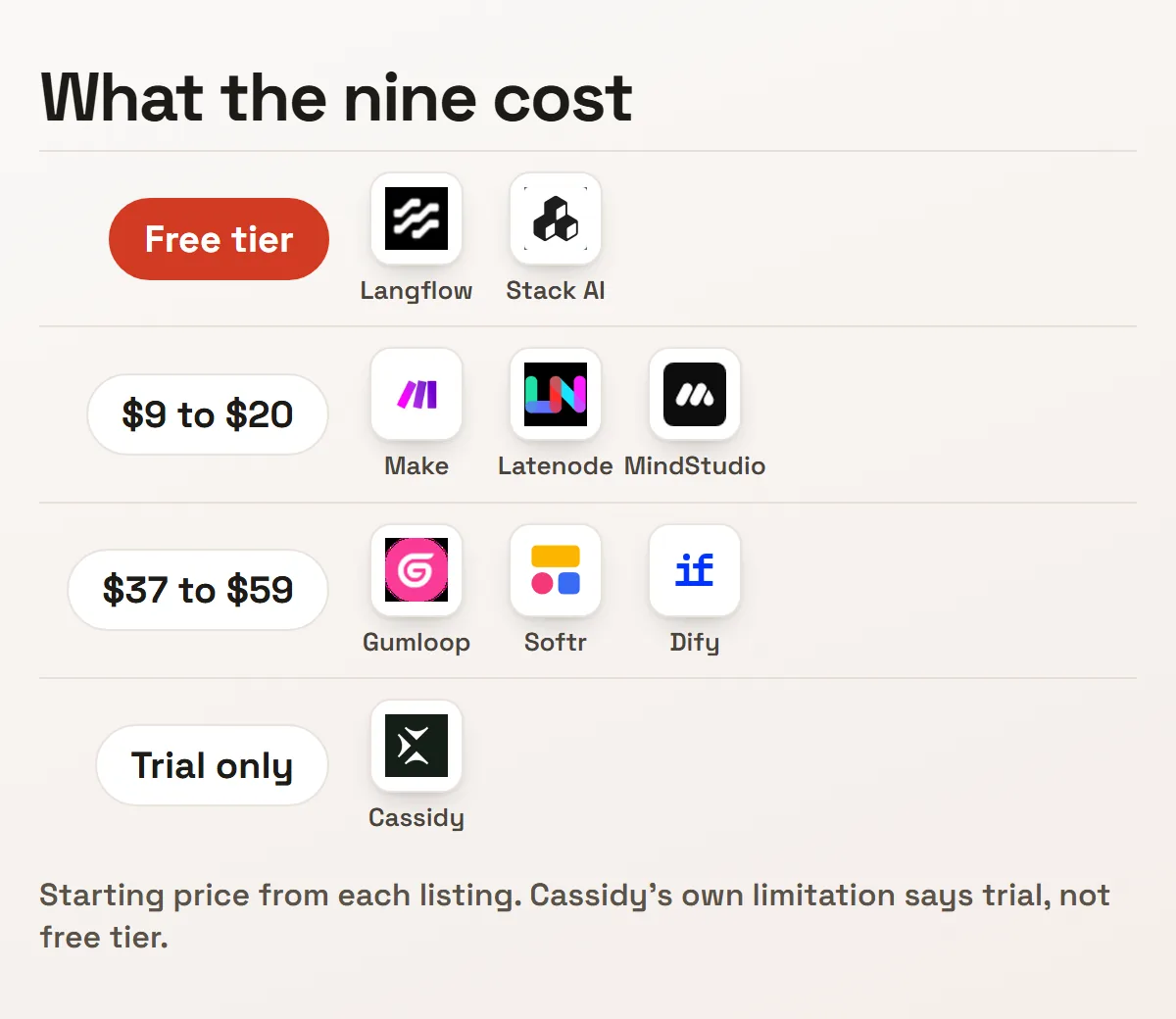
Langflow is free and open source. Make, Gumloop, Stack AI, Latenode, MindStudio, Softr and Dify all run free tiers with caps, then bill from $9 to $59 a month. Cassidy offers a trial instead.
Do I ever end up writing code anyway?
Sometimes, and the honest ones say so. Latenode builds a code editor into a step deliberately, and its own limitation notes that using it needs real programming knowledge. Treat “no code” as a starting point rather than a guarantee.
Can these run on our own servers?
Two can. Dify supports full self-hosting and Langflow is open source, so both suit data that can’t sit on a vendor’s cloud. The rest are hosted services, which is a policy question before it’s a technical one.