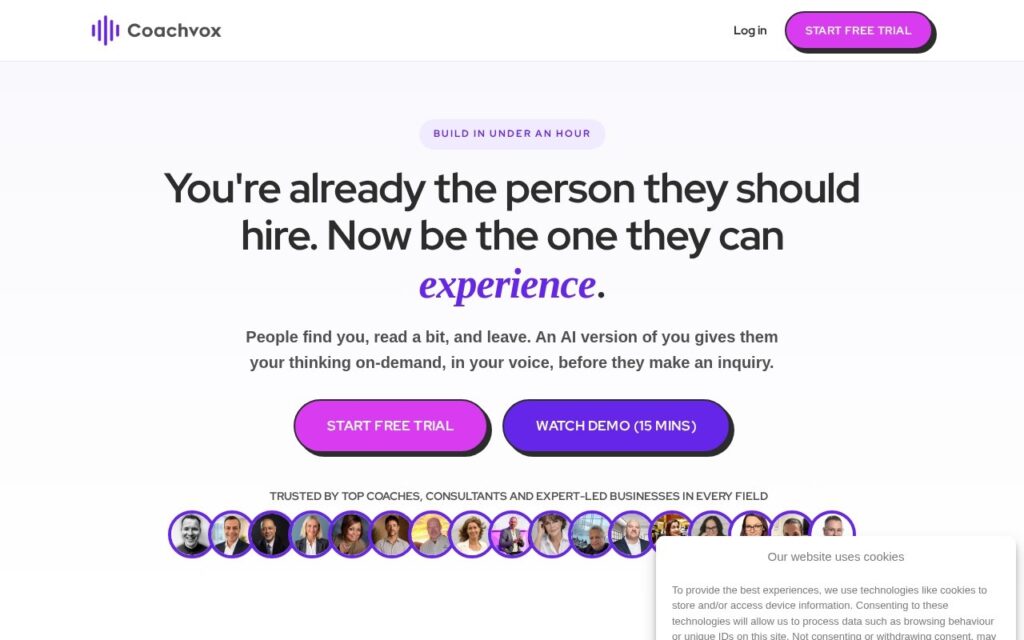
Coachvox lets coaches, consultants and creators build an AI version of themselves from their own writing and material, so an audience can ask questions and get answers in that person’s voice before making an enquiry.
The consent model is what separates this from the wider digital-clone category, and it matters. You build a clone of yourself, from your own content, for your own audience – nobody else’s likeness or voice is involved. That is a fundamentally different proposition from tools that generate a persona of a third party, and it is the version of this technology that raises no ownership question at all.
The business case is sound for the audience it targets: a coach’s constraint is that their thinking only scales through their calendar. The obligation that comes with it is disclosure. Anyone talking to your AI should know it is an AI – not because the technology is deceptive, but because a person seeking guidance from someone they trust deserves to know whether they are receiving it. Set boundaries too, since the clone will answer confidently in your voice on subjects you would have declined to advise on.