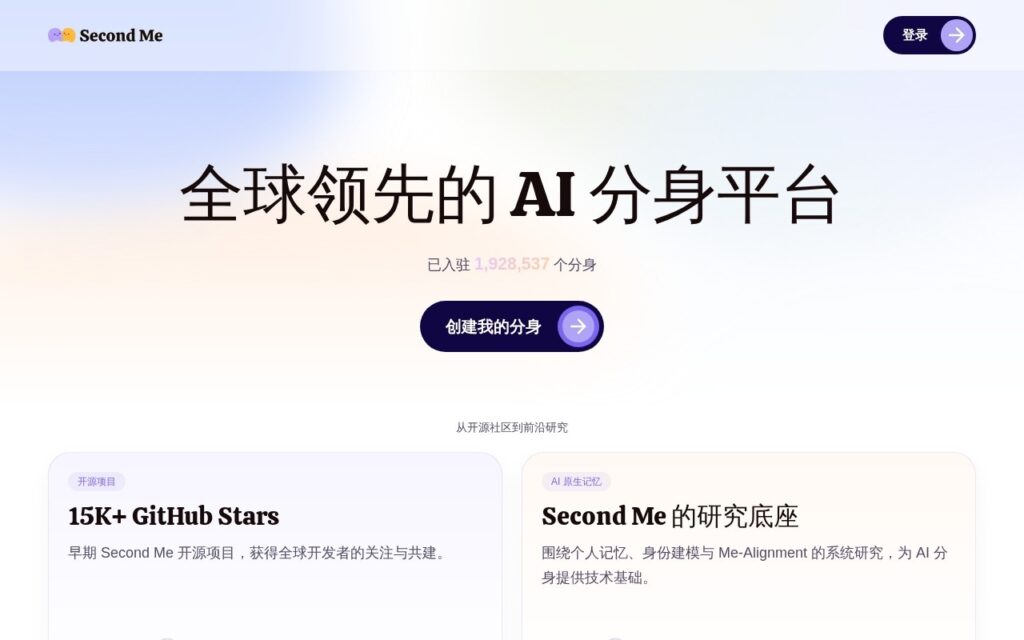
Second Me is Mindverse AI’s personal avatar platform, reached now at second.me after the MindOS domain was folded into it. You define a personality, feed it your memories, notes and voice recordings, and it produces an avatar that answers as you would: with your positions and your phrasing rather than a general assistant’s. The avatar can then be distributed to an audience or monetised.
The interesting claim is not that it sounds like you but that it holds your viewpoints. A generic assistant asked a contested question gives a balanced summary; the person being imitated has an actual opinion, and an avatar without one is instantly recognisable as a bot. Whether the memory-injection approach delivers that is the whole question, and it is the part hardest to judge from outside.
It targets creators, influencers and professionals looking to scale reach beyond the hours they have, with user-managed controls over which content the avatar can draw on. There is a companion open-source project, and the product runs through login or the mobile app with no pricing published anywhere on the site. An avatar speaking as you to an audience is a reputational exposure that no privacy control covers, memory-derived opinions drift from the person’s real ones over time, and monetising a synthetic version of yourself is a disclosure question in most jurisdictions.