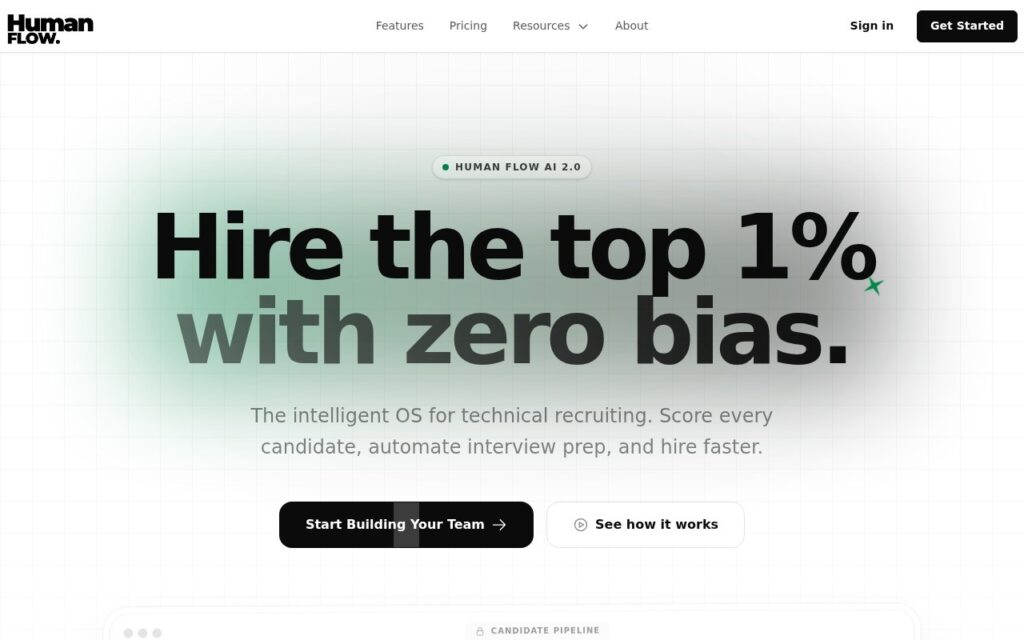
HumanFlow is an AI recruiting platform for technical hiring. It scores every candidate in a pipeline and automates interview preparation, with the stated aim of cutting time to hire.
It fits teams screening high volumes of engineering applicants. Its marketing promises the top 1% of talent with “zero bias”, and that claim needs scrutiny before you sign.
HumanFlow is built around a pipeline view, where each technical candidate carries a score instead of a recruiter’s gut call.
That design solves a real problem. Screening is the costly stage of technical hiring, and consistent structured evaluation beats a tired reviewer reading the hundredth CV.
Interview prep automation is the lowest-risk part of the package. It helps interviewers get ready without deciding anyone’s fate.
“Zero bias” is the one claim an automated candidate scorer can’t make. Scoring models learn from past hiring decisions, and that’s exactly how old preferences get encoded and reissued as an objective-looking number.
Regulators now want evidence. New York City’s Local Law 144 prohibits employers from using an automated employment decision tool unless it has had a bias audit within the past year, a summary of the results is publicly available, and the required notices have been given. Enforcement began on July 5, 2023. Illinois and Colorado have passed their own rules on AI in hiring, so check the official state sources for current status and effective dates.
A vendor promising zero bias without a published audit is making the exact claim the law asks it to prove.
Six Questions to Ask HumanFlow Before You Buy
A HumanFlow sales call is the right moment to test the zero-bias claim. Work through these six questions in order, and ask for every answer in writing.
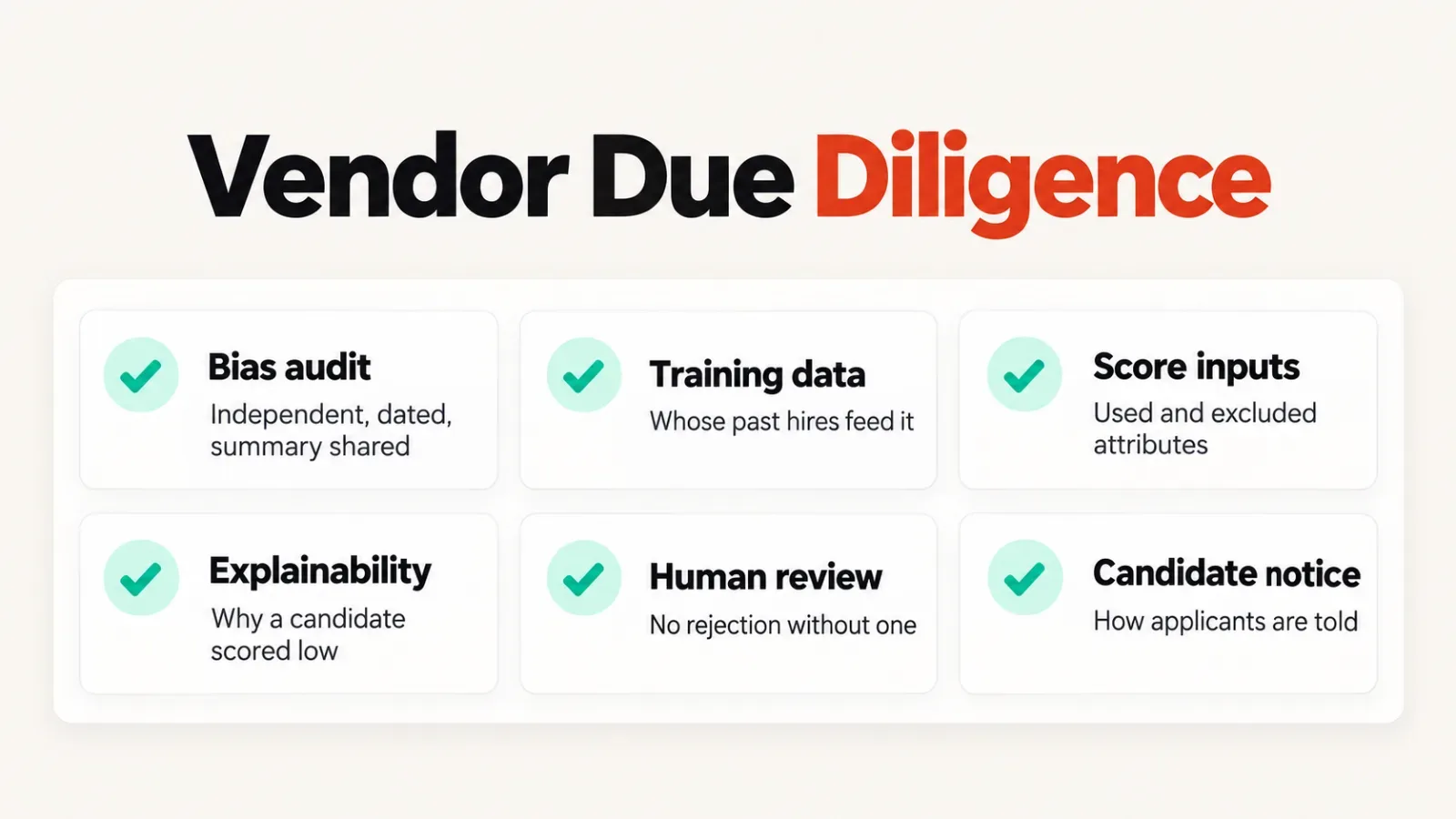
- Can you share your most recent independent bias audit, and when was it run?
- What data trained the scoring model, and do our own past hires feed it?
- Which candidate attributes does the score use, and which does it exclude?
- Can a recruiter see why a candidate scored low?
- Is any candidate rejected without a human reviewing the score?
- How are candidates told that an automated tool is assessing them?
Vague answers to the first or fifth question are a stop sign. Those two decide whether you’re legally exposed.
Is HumanFlow Right for Your Hiring Team?
HumanFlow makes the most sense where screening volume is high and a human still owns every decision. Match your situation to the row below.
| Your situation | Recommendation |
|---|---|
| High-volume engineering screening, a recruiter reviews every score | A reasonable trial candidate |
| You hire candidates based in New York City | Don’t use the scoring until you’ve seen the audit summary |
| You fill a handful of engineering roles a year | Scoring adds little; structured interviews will do |
| You want the tool to reject candidates automatically | Skip it; someone must stay accountable |
| You only want help preparing interviewers | Interview prep is the safest place to start |
Pilot HumanFlow on Interview Prep First
If you trial HumanFlow, start with interview preparation, where a weak output costs an interviewer some time rather than costing a candidate a job. Then run the scoring alongside your current screen for one hiring round, without acting on it.
Compare who each process would have advanced. If the scores track your recruiters’ structured judgements and the audit checks out, widen the rollout. If they don’t, you’ve lost nothing but one round of comparison.