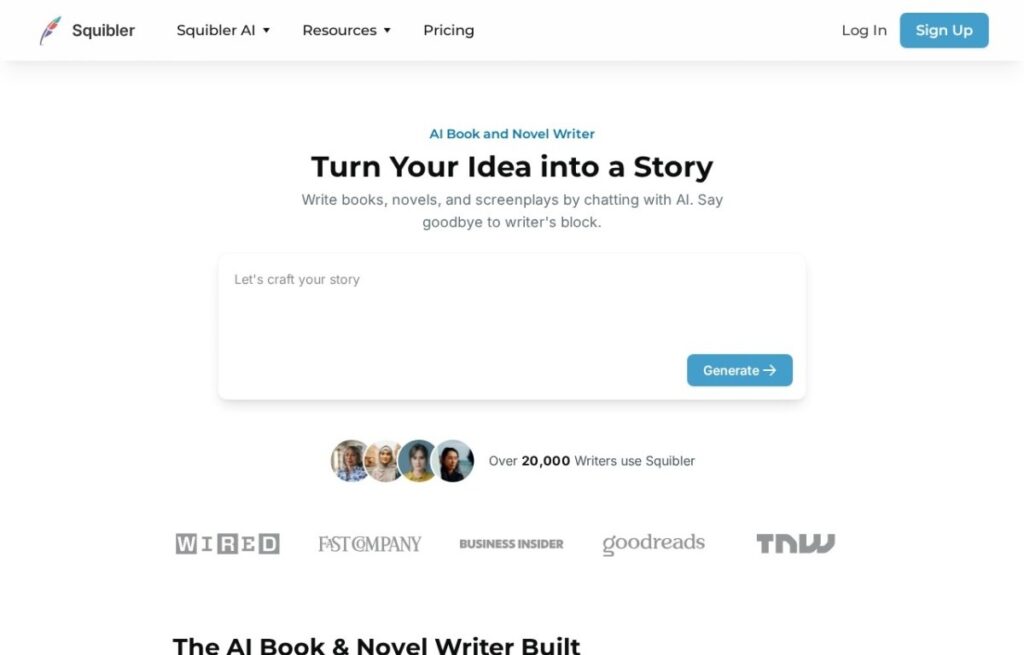
Squibler leans on formal story structure more than most fiction-writing tools. Rather than a blank page with AI suggestions on the side, it offers beat-sheet templates built on established frameworks (Save the Cat and similar story-structure methods) that a writer fills in before drafting, treating outlining as a first-class step rather than something to skip.
That structure-first approach extends to format: alongside novel writing, Squibler supports screenplay formatting directly, useful for writers moving between prose and script without switching tools entirely. AI assistance handles brainstorming, scene expansion, and dialogue generation once the structural skeleton is in place, rather than generating a story from nothing.
Squibler offers a free tier for the core outlining and writing tools, with paid plans starting around $16 a month unlocking more AI generation and export options. Writers who think in structure first, plotters rather than pantsers, tend to get the most value out of it; those who prefer discovering a story as they write may find the template-driven workflow more scaffolding than they want.