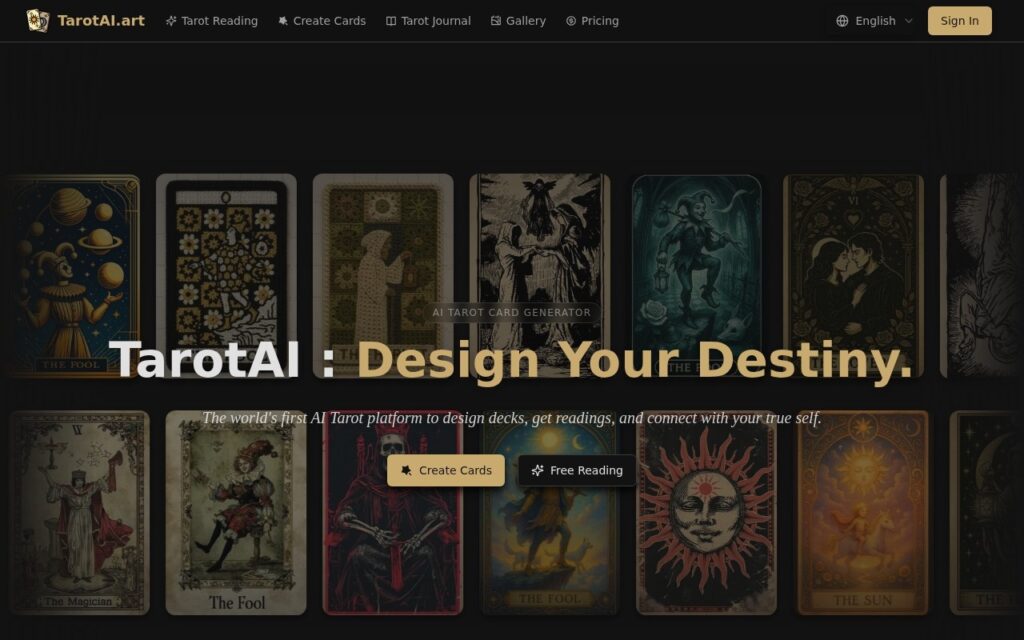
TarotAI does three things around tarot. It generates readings, it keeps a tarot journal of them over time, and – the part that distinguishes it – it lets you design and generate your own card artwork, building a complete deck rather than drawing from a stock one. A gallery shows decks made this way, and a free reading is available before signing in.
The deck design is a genuine creative tool and deserves separating from the divination. Tarot art is a real illustration discipline with a long tradition of artists reinterpreting the same 78 archetypes, and it is a natural fit for image generation: the iconography is fixed, the symbolism is documented, and the work is in the styling. Someone who wants a deck in their own visual language previously needed either years of illustration skill or a commission budget. The journal is a sensible companion – recording readings over time is standard practice among people who use tarot seriously, and it is the feature most tarot apps omit.
On the readings themselves, be clear-eyed: tarot has no predictive validity, and a language model producing an interpretation is doing what the tool says – generating plausible reflective text against a card’s documented meanings. Most people who use tarot are using it as a structured prompt for thinking rather than as a forecast, and on those terms it works. ‘The world’s first AI Tarot platform’ is not a claim that survives checking. A free reading is offered with rates on a pricing page.