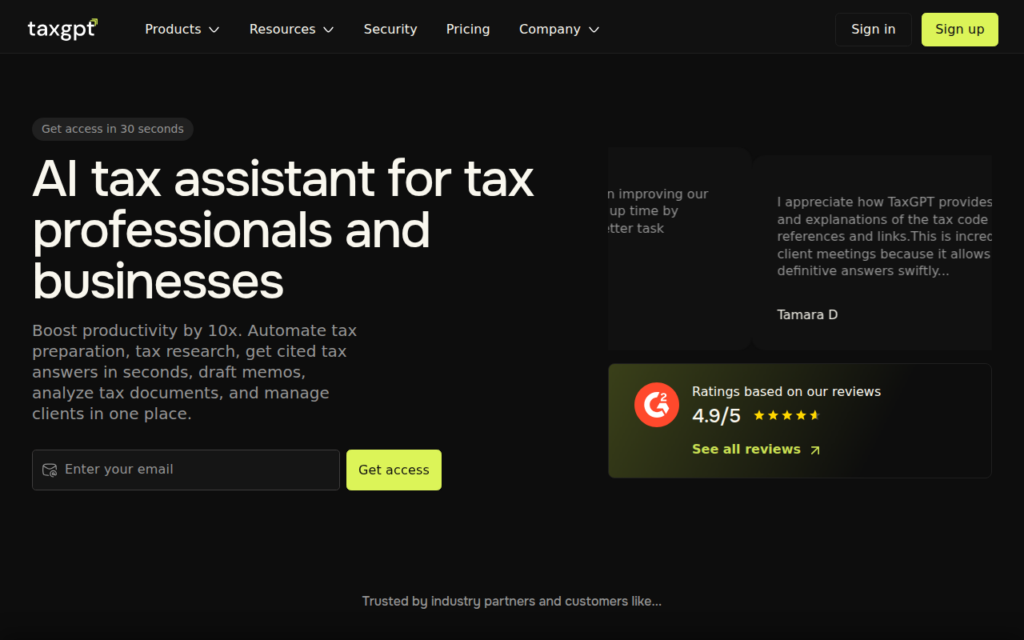
TaxGPT is built for tax professionals and accountants rather than for taxpayers, and the distinction matters because the requirements are different. A professional needs an answer they can defend to a regulator, which means the citation is as important as the answer itself.
Providing cited tax answers is therefore the substantive feature. Tax law is a large body of statute, regulation and rulings that changes annually, and research is a genuine cost centre for firms. An assistant that points to the authority lets a professional verify rather than trust, which is the only workable model when the advice carries liability.
It extends into memo drafting and document analysis, covering more of the workflow than research alone. The honest caution is that tax positions carry professional liability, so cited output must still be checked against current authority for the relevant jurisdiction, and nothing here substitutes for professional judgement.