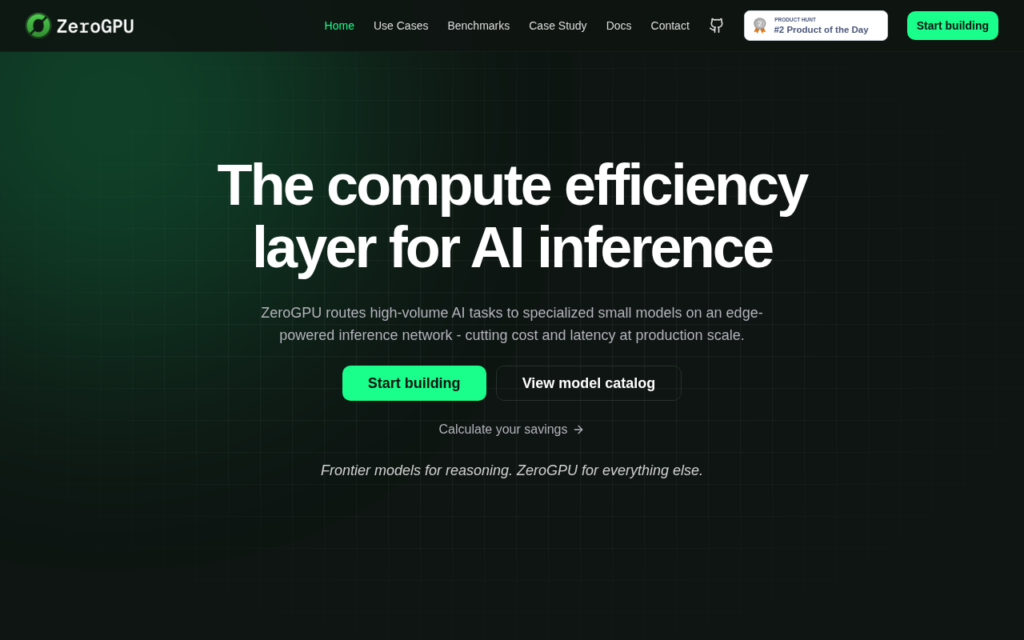
ZeroGPU addresses a straightforward economic waste in production AI: most requests are handled by a frontier model that is far larger than the task requires. Classification, extraction, routing and similar repeatable work does not need frontier reasoning, but it gets it by default because that is what the application is wired to call.
The platform routes those tasks to smaller specialised models across an edge inference network, so the frontier model handles only what genuinely needs it. Because the smaller model is both cheaper and closer to the request, the result should improve cost and latency together rather than trading one for the other.
Its own framing is measured rather than absolute, right model, right compute, measured, which is the correct posture for this claim: whether it pays off depends on what share of your traffic is genuinely routine. Teams with high-volume repetitive inference have the clearest case; low-volume or highly varied workloads much less so.