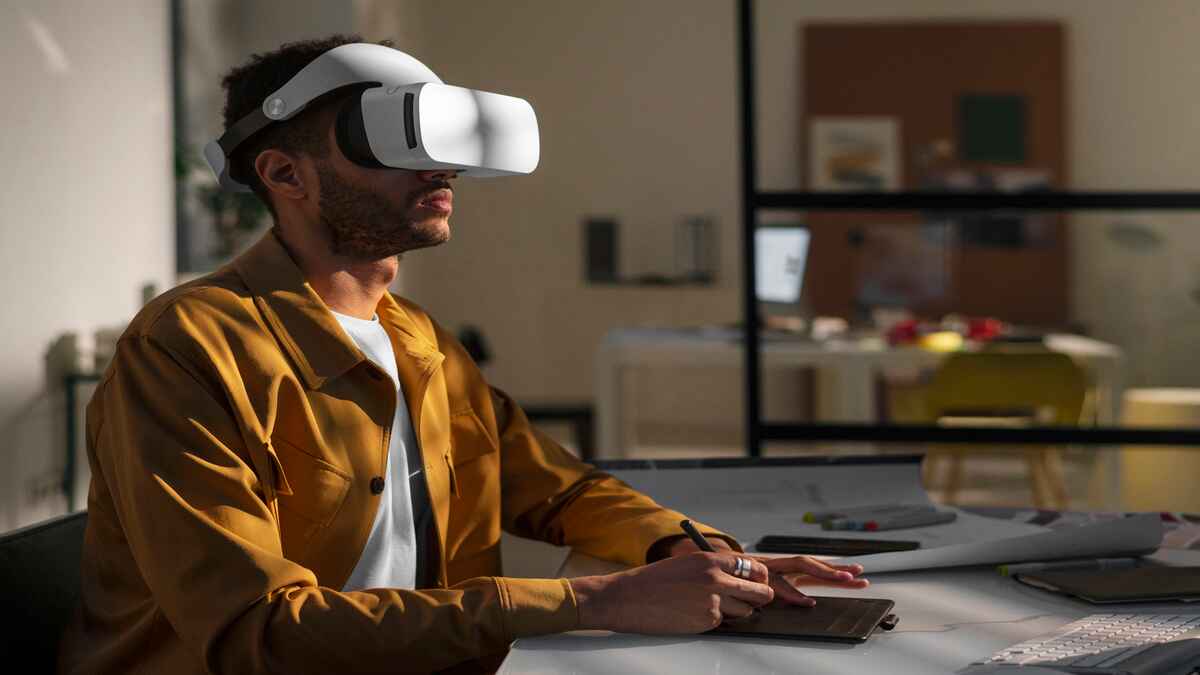
AI is speeding up VR content creation across the board: generating realistic 3D assets and worlds from text or images, personalizing experiences to the user, and automating the asset pipeline that used to require a full 3D-art team. Concept development, asset creation, world building, and user-experience design all benefit, though AI-generated assets still typically need a human pass for polish. Pairing these with AI video generator tools lets creators produce 360-degree video content that integrates directly into a VR environment.
Top AI VR Content Creation Tools
Meshy
AI tool for creating 3D assets from text descriptions or images, with texture generation and export formats built for game engines and VR pipelines. Replaces “Luma Labs Genie”: Luma sunset Genie, its text-to-3D tool, in January 2026, and the post’s own link had already been pointing to Dream Machine (Luma’s separate text-to-video product) rather than Genie itself.
Pros:
- Fast text/image-to-3D generation with usable textures.
- Export formats built for game engines and VR pipelines.
Cons:
- Complex models still need manual cleanup for production use.
Pricing Package:
Free tier available; paid plans for more generations and commercial use.
Tripo3D
Generates 3D models from text prompts or reference images, with rigging support for animated characters, aimed at game and VR asset pipelines. Replaces “3D CSM (Common Sense Machines)”: its product shut down January 5, 2026, and the company was acquired by Alphabet/Google shortly after (closing January 24, 2026); csm.ai no longer resolves.
Pros:
- Rigging support makes generated characters usable for animation, not just static assets.
- Works from either text prompts or reference images.
Cons:
- Best results still require good reference material or a well-crafted prompt.
Pricing Package:
Free tier available; paid plans for more generations and commercial use.
ZoeDepth
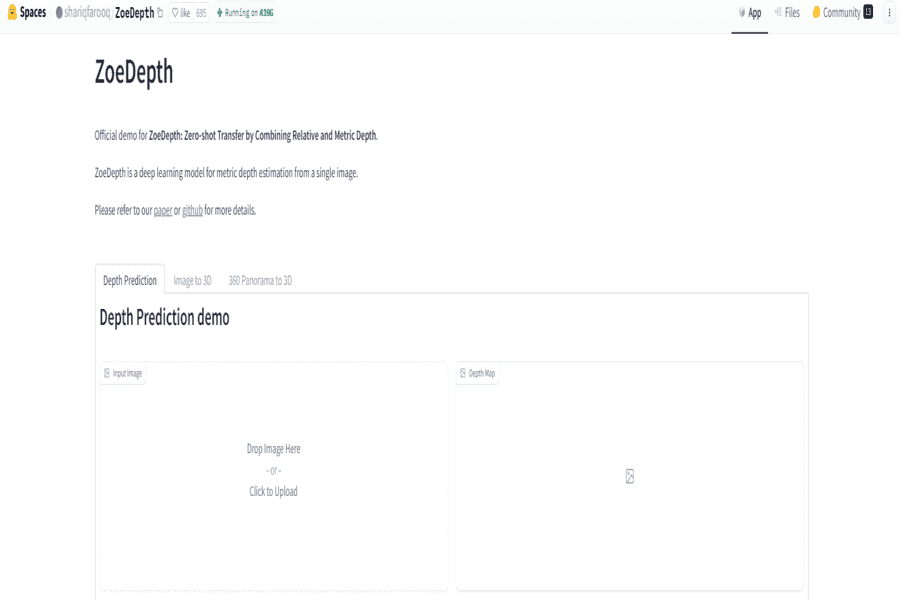
A deep learning model for estimating depth from a single image. This is crucial for creating realistic 3D environments in VR.
Pros:
- Accurate depth estimation
- Fast and efficient
- Easy to integrate into existing pipelines
Cons:
- Can struggle with challenging images, such as those with low lighting or complex scenes
- Requires training on large datasets
Pricing Package:
Free for academic use, commercial licenses available
Social Media:
Contact Information:
- Contact Number: +1 (415) 523-2000
RunwayML
A creative toolset powered by machine learning, offering a range of AI-powered features for video editing, image generation, and more. It can be used to create immersive VR experiences.
Pros:
- User-friendly interface
- Wide range of AI-powered features
- Strong community and support
Cons:
- Some features can be computationally intensive
- Requires a subscription for advanced features
Pricing Package:
Subscription-based with various plans
Social Media:
Stable Diffusion
A text-to-image model capable of generating highly detailed images from text descriptions. It can be used to create 3D assets and environments for VR.
Pros:
- Highly customizable
- Capable of generating diverse and creative images
- Open-source model
Cons:
- Requires technical expertise to fine-tune
- It can be computationally expensive
Pricing Package:
Free and paid options available
Midjourney
An AI program that creates images from textual descriptions, similar to Stable Diffusion. It can generate concept art, character designs, and environment designs for VR.
Pros:
- High-quality image generation
- Easy to use
- Strong community
Cons:
- It can be limited in terms of customization
- Requires a subscription to use
Pricing Package:
Subscription-based
DreamFusion
A text-to-3D model capable of generating 3D models from text descriptions. It can be used to create 3D objects and environments for VR.
Pros:
- Highly realistic 3D models
- Capable of generating a wide range of 3D objects
- Open-source model
Cons:
- Requires significant computational resources
- It can be challenging to use for beginners
Nvidia Omniverse
A platform for building and simulating virtual worlds. It can be used to create and test VR experiences.
Pros:
- Powerful and flexible platform
- Real-time simulation and rendering
- Integration with other Nvidia tools
Cons:
- Steep learning curve
- Requires high-end hardware
Pricing Package:
Free for individual users, enterprise licenses are available.
Blender
A free and open-source 3D creation suite that offers a wide range of modeling, animation, rendering, and more tools. It can be used to create high-quality VR content.
Pros:
- Free and open-source
- Powerful and versatile
- Large and active community
Cons:
- Steep learning curve
- It can be resource-intensive for complex projects
Pricing Package:
Free and open-source
Unity
A popular game engine that can be used to create VR experiences. It offers various 3D modeling, animation, scripting tools, and more.
Pros:
- Powerful and flexible
- Large and active community
- Extensive asset store
Cons:
- It can be complex for beginners
- Requires a license for commercial use
Pricing Package:
- Personal Edition: Free
- Plus Edition: Monthly or yearly subscription
- Pro Edition: Monthly or yearly subscription
- Enterprise Edition: Custom pricing
Unreal Engine
A high-performance game engine that can be used to create stunning VR experiences. It offers advanced features like real-time ray tracing and cinematic-quality rendering.
Pros:
- Powerful and high-performance
- Advanced features
- Large and active community
Cons:
- Steep learning curve
- Requires a license for commercial use
Pricing Package:
- Free for individuals and small teams
- Enterprise license for larger teams and commercial projects
Benefits, Challenges, and Where This Is Headed
AI-generated VR content increases engagement and makes immersive experiences more accessible to creators who don’t have a full 3D-art pipeline, with real applications in training and education (practicing a procedure or scenario virtually before doing it for real) beyond entertainment. This space moves fast, though — several tools worth knowing a year ago have already shut down or been acquired, so budget for churn when building a production pipeline around any one tool. Real challenges remain too: ethical questions around AI-generated likenesses and content, technical limits on realism and performance, and genuine user-privacy concerns given how much VR headsets can track about a person’s movement and attention. Looking ahead, expect real-time translation and localization for VR content, AI that adapts experiences based on a user’s detected emotional state, and continued growth in social VR and remote collaboration.
Conclusion
The tools above split into 3D asset generation (Meshy, Tripo3D, DreamFusion, ZoeDepth for depth estimation), general AI media generation applicable to VR content (RunwayML, Stable Diffusion, Midjourney), and the engines and platforms where it all comes together (Nvidia Omniverse, Blender, Unity, Unreal Engine). Given how quickly this specific niche has consolidated and shut down tools in just the past year, verify a tool’s current status before committing a production pipeline to it.