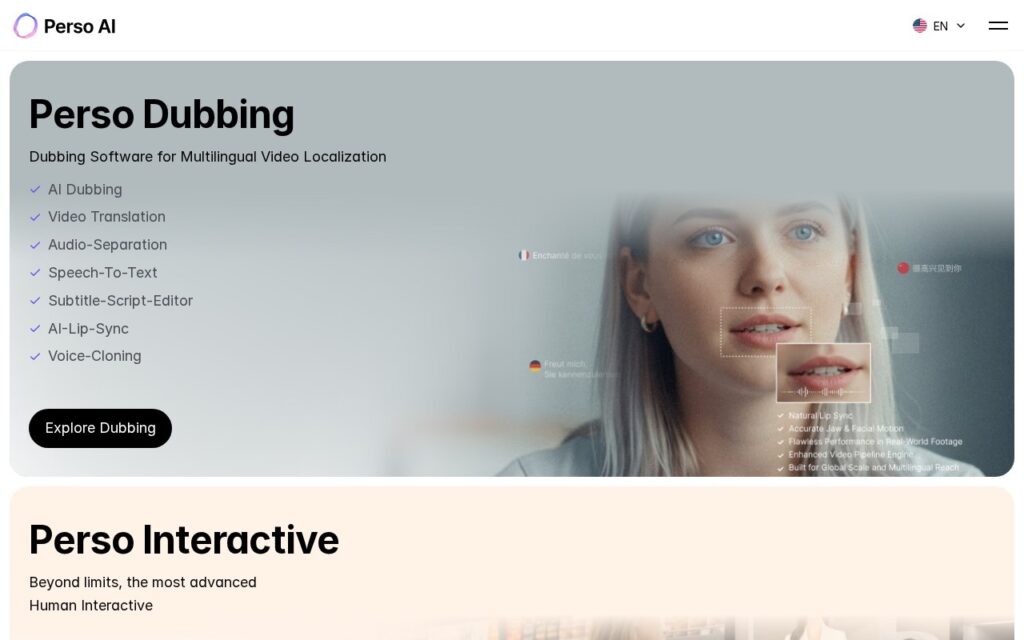
Perso handles the full dubbing chain rather than one step of it: separating audio from the mix, transcribing it, cloning the speaker’s voice into the target language and matching the lip movement to the new audio. Coverage is 99-plus languages.
Lip-sync is what separates dubbing that works from dubbing that people switch off. Audiences forgive a translated voice and do not forgive a mouth that no longer matches it. The live side is a genuinely different product: real-time two-way interpretation in 32 languages inside Zoom or Google Meet, with automatic language detection.
It comes from ESTsoft and offers a free tier with one generation, then $6.99, $29 and $99 monthly plans before enterprise. Voice cloning raises consent questions that belong to whoever holds the recording, translation quality still varies by language pair, and real-time interpretation in a meeting is convenience rather than a substitute for a professional interpreter.