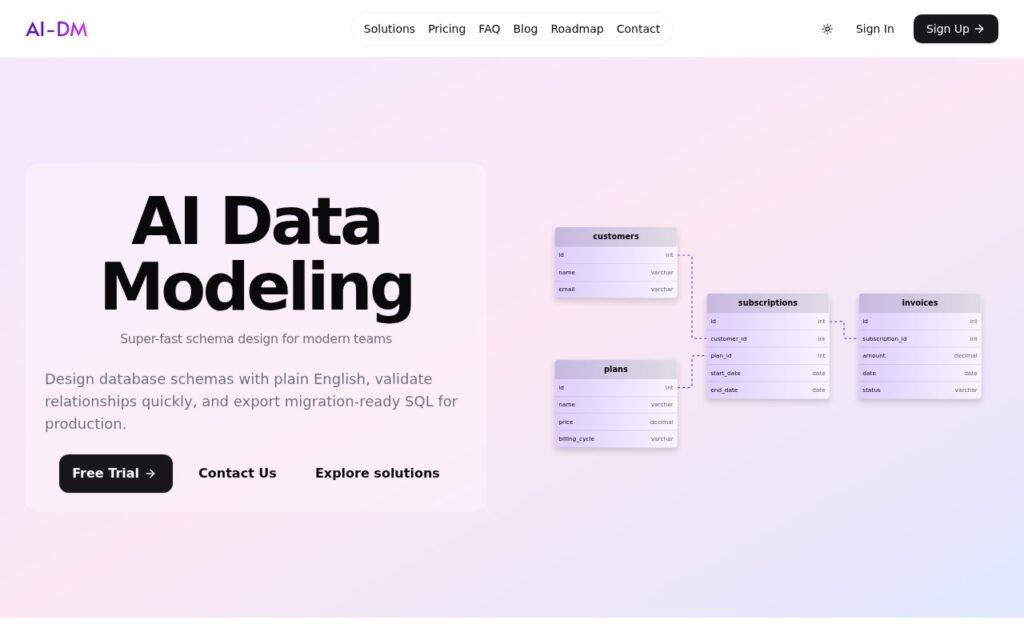
AI Data Modeling turns a plain-English description of data requirements into a validated database schema and exportable, production-ready SQL, using GPT-4 to interpret the request. It renders visual relationship mapping between tables, includes real-time “Smart Error Detection” as a schema is built, supports importing existing PostgreSQL schemas for iteration, and lets teams share models and export staged SQL changes.
Going from a plain-language description straight to validated, exportable SQL is the genuine speed advantage for early-stage teams: schema design normally means either a slower manual ER-diagram process or writing SQL by hand and discovering relationship errors after the fact, and real-time error detection during design catches problems before they reach a migration. Being able to import an existing PostgreSQL schema also means it fits into an iteration workflow, not just greenfield projects.
GPT-4-interpreted schema design still needs a human engineer’s review before it reaches production, particularly for indexing, performance and security choices an AI model has no visibility into your actual query patterns to make well. The Team plan is listed as “coming soon,” so multi-team collaboration at scale isn’t fully available yet.