AI is changing medical imaging by analyzing scans faster and more consistently than manual review alone, flagging anomalies for radiologist attention and supporting diagnosis across radiology, cardiology, and oncology. This guide covers the core applications and the 8 platforms worth knowing, most of which are FDA-cleared or CE-marked clinical tools, not consumer software.
Applications and Tool Types
The core applications: image analysis and segmentation that identifies and outlines specific structures in a scan, image reconstruction that improves scan quality (sometimes enabling faster, lower-dose acquisition), image classification and diagnosis support, and computer-aided detection (CAD) systems that flag likely findings for radiologist review. Beyond core imaging, the same underlying techniques extend into AI-powered personalized medicine (tailoring treatment based on imaging biomarkers) and AI-assisted surgical robotics, though those are more specialized adjacent categories than the core imaging-diagnostics tools covered here.
AI Tools for Medical Imaging and Diagnostics
Aidoc
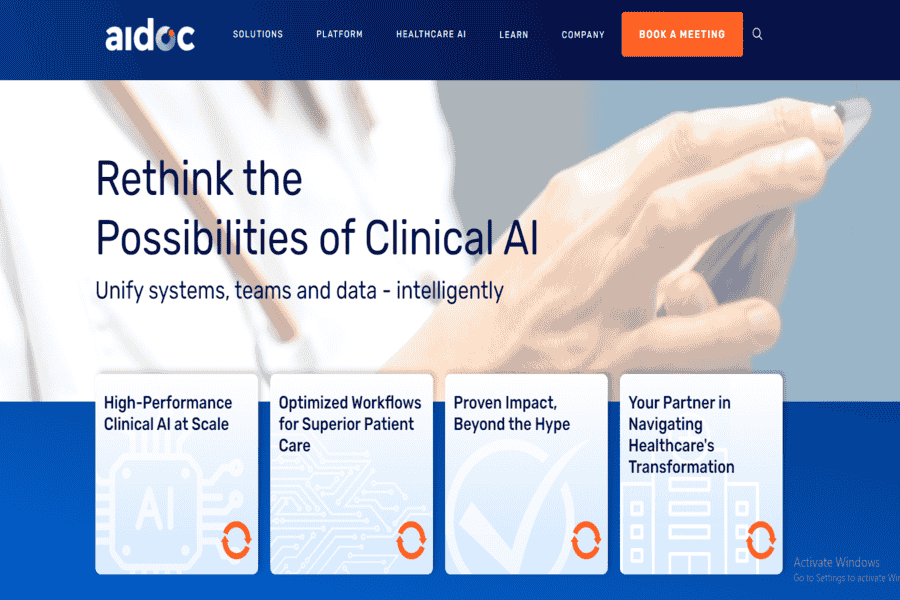
Aidoc is an AI-powered medical imaging tool designed to assist radiologists in identifying critical conditions such as stroke, pulmonary embolism, and intracranial hemorrhages. It integrates seamlessly with existing workflows to accelerate diagnostic processes and improve patient outcomes.
Pros:
- Rapid identification of life-threatening conditions.
- Seamless integration with PACS (Picture Archiving and Communication Systems).
- FDA and CE-approved algorithms.
- Reduces radiologist workload.
Cons:
- The high initial cost for implementation.
- Requires robust IT infrastructure.
- Limited to specific conditions.
Pricing Package:
Pricing is customized based on institution size and required features. Contact Aidoc for a tailored quote.
Social Media:
- Facebook: Aidoc Facebook
- Instagram: Aidoc Instagram
- Twitter: Aidoc Twitter
- LinkedIn: Aidoc LinkedIn
- YouTube: Aidoc YouTube
Contact Information:
- Mail: [email protected]
- Contact Number: +1 (646) 867-2221
Nanox.AI (formerly Zebra Medical Vision)
Uses machine learning to analyze radiological images for conditions including osteoporosis, liver disease, and cardiovascular risk, supporting early detection and treatment planning. Nano-X Imaging acquired Zebra Medical Vision in 2021 and rebranded it as Nanox.AI; zebra-med.com no longer resolves.
Pros:
- Broad range of condition detection from a single platform.
- Cloud-based deployment available.
Cons:
- Limited customization options; requires internet connectivity for cloud features.
Pricing Package:
Pricing varies; pay-per-scan and subscription-based models are offered.
Arterys
A cloud-based AI platform specializing in medical imaging and analytics for cardiology, oncology, and radiology, providing automated quantification and reporting tools that reduce diagnostic time and improve accuracy. Acquired by precision-medicine company Tempus AI in October 2022; continues to operate under the Arterys name.
Pros:
- Cloud-native, enabling remote collaboration.
- Multimodal imaging analysis.
- HIPAA and GDPR compliant.
Cons:
- Requires a consistent internet connection.
- Subscription costs may be high for smaller facilities.
Pricing Package:
Subscription-based pricing tailored to the organization’s needs.
Social Media:
- Facebook: Arterys Facebook
- Twitter: Arterys Twitter
- LinkedIn: Arterys LinkedIn
- YouTube: Arterys YouTube
Contact Information:
- Mail: [email protected]
- Contact Number: +1 (415) 796-8270
Qure.ai
Qure.ai develops AI tools for radiology, including chest X-rays and brain CT scans, improving diagnostic accuracy and accessibility.
Pros:
- Affordable and scalable solutions.
- Works offline in low-resource settings.
- Multiple regulatory approvals (FDA, CE).
Cons:
- Limited integration with advanced hospital systems.
- Narrow focus on specific imaging types.
Pricing Package:
Custom pricing based on deployment size and use case.
Social Media:
- Facebook: Qure.ai Facebook
- Instagram: Qure.ai Instagram
- Twitter: Qure.ai Twitter
- LinkedIn: Qure.ai LinkedIn
Contact Information:
- Mail: [email protected]
- Contact Number: +91 22 4897 0777
Infervision
Infervision focuses on AI-based chest and head CT image analysis to detect early signs of cancer and strokes.
Pros:
- High accuracy in lung nodule detection.
- Supports multilingual systems.
- Strong market presence in Asia.
Cons:
- Less known in Western markets.
- Requires continuous updates for improved accuracy.
Pricing Package:
Contact for a tailored quote.
Social Media:
- Twitter: Infervision Twitter
- LinkedIn: Infervision LinkedIn
Contact Information:
- Mail: [email protected]
Viz.ai
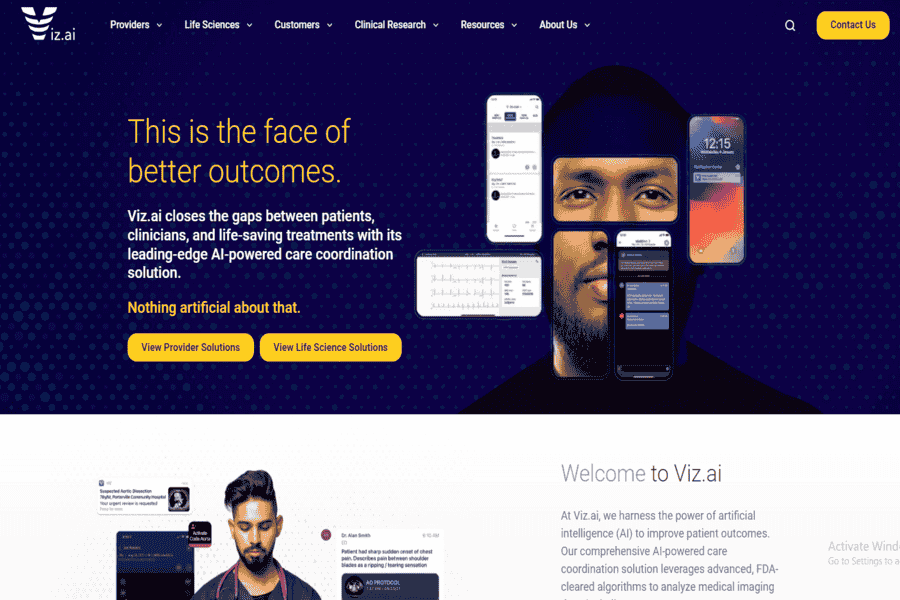
Viz.ai uses AI to streamline stroke diagnosis and care coordination for improved treatment times.
Pros:
- Real-time alerts for critical cases.
- Simplifies communication among healthcare teams.
- Integrates easily with hospital systems.
Cons:
- Primarily focused on stroke.
- Pricing may be high for smaller institutions.
Pricing Package:
Contact Viz.ai for custom pricing.
Social Media:
- Instagram: Viz.ai Instagram
- Twitter: Viz.ai Twitter
- LinkedIn: Viz.ai LinkedIn
Contact Information:
- Mail: [email protected]
- Contact Number: +1 (888) 273-0325
Aidence
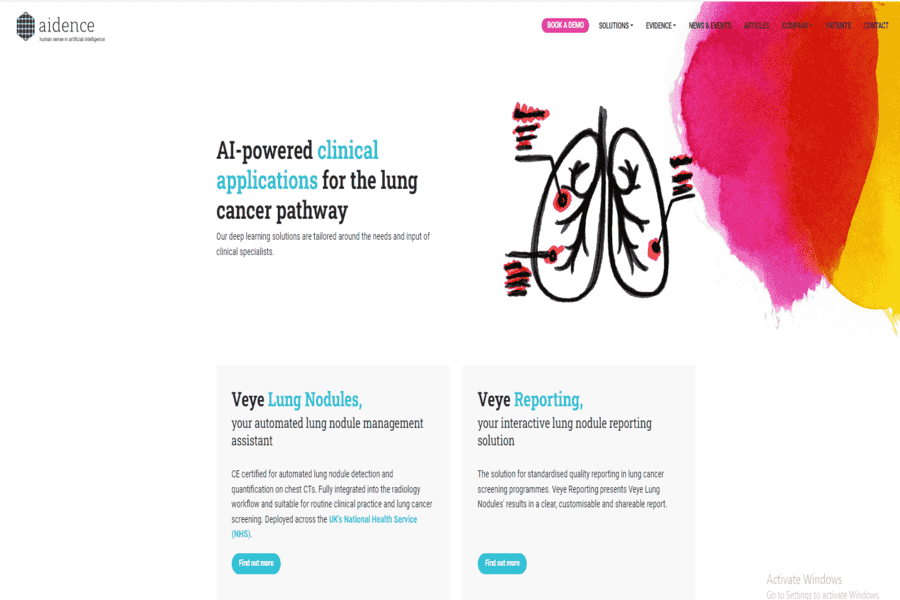
Aidence specializes in lung cancer screening through automated analysis of CT scans for early detection. Acquired by RadNet in January 2022 (alongside Quantib); continues to operate under the Aidence name within RadNet’s AI division.
Pros:
- Focused on early cancer detection.
- CE-certified algorithms.
- Detailed reporting capabilities.
Cons:
- Limited to lung imaging.
- High initial setup cost.
Pricing Package:
Pricing is available upon request.
Social Media:
- Twitter: Aidence Twitter
- LinkedIn: Aidence LinkedIn
Contact Information:
- Mail: [email protected]
Lunit INSIGHT
Lunit INSIGHT provides AI-based solutions for detecting chest abnormalities and breast cancer in radiology images.
Pros:
- High accuracy in cancer detection.
- Proven track record in clinical trials.
- User-friendly interface.
Cons:
- Limited focus on specific imaging types.
- Requires stable internet for cloud-based solutions.
Pricing Package:
Custom pricing based on application and scale.
Social Media:
- Facebook: Lunit Facebook
- Instagram: Lunit Instagram
- Twitter: Lunit Twitter
- LinkedIn: Lunit LinkedIn
- YouTube: Lunit YouTube
Contact Information:
- Mail: [email protected]
- Contact Number: +82-2-3144-2700
Challenges and Limitations
AI in medical imaging still faces real constraints. High-quality labeled datasets are scarce, especially for rare conditions, and accurate annotation requires expert radiologists’ time. Models trained on non-representative data can produce biased or less reliable results for underrepresented patient groups. Many deep learning models remain difficult to interpret, which slows clinical trust and adoption — radiologists need to understand why a model flagged something, not just that it did. Patient data privacy, regulatory compliance, and liability for AI-assisted errors add further legal and ethical complexity that the field is still working through.
Future Trends
Multimodal models that combine imaging with genomics and clinical records promise more complete diagnostic pictures than imaging alone. AI-driven personalized medicine is starting to tailor treatment plans to patient-specific imaging biomarkers. Real-time image analysis during procedures is enabling faster intraoperative decisions, and AI-assisted surgical robotics is pushing toward more precise, less invasive interventions with shorter recovery times.
Conclusion
AI has moved from research promise to deployed clinical tool in medical imaging: platforms like Aidoc, Qure.ai, Viz.ai, and Infervision are already flagging critical findings in hospitals today, while specialists like Arterys, Aidence, and Lunit INSIGHT cover cardiology, lung screening, and oncology workflows respectively. The technology works best as an assistant to radiologists, not a replacement — it triages, quantifies, and flags, while clinicians retain the diagnostic judgment. Data quality, bias, and interpretability remain open problems, but the direction is clear: faster, more consistent detection support across an increasing range of conditions.