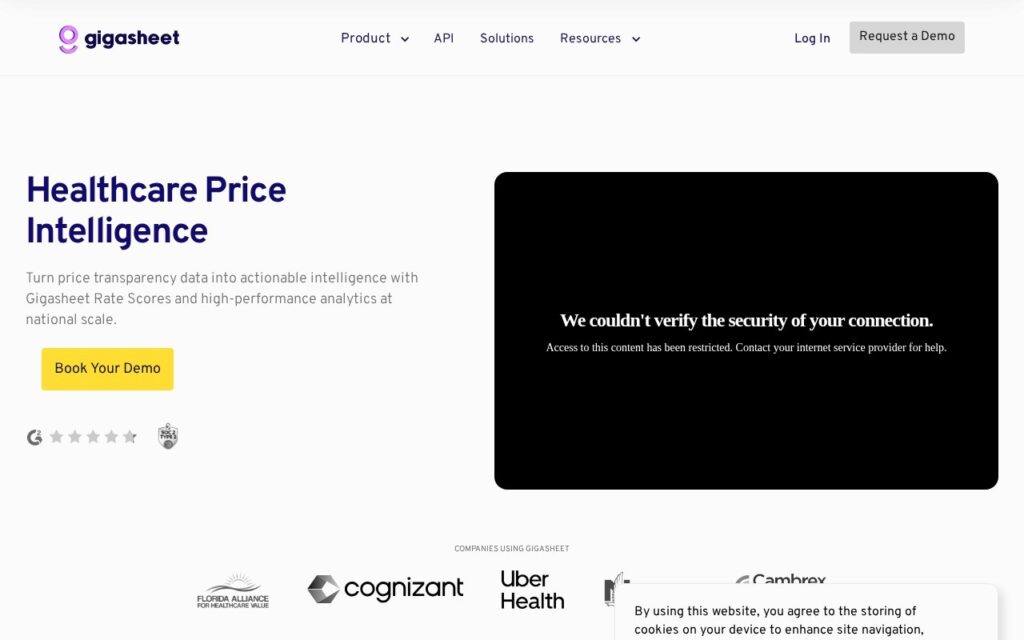
Gigasheet turns published healthcare price transparency files into something answerable. Hospitals and insurers are required to publish their negotiated rates, and the resulting files are enormous, inconsistently formatted and effectively unreadable without tooling built for them.
Provider groups use it to see what comparable organisations negotiated before sitting down with a payer, and payers use it for network development. The interface stays spreadsheet-shaped rather than requiring a query language, which is what puts it in reach of the analysts who actually do this work.
It repositioned here from general large-file analysis, so older descriptions describe a different product. The value is tied to United States transparency rules specifically, and pricing tiers are not detailed publicly.
Key features
Healthcare price transparency datasets
Negotiation insight for hospitals and provider groups
Network development for payers and plans
Spreadsheet interface over very large files
No query language required
Screenshots & demo
Pricing
Gigasheet offers a free plan, with paid upgrades for higher limits and more features.
Pricing is provided as a guide. Check the official site for the latest plans.
Is Gigasheet expensive?
Gigasheet has no advertised paid tier. Among the 18 priced tools we list in Healthcare AI, the median entry price is $24.99 a month.
19% of Healthcare AI tools in the directory offer a free tier, and this is one of them.
Compared against every priced listing in Healthcare AI, recalculated as the catalogue changes. Method and the full market breakdown are in our AI tool pricing study.
Pros & cons
Pros
Makes published transparency files genuinely usable
Serves both providers and payers
Spreadsheet interface rather than a query language
Cons
Repositioned from general data analysis, so older write-ups mislead
Value is tied to United States price transparency rules