Contact for Pricing Verified

Google Looker

A semantic modeling layer that defines metrics once, in code

4.3 Data and Analytics
4.3 Very good 4.3

Bottom line: Google Looker is a strong data and analytics tool, best known for lookML semantic modeling layer for governed metric definitions.

Strong metric governance and consistency across an organization No free tier or transparent self-serve pricing
Reviewed by Challenging Voice Editorial · Updated Jul 2026 How we rate
PricingContact for Pricing
Free planNo
CompanyGoogle
PlatformsAPI, Web
Best forData and Analytics
Founded2012
Visits8
Last reviewedJul 2026
UpdatedJul 2026
Ask AI about Google Looker ChatGPT Claude Perplexity

Overview

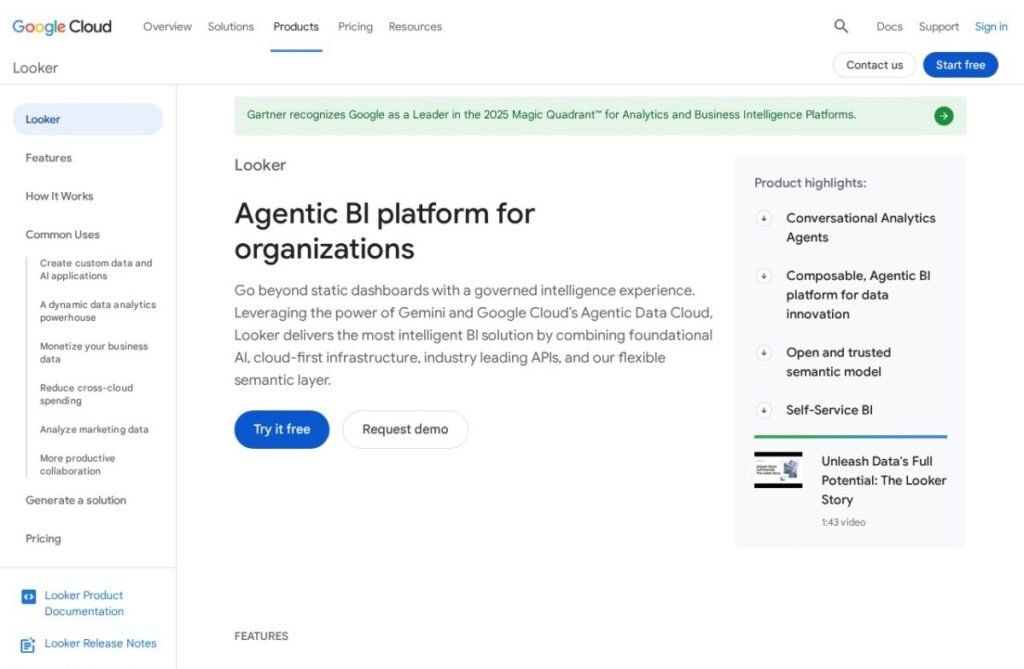
Looker, founded in 2012 and acquired by Google in 2019, built its reputation on a specific architectural choice most competitors don't share as strictly: LookML, a modeling layer where an organization defines its data relationships and metric calculations once, in code, so every report and dashboard across the company references the same governed definition of "revenue" or "active user" rather than each analyst calculating it slightly differently.

That semantic-layer-first design trades some of the drag-and-drop flexibility simpler BI tools offer for consistency at scale: a metric defined once in LookML stays consistent everywhere it's used, reducing the common problem of two dashboards showing different numbers for what should be the same figure. Now part of Google Cloud, it integrates natively with BigQuery and other Google data services.

There's no free tier; Looker sells through Google Cloud enterprise pricing. For a larger organization specifically concerned with metric consistency and governance across numerous dashboards and teams, Looker's code-first semantic layer addresses that problem more directly than tools prioritizing flexibility over strict consistency.

Key features

Screenshots & demo

Google Looker screenshot 1

Pricing

Google Looker uses custom pricing. Contact their team for a quote based on your needs.

  • Pricing modelContact for Pricing
  • Starting priceCustom
  • Free planNo
Visit Google Looker

Pricing is provided as a guide. Check the official site for the latest plans.

Pros & cons

Pros

  • Strong metric governance and consistency across an organization
  • Deep native integration with Google Cloud's data services
  • Reduces conflicting numbers across different dashboards
  • Backed by Google's infrastructure and ongoing investment

Cons

  • No free tier or transparent self-serve pricing
  • Code-first LookML approach has a steeper learning curve than drag-and-drop tools
  • Full value requires investment in properly modeling data upfront

How it compares

ToolRatingFreeFromBest known for
Google Looker (this tool)4.3NoLookML semantic modeling layer for governed metric definitions
Rows4.4Yes$15/moLive API connections directly inside spreadsheet cells
Vanna4.4YesFreeOpen-source RAG framework for text-to-SQL
Databricks Genie4.4NoNatural-language querying grounded in Databricks' lakehouse data

Our verdict

4.3 / 5 4.3

Google Looker is a strong data and analytics tool, best known for lookML semantic modeling layer for governed metric definitions.

What makes it different: Google Looker stands out for lookML semantic modeling layer for governed metric definitions.

How we score it
Overall 4.3
Value for money 4.2
Feature depth 4.9
Popularity 3.7
Best for ProfessionalsTeamsCreatorsCurious learners

Frequently asked questions

What is Google Looker?
Google Looker is a data and analytics tool listed in the Challenging Voice directory. A semantic modeling layer that defines metrics once, in code.
Is Google Looker free?
Google Looker does not offer a free plan.
What are the best Google Looker alternatives?
Popular alternatives to Google Looker include Apollo.io, Basedash, and Bricks. Browse them all in the Data and Analytics category.
Is Google Looker any good?
Google Looker scores 4.3 out of 5 based on our editorial review.

Reviews

4.3 No reviews yet

Write a review

Similar tools you might like