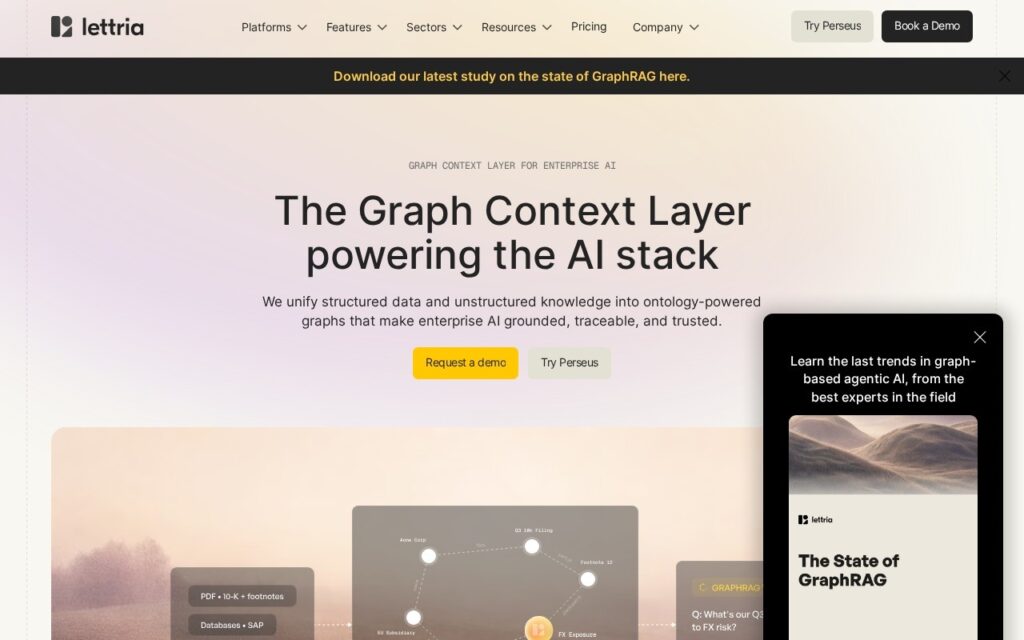
Lettria builds what it calls a Graph Context Layer for enterprise AI, unifying structured data and unstructured documents into ontology-powered knowledge graphs so that generative AI systems built on top of them stay grounded, traceable and auditable. Its Knowledge Studio product targets regulated industries with graph-native document intelligence, which the company states delivers more than 30 percent better accuracy than vector-based retrieval-augmented generation on complex enterprise knowledge. Perseus, aimed at developers and technical teams, generates ontologies and knowledge graphs directly from a company’s own domain data with business experts kept in the loop, cutting the graph-building process from months to minutes. Founded in Paris in 2019 by CEO Charles Borderie, the company counts Alfa Laval among its customers, where thousands of technical manuals and specifications were unified into a single searchable ontology.
Building and maintaining a knowledge graph is a different, more structured undertaking than pointing a vector database at a folder of documents, so a team should expect an implementation project with its own timeline rather than a plug-and-play setup, even with Perseus accelerating the ontology-creation step. Lettria is aimed squarely at regulated, complex enterprise use cases; a small team with a basic internal FAQ or search need is likely better served by a lighter, self-serve RAG tool.
Pricing is not published; Lettria sells to enterprise and regulated-industry teams through a demo request or a Perseus trial for developers rather than a self-serve plan.