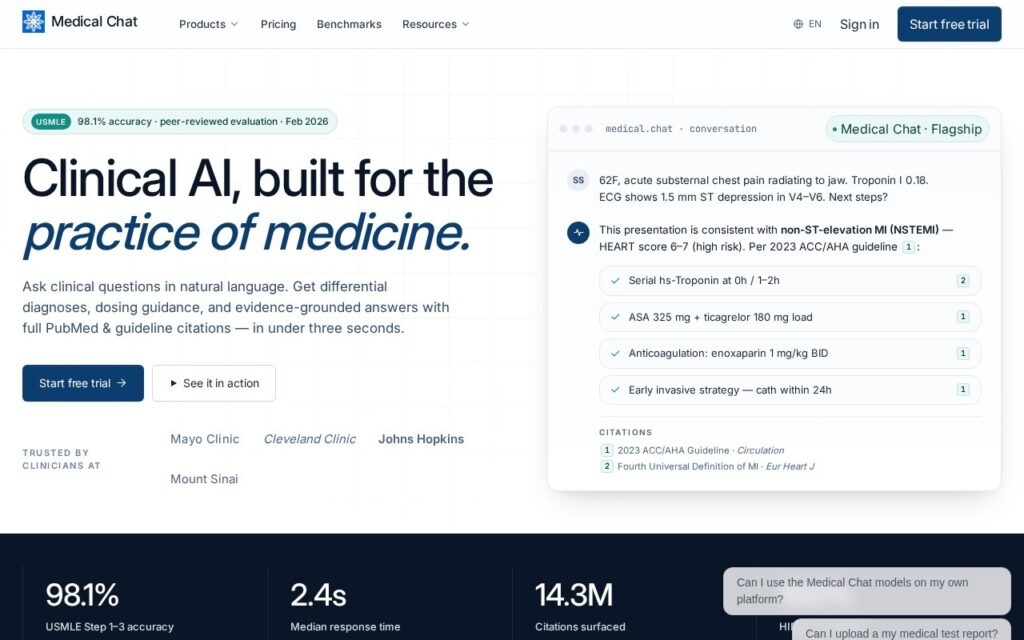
Medical Chat provides AI-driven clinical decision support: clinicians ask questions in natural language and receive differential diagnoses, dosing guidance, and evidence-grounded answers with citations, typically in under three seconds. It’s used by clinicians at major institutions including Mayo Clinic, Cleveland Clinic, Johns Hopkins, and Mount Sinai, with testimonials from ED attendings, internal medicine physicians, and residency program directors.
HIPAA compliance and zero-retention data policies are heavily emphasized, and the company cites a 98.1% USMLE accuracy benchmark, positioning the tool as “safer than ChatGPT for healthcare.” One notable gap: unlike many health-AI products, there’s no prominent, explicit disclaimer stating this isn’t a substitute for a doctor – only a brief FAQ note that it “should complement, not replace, professional medical advice.” AI clinical tools like this are meant to support, not replace, a clinician’s own judgment and direct patient evaluation.
Medical Chat targets healthcare professionals – physicians, residents, and clinical teams – rather than patients directly. A 14-day free trial requires no credit card; specific pricing tiers aren’t detailed on the page reviewed.