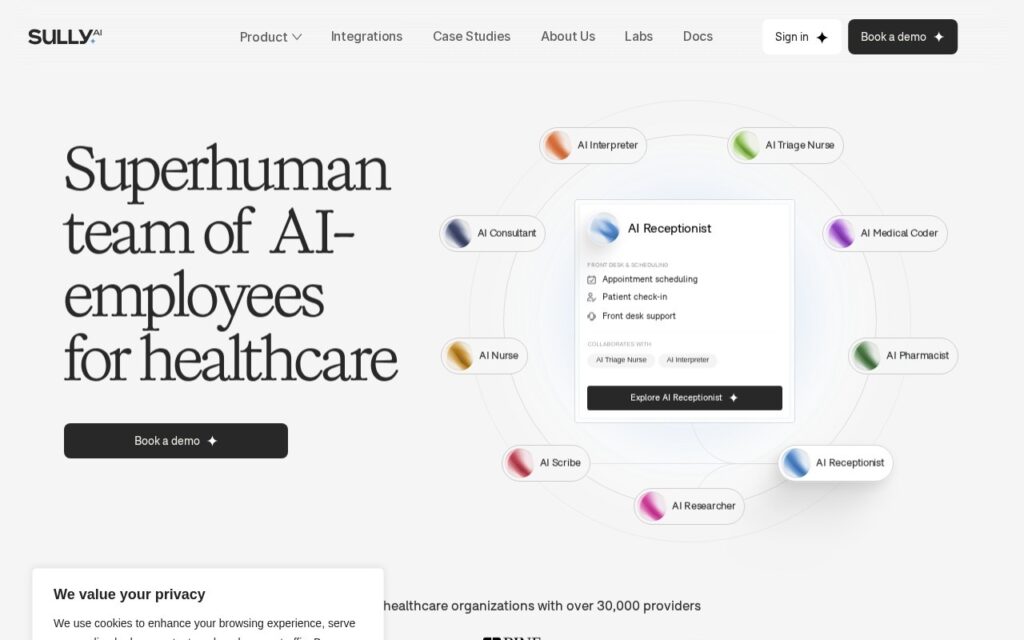
Sully.ai is organised as roles rather than features. An AI receptionist schedules and checks patients in, a triage nurse handles the first clinical question, a scribe documents the encounter, a medical coder assigns codes, a pharmacist covers prescriptions, and an interpreter handles language, all connected to Epic, Cerner, MEDITECH, Athenahealth and 50-plus other EHRs.
Framing it as roles is more than marketing. A clinic knows what a medical assistant does and can reason about handing that specific work over, where a feature list leaves the practice to work out what it replaces. Coverage from check-in through to prescription is what turns it from a documentation tool into staffing.
It reports 30,000-plus providers, HIPAA, SOC 2 Type II and ISO 27001, with 93.8 percent ICD-10 coding accuracy claimed against a stated 40 percent human physician error rate. No pricing is published, that comparison is the vendor’s own and the human baseline deserves scrutiny, and triage in particular is clinical judgement where a wrong call carries real consequences.