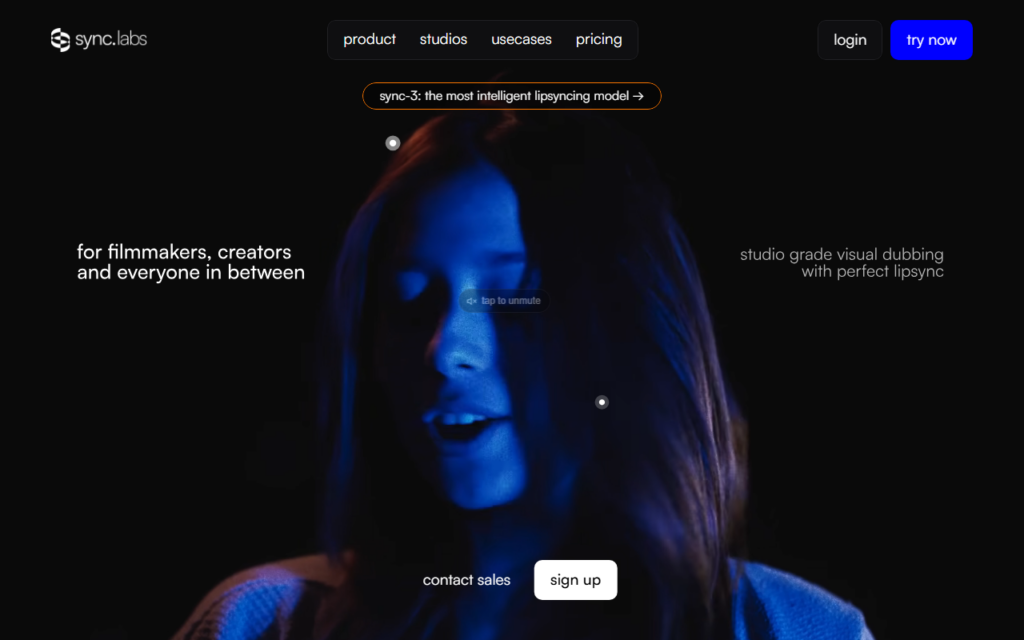
sync. (sync. labs) generates lipsync, matching an on-screen speaker’s mouth movement to a new audio track. The use case is localisation: a film, advert or piece of content dubbed into another language normally shows the mismatch between lips and sound, and that mismatch is what makes dubbed footage feel wrong.
Both an API and a web studio are available, which covers the two buyer types — a platform embedding lipsync into its own pipeline, and a production team processing individual assets. Per-minute pricing suits variable volume.
Synthetic lipsync raises consent questions that are the customer’s responsibility. Altering a person’s speech on video requires their permission, and several jurisdictions now regulate this directly. Confirm rights before processing footage of any identifiable person.