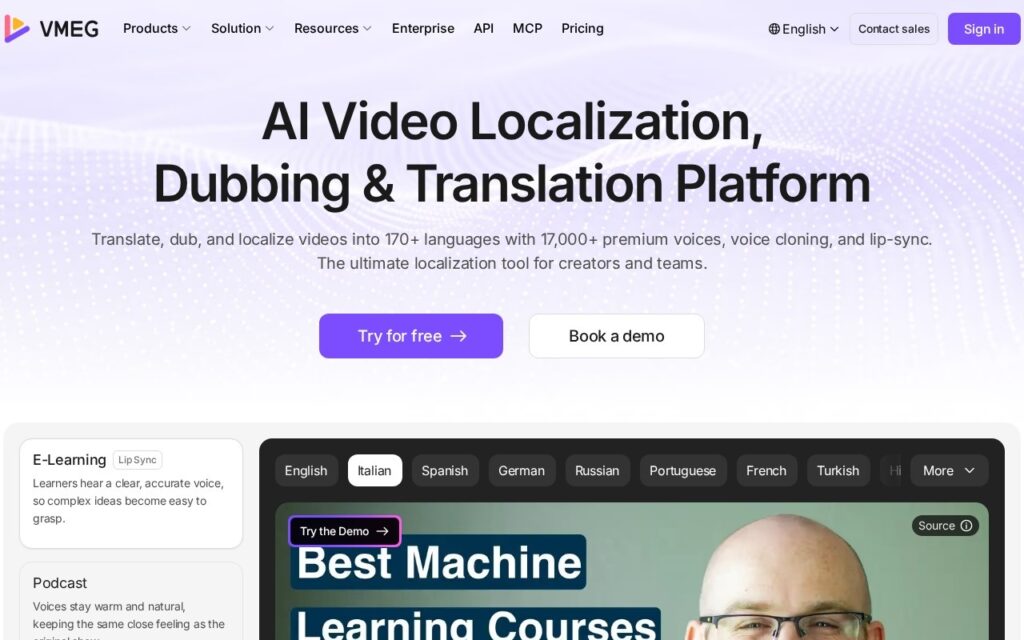
VMEG localises video end to end: translation and dubbing into more than 170 languages with 17,000-plus voices, voice cloning, emotion fine-tuning, lip-sync, multi-speaker identification, bilingual subtitles and an editing studio with script proofreading, plus batch processing for volume.
Multi-speaker identification is the requirement that separates real dubbing from a voiceover. Any interview, panel or podcast has several people talking, often over each other, and a system that cannot tell them apart produces one synthetic voice reading everyone’s lines. Script proofreading before the audio is generated is the other half: correcting a translation after dubbing means redoing the dub.
PixRipple prices it on credits calculated by video length with unlimited edits and reprocessing at no extra cost, but publishes no figures. Voice cloning raises consent questions about the original speaker, 170 languages vary enormously in quality, and lip-sync on a close-up is still where these systems visibly struggle.