Search for an AI summarize tool and you get a list of products with “summarizer” in the name. Sort our catalogue by editorial rating instead and something more useful turns up.
The two highest-rated tools that summarise are ChatGPT at 4.8 and Claude at 4.7, and neither is a summariser. Meanwhile most of the products built specifically to summarise sit below 4.0. Summarising has stopped being a category and become a feature.
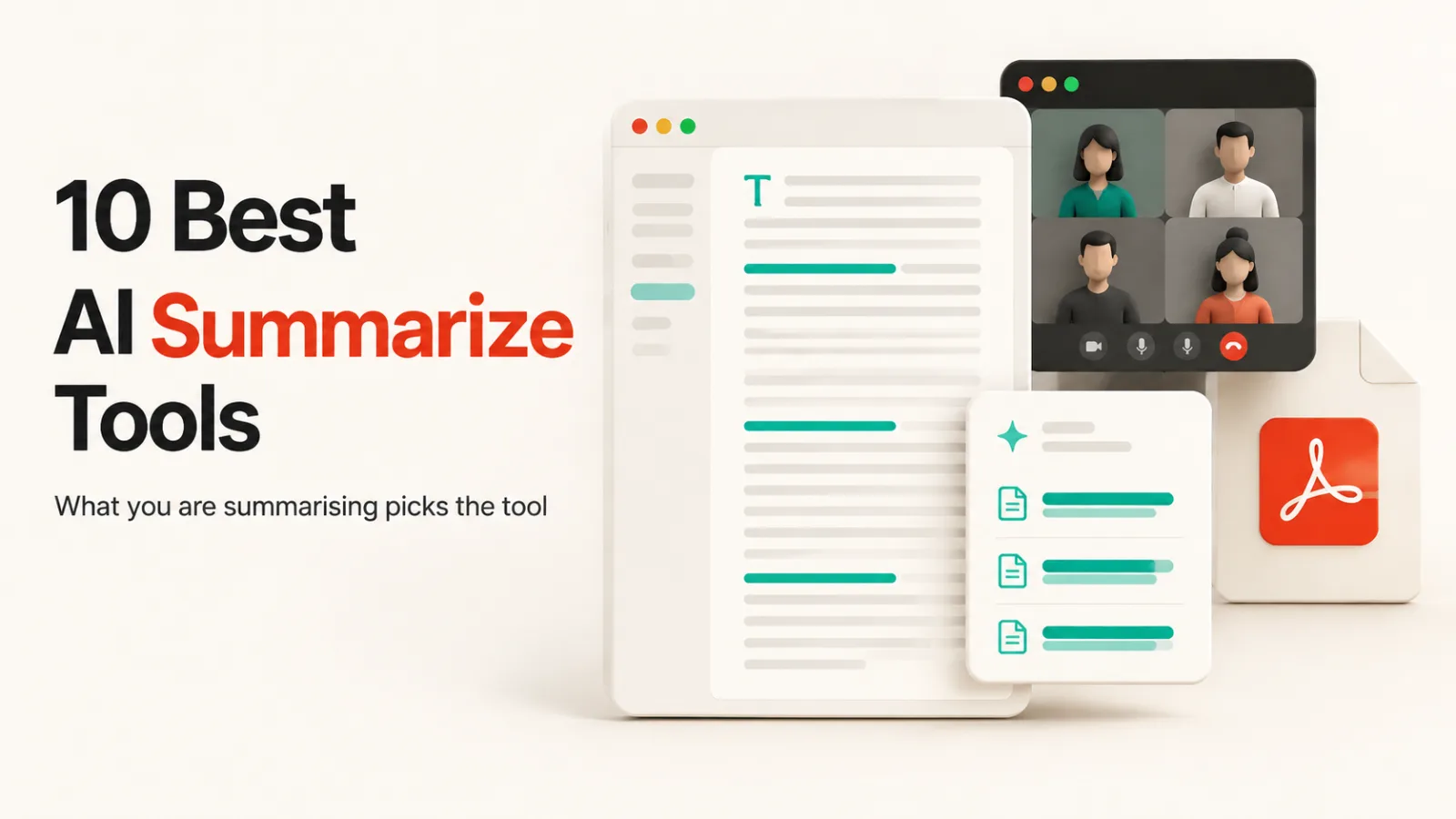
Which means the useful question isn’t “what’s the best summarizer”. It’s what are you summarising. A meeting, a PDF, a research paper, your own reading and a whole corpus each have a different best answer, and the ten below are grouped that way.
Summarising a research corpus
NotebookLM rates 4.5 and costs nothing. You give it sources and it answers across all of them at once, with citations back to the passage. It’s the only tool here built around a body of documents rather than one document, and Google gives it away.
Summarising a meeting
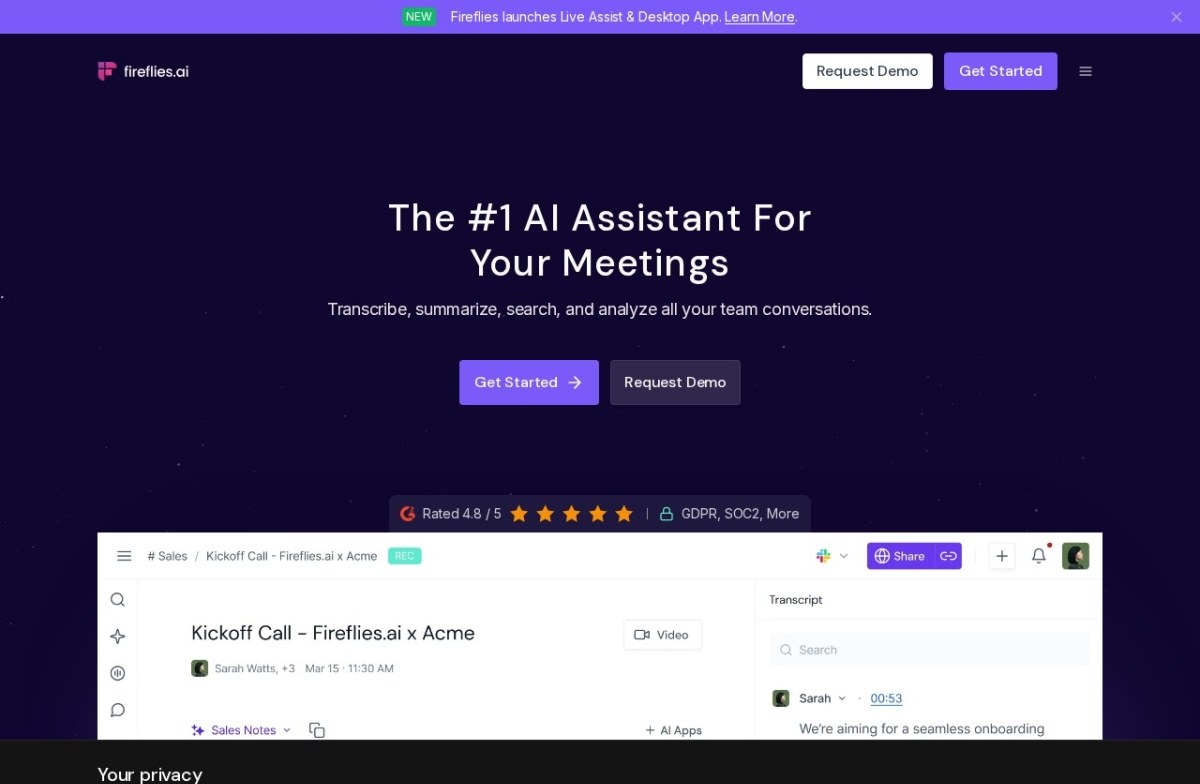
Fireflies.ai at 4.5 and $10 is the highest-rated meeting recorder in the catalogue. It joins the call, transcribes it and produces the recap and action items afterwards.
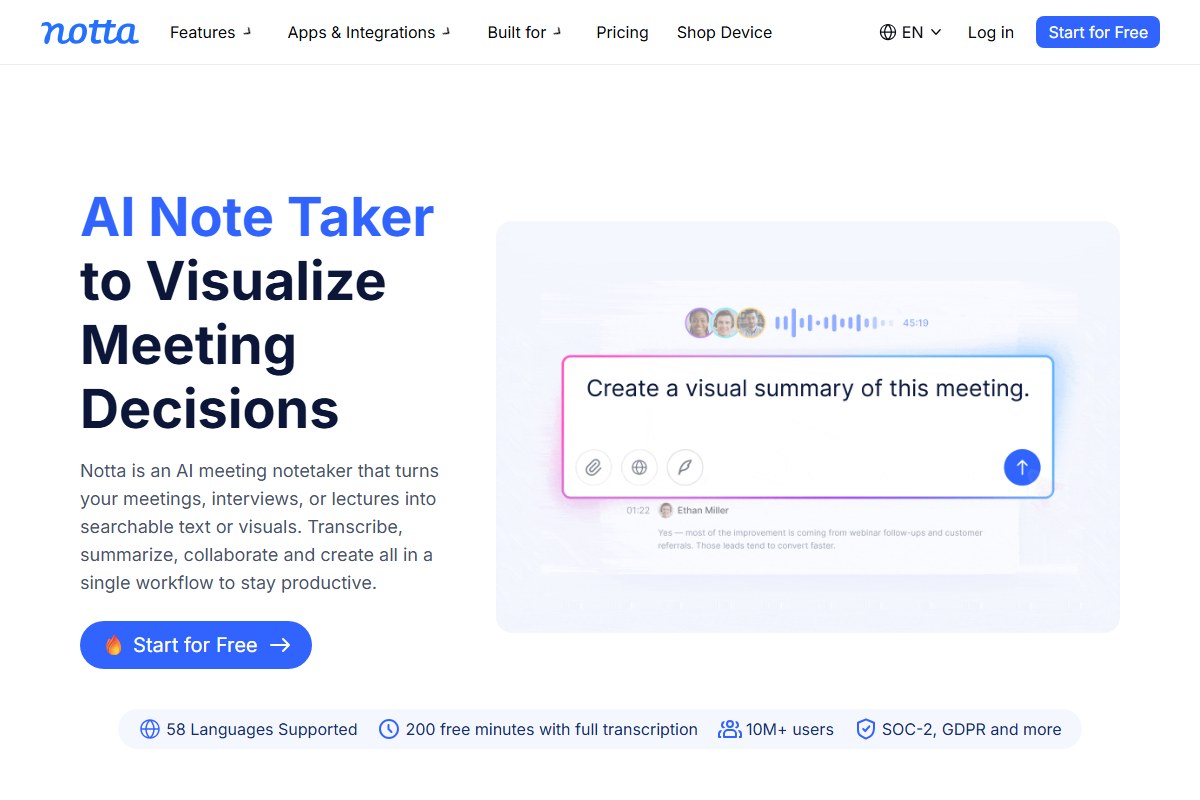
Notta at 4.4 and $8 does the same job for less, with stronger multi-language support. If your calls aren’t all in English, start here.
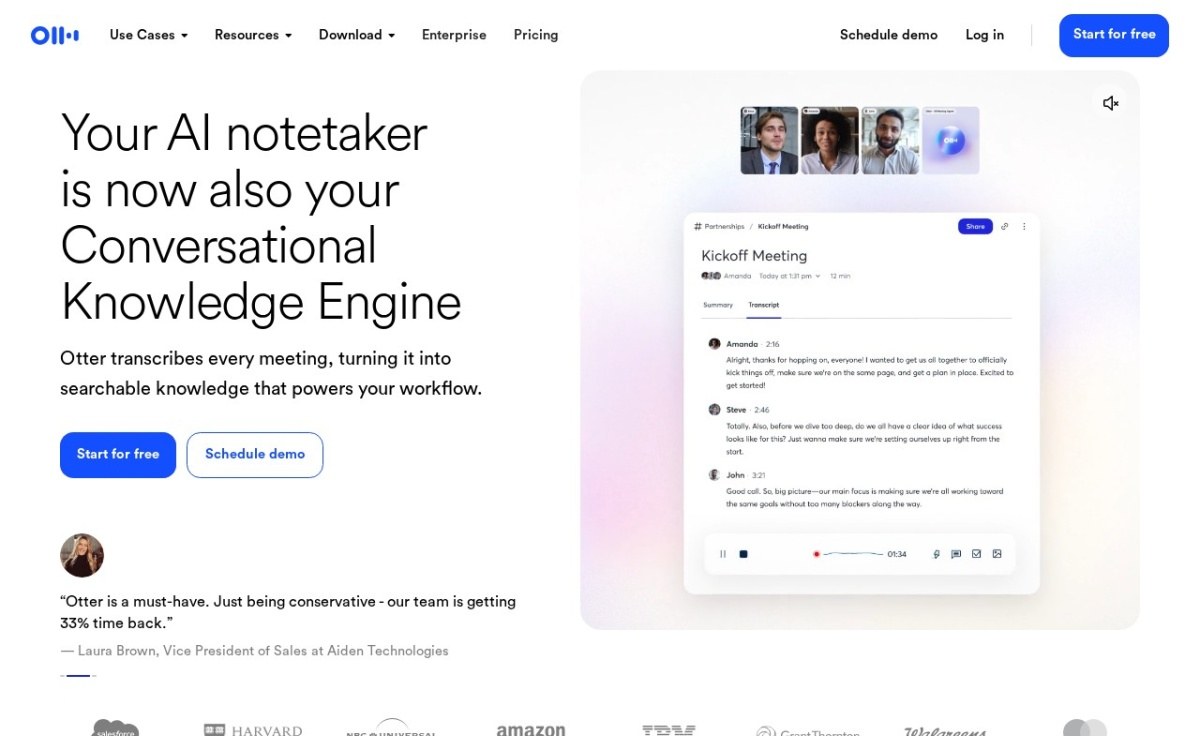
Otter.ai at 4.3 is the best-known name and, at $17, the most expensive meeting tool on this list. It earns that in live transcription rather than in the summary itself.

Summarising a document
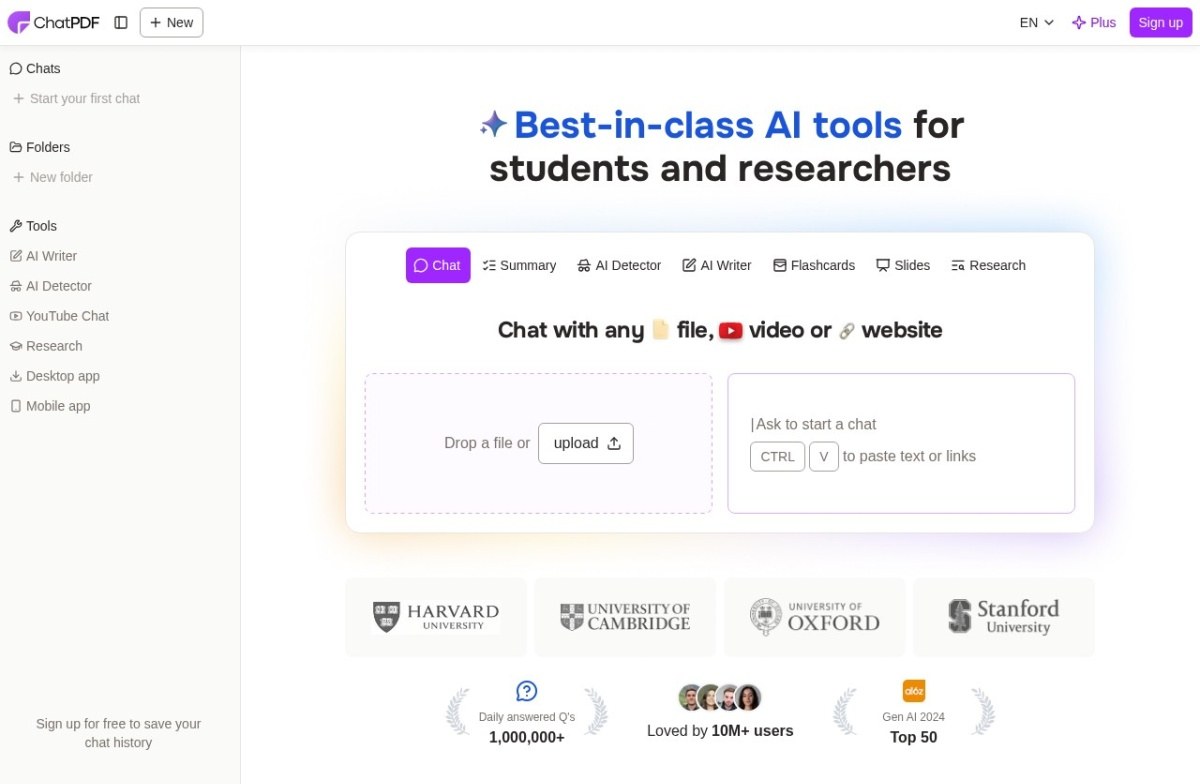
ChatPDF at 4.4 and $5 does one thing: you upload a PDF and ask it questions. No workspace, no library, no setup.
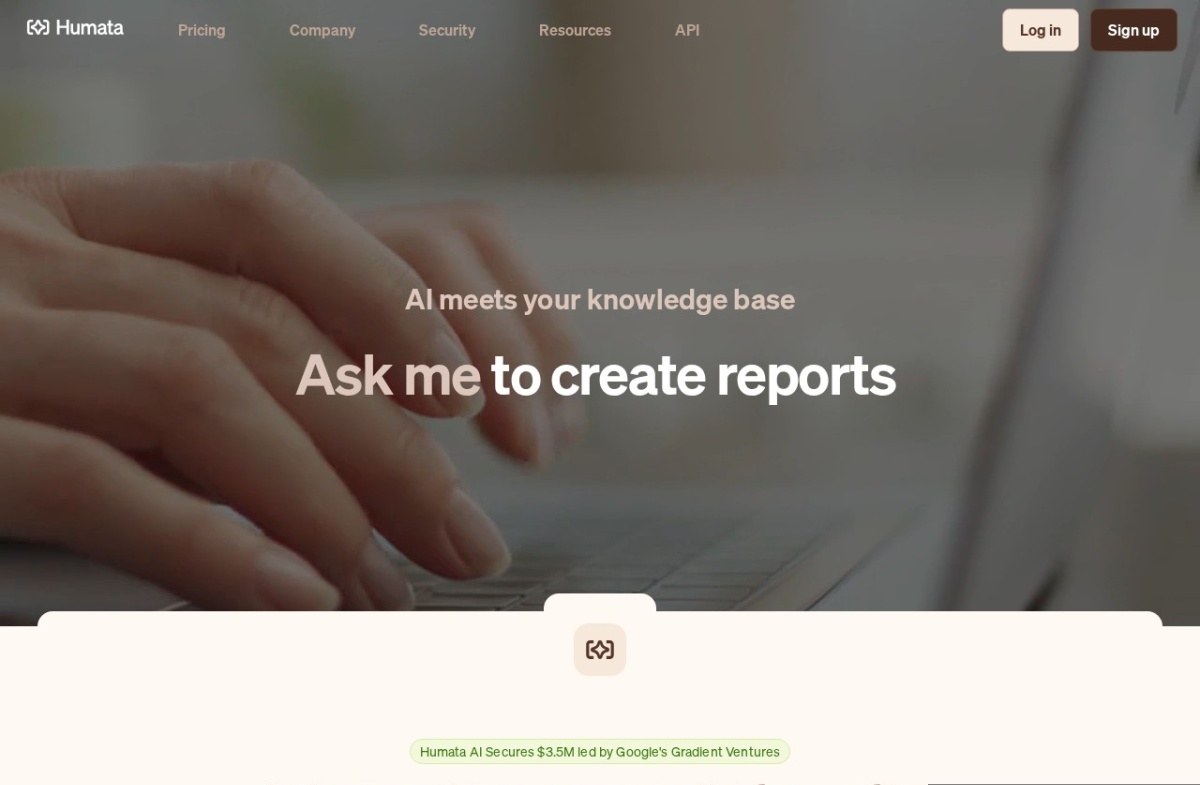
Humata at 4.3 is the cheapest paid tier in this whole list and handles longer, more technical documents than ChatPDF comfortably manages.
QuillBot at 4.5 and $10 belongs here too, though it’s better known for paraphrasing. Its summariser takes pasted text rather than a file, which suits an article you’ve already got open.
Summarising a paper
Scholarcy at 4.3 and $5 breaks an academic paper into a structured summary card: findings, methods, references. Built for literature review rather than for reading one thing.
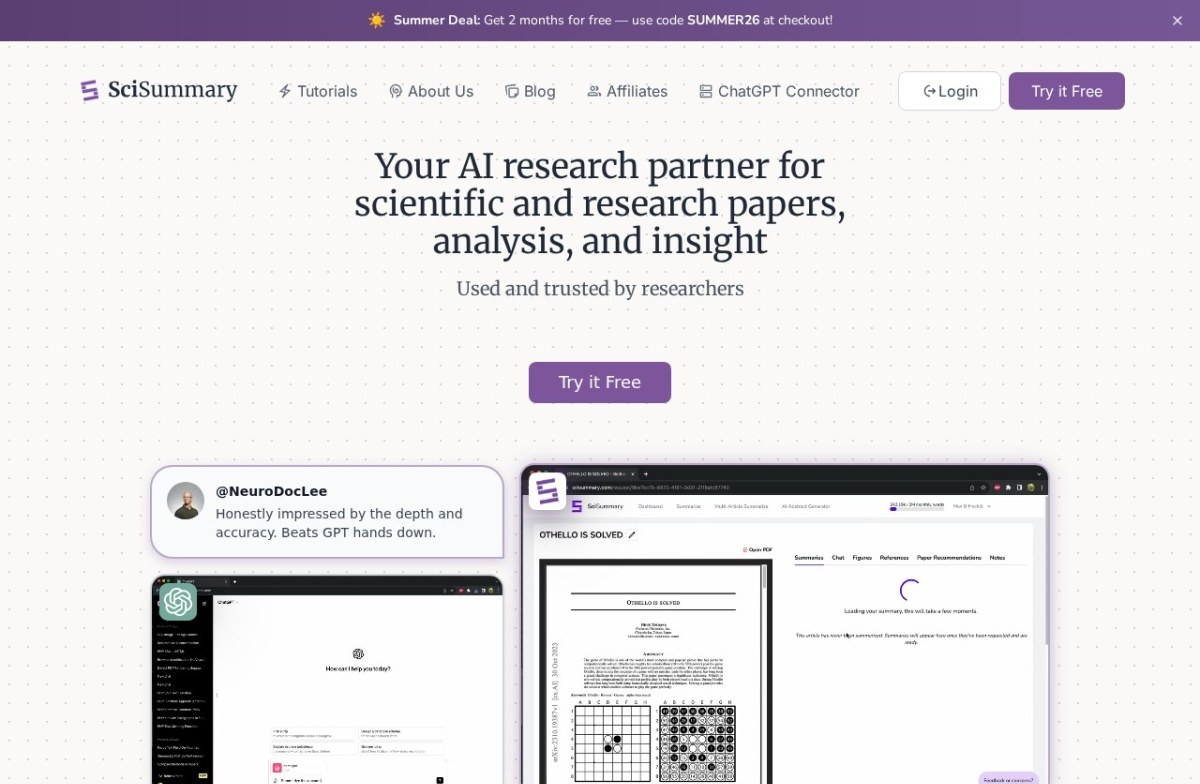
SciSummary at 4.1 and $9 is the highest-rated tool in the catalogue built only to summarise, which is itself the point this post is making. It handles scientific papers specifically.
Summarising your own reading
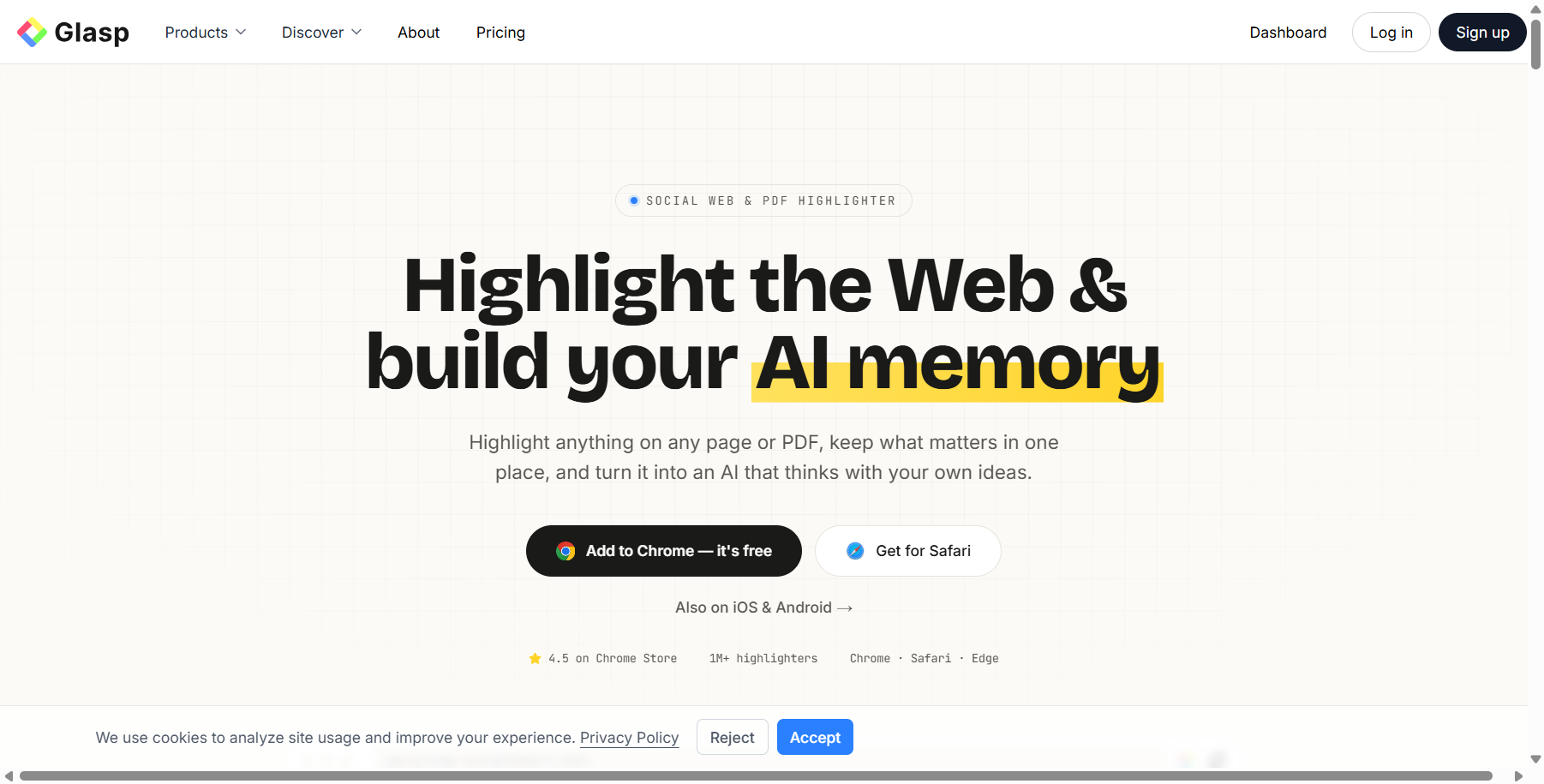
Glasp at 4.3 costs nothing and works backwards from the others. You highlight as you read across the web, and it summarises what you kept rather than what the page said.
What the ratings actually show
We scanned the whole catalogue for listings whose own description leans on summarising. Twelve came back, and only three of them clear an editorial rating of 4.0: SciSummary at 4.1, Eightify at 4.1 and Futurwise at 4.0. The rest land between 3.5 and 3.9.
Compare that with the tools above, where summarising is one capability inside a product built for meetings, documents or research. Those cluster between 4.3 and 4.5. The dedicated summarisers are the weaker half of the field.
That isn’t a coincidence. Producing a summary is now close to free for anyone with model access. A product whose only job is summarising has little left to be good at. The tools that rate well earn it somewhere else: joining the call, holding the corpus, keeping your highlights.
Which one fits
- Many sources at once: NotebookLM, free.
- Calls you keep forgetting: Fireflies.ai at $10, or Notta at $8 for non-English.
- One PDF, right now: ChatPDF at $5, or Humata for longer technical documents.
- Academic literature: Scholarcy at $5, or SciSummary at $9 for science.
- Text already on screen: QuillBot at $10.
- Your own reading, over time: Glasp, free.
- Anything else: the assistant you already pay for.
Common questions
Do I need a dedicated summarize tool at all?
Often not. If you already pay for ChatGPT or Claude, both summarise better than most products sold for it, and both rate higher in our catalogue. A dedicated tool earns its place when it reaches something the assistant can’t: a live call, a locked PDF library, a corpus you query repeatedly.
Are these free?
Every tool on this list has a free plan, which is unusual for a whole category. NotebookLM and Glasp are free outright. The rest gate volume rather than features, so the paid price above is what you pay once you use it seriously.
Can I trust an AI summary of something important?
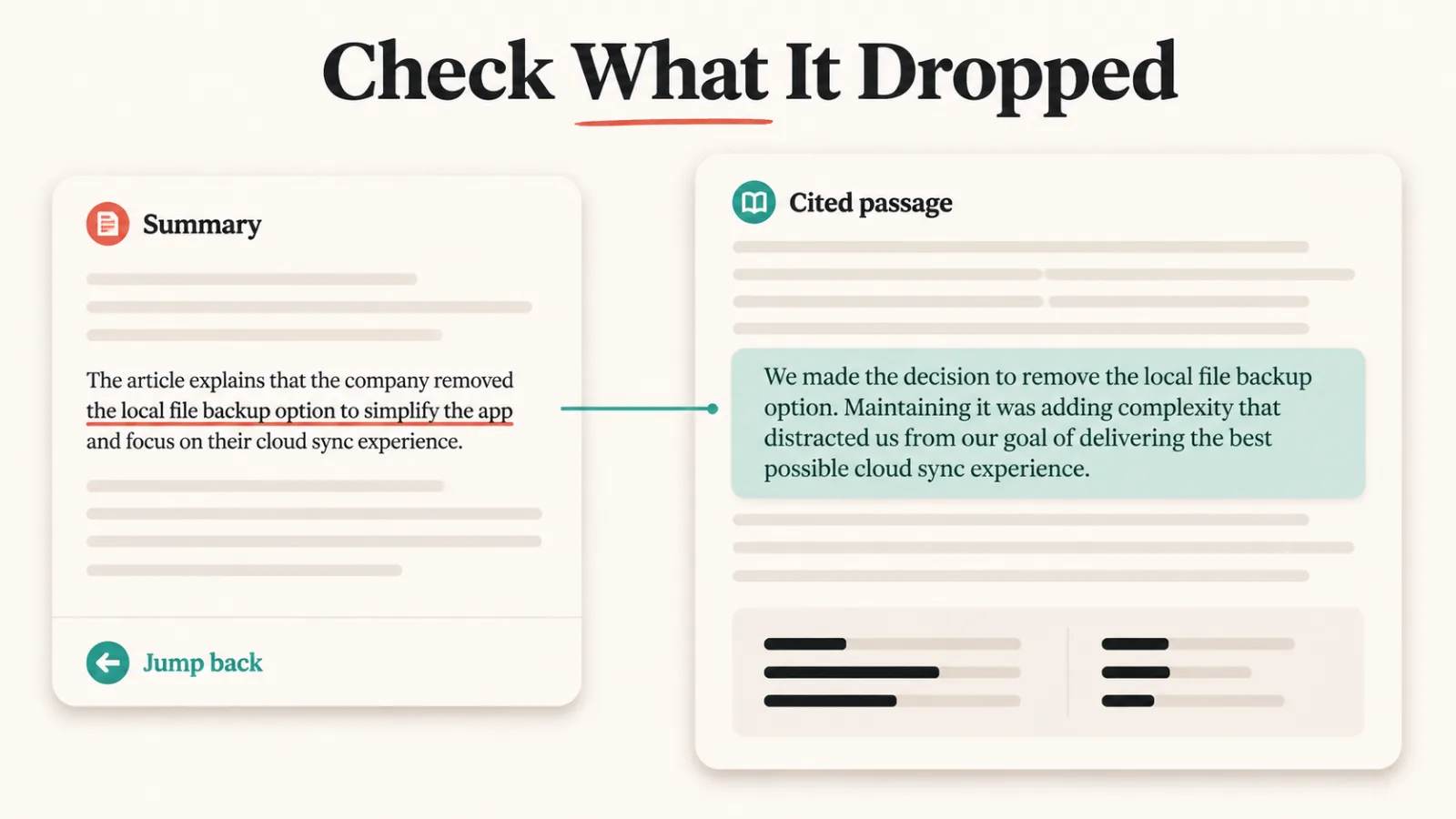
Not without checking it. Summaries fail quietly, because what gets dropped leaves no trace. A confident summary of a contract can be wrong in exactly the way you’d never notice. Tools that cite back to the source passage, like NotebookLM and Scholarcy, make that check cheap enough to do.
What about summarising video?
Eightify at 4.1 covers YouTube specifically and TubeOnAI at 3.9 does the same job. Neither made the ten above on rating, but both are in the catalogue if that’s the only thing you need.