AI has moved well beyond spellcheck and grammar suggestions into genuinely creative territory. Generating story ideas, developing characters, writing dialogue, and helping with world-building. This guide covers what these tools actually do, where they help most, and the 20 tools worth knowing across novel-writing software, dedicated AI story generators, and general organization tools writers have adapted for the job. For visualizing characters and settings from text descriptions, see ourAI image generator tools Guide.
How AI Helps With Story and Character Generation
The practical uses cluster into a few areas. For ideas, AI can brainstorm plot points and identify common story structures and tropes from existing work. For characters, it can generate backstories, personality traits, motivations, and arcs showing how a character changes over the story. For dialogue, it can draft exchanges that match a character’s voice and the scene’s tone. For plot, it can suggest twists, check pacing, and help keep world-building details (geography, history, culture) consistent. And for style, it can analyze existing text to match a target tone or flag where the writing drifts from it.
Benefits and Types of Tools
The real benefits are speed and volume, not necessarily quality on the first pass: AI generates variations fast enough to break through writer’s block and test directions that would take hours to draft by hand, and it can flag plot holes or inconsistencies across a long manuscript that are easy to miss on a re-read. Tools in this space split into three types. Text generators that draft prose, dialogue, or full outlines; image generators that turn character and scene descriptions into visuals; and interactive tools built for choose-your-own-path fiction, tabletop RPG prep, or branching narrative design. Most working writers end up combining two or three rather than relying on one tool for everything.
Top Tools For Story and Character Generation
Scrivener
A powerful writing software designed for novelists, screenwriters, and storytellers with tools to create, organize, and manage characters and plots.
Pros:
Comprehensive features; highly customizable.
Cons:
Steep learning curve for beginners.
Pricing Package:
$59.99 (one-time purchase).
Relevance and Accuracy: 4/5
Creativity and Engagement: 4/5
Comprehensiveness and Insight: 5/5
Adaptability and Style: 4/5
Efficiency and User-Friendliness: 3/5
Social Media:
- Facebook: Literature and Latte
- Twitter: @ScrivenerApp
- LinkedIn: Literature & Latte
- Email: [email protected]
Plottr
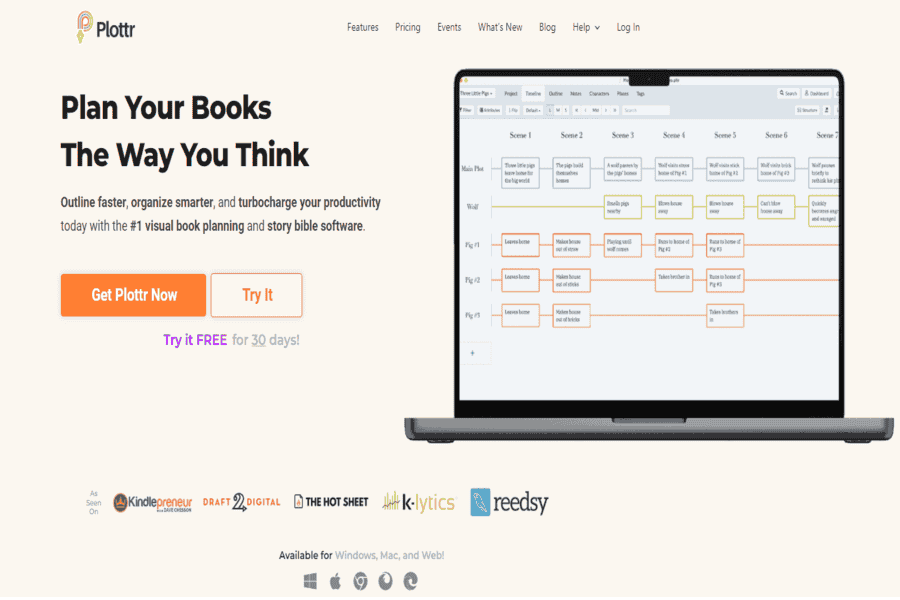
Visual story-planning software for writers, offering templates and tools for character and story development.
Pros:
Easy-to-use visual tools; integrates with Scrivener.
Cons:
Limited for detailed text editing.
Pricing Package:
$25/year.
Relevance and Accuracy: 4/5
Creativity and Engagement: 4/5
Comprehensiveness and Insight: 3/5
Adaptability and Style: 4/5
Efficiency and User-Friendliness: 5/5
Social Media:
- Facebook: Plottr
- Twitter: @PlottrApp
- Email: [email protected]
Campfire
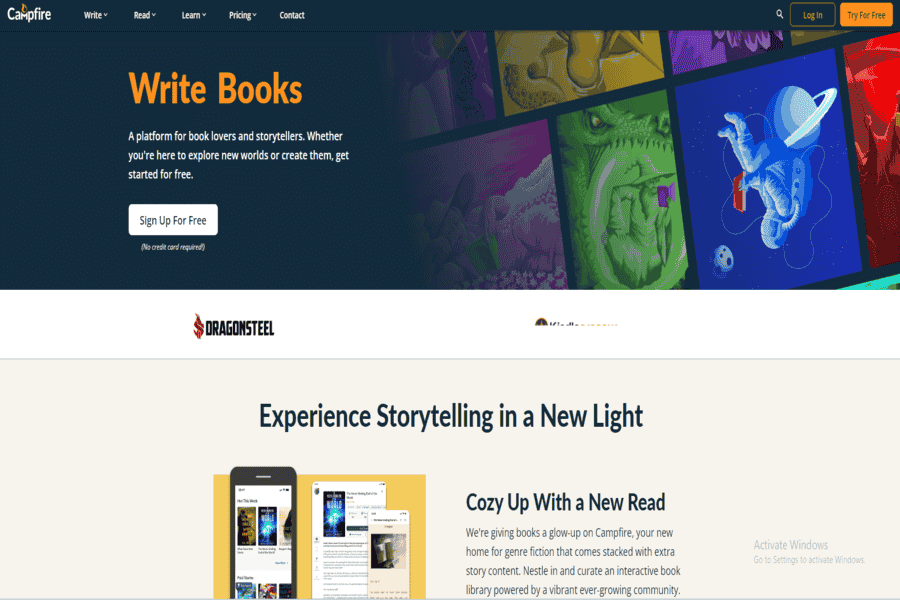
A world-building and storytelling platform with tools for creating characters, plots, and entire universes.
Pros:
Excellent world-building features; modular pricing.
Cons:
Requires subscription for premium features.
Pricing Package:
Free basic plan; modules start at $25/year.
Relevance and Accuracy: 4/5
Creativity and Engagement: 5/5
Comprehensiveness and Insight: 5/5
Adaptability and Style: 4/5
Efficiency and User-Friendliness: 4/5
Social Media:
- Facebook: Campfire Writing
- Twitter: @CampfireTech
- Instagram: @campfirewriting
- Email: [email protected]
World Anvil
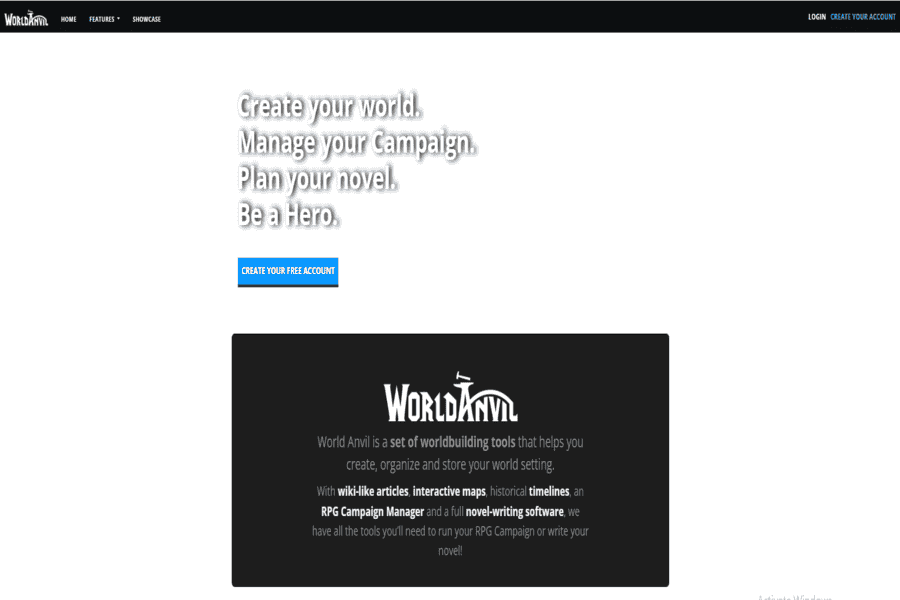
A world-building tool tailored for authors, game designers, and storytellers to create complex universes and track character development.
Pros:
Rich features for world-building; community-driven.
Cons:
The steeper learning curve for beginners.
Pricing Package:
A free plan is available; the premium starts at $3/month.
Relevance and Accuracy:
4/5
Creativity and Engagement:
5/5
Comprehensiveness and Insight:
5/5
Adaptability and Style:
4/5
Efficiency and User-Friendliness:
3/5
Social Media:
- Facebook: World Anvil
- Twitter: @WorldAnvil
- Instagram: @worldanvil
- Email: [email protected]
Character.ai
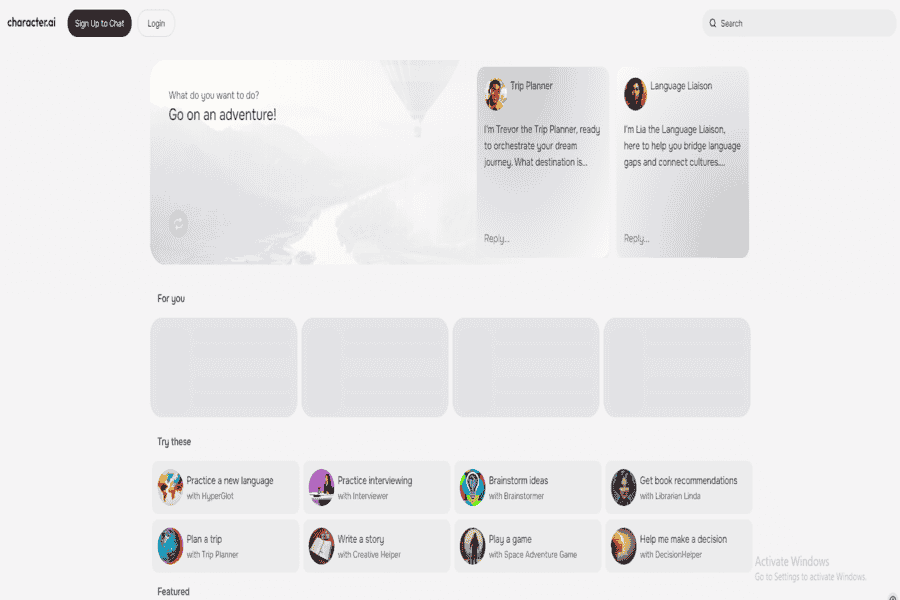
AI-powered platform to create characters with distinct personalities and backstories.
Pros:
Engaging in AI interactions is good for inspiration.
Cons:
Limited customization options.
Pricing Package:
Free.
Relevance and Accuracy:
3/5
Creativity and Engagement:
5/5
Comprehensiveness and Insight:
3/5
Adaptability and Style:
4/5
Efficiency and User-Friendliness:
5/5
Social Media:
- Twitter: @character_ai
Story Planner
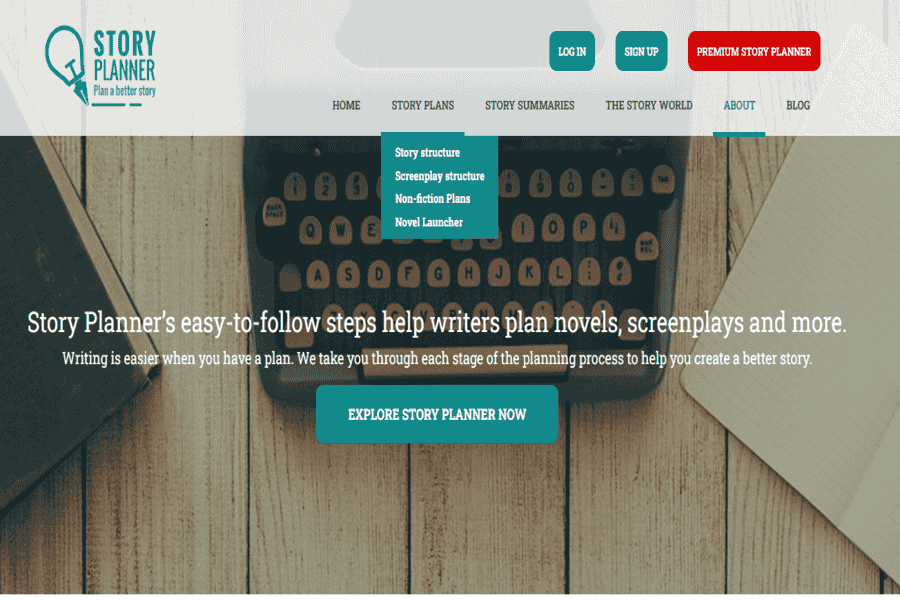
A web-based tool offering templates and guides for planning stories, characters, and scenes.
Pros:
Easy-to-use templates are great for beginners.
Cons:
Limited integration with other tools.
Pricing Package:
$5/month or $49/year.
Relevance and Accuracy: 4/5
Creativity and Engagement: 4/5
Comprehensiveness and Insight: 3/5
Adaptability and Style: 3/5
Efficiency and User-Friendliness: 5/5
Social Media:
- Email: [email protected]
Artbreeder
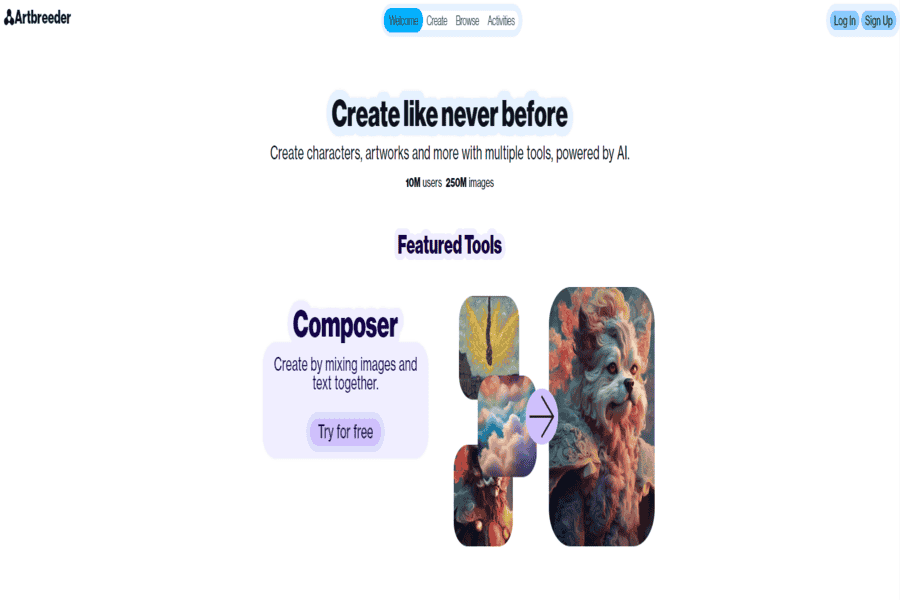
An AI-based platform for generating unique character visuals and settings through customizable art.
Pros:
Excellent for visualizing characters; highly creative.
Cons:
Focuses on visuals rather than textual content.
Pricing Package:
Free basic plan; premium plans start at $8.99/month.
Relevance and Accuracy: 3/5
Creativity and Engagement: 5/5
Comprehensiveness and Insight: 3/5
Adaptability and Style: 4/5
Efficiency and User-Friendliness: 5/5
Novel Factory
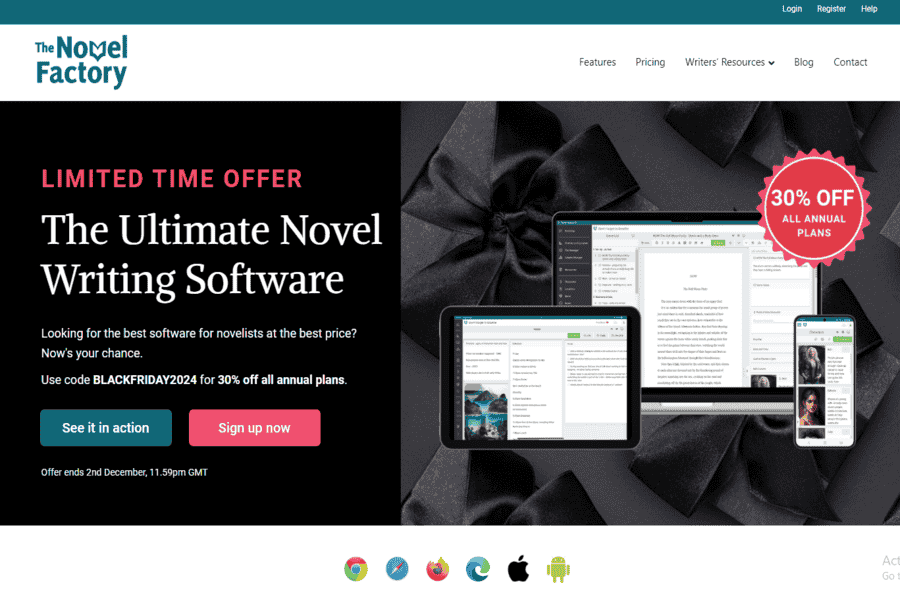
A tool designed for novelists to develop characters, plotlines, and settings systematically.
Pros:
Step-by-step guidance; easy for beginners.
Cons:
Limited customization options.
Pricing Package:
$7.50/month or $75/year.
Relevance and Accuracy: 4/5
Creativity and Engagement: 4/5
Comprehensiveness and Insight: 4/5
Adaptability and Style: 3/5
Efficiency and User-Friendliness: 5/5
Social Media:
- Email: [email protected]
RanGen
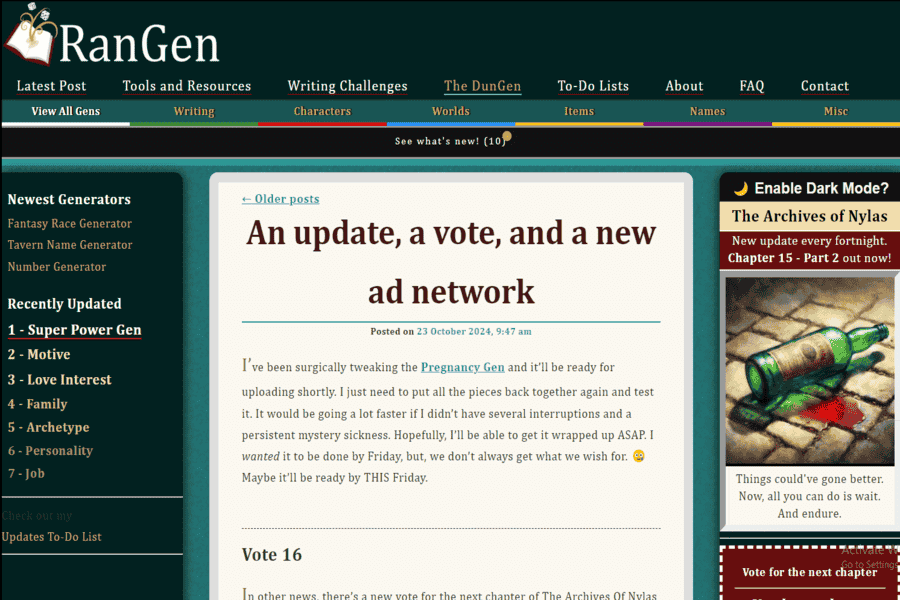
A random generator offering story ideas, character concepts, and world-building prompts.
Pros:
Free; excellent for idea generation.
Cons:
Limited depth; needs more integration with other tools.
Pricing Package:
Free.
Relevance and Accuracy: 3/5
Creativity and Engagement: 5/5
Comprehensiveness and Insight: 2/5
Adaptability and Style: 3/5
Efficiency and User-Friendliness: 5/5
Dabble Writer
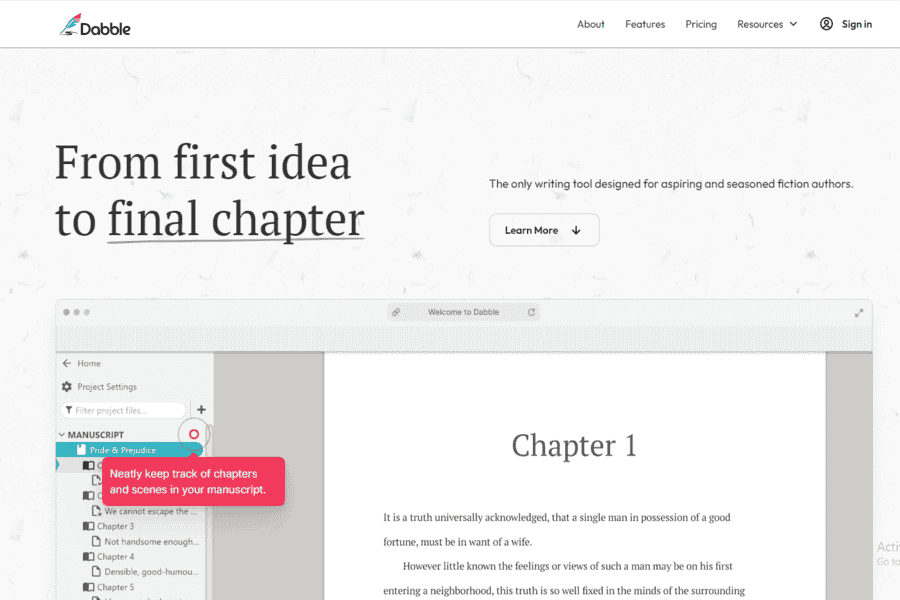
A cloud-based writing tool with features for plotting, character development, and organizing story elements.
Pros:
Intuitive interface; syncs across devices.
Cons:
There is no lifetime pricing option.
Pricing Package:
$10/month or $120/year.
Relevance and Accuracy: 4/5
Creativity and Engagement: 4/5
Comprehensiveness and Insight: 4/5
Adaptability and Style: 4/5
Efficiency and User-Friendliness: 5/5
Social Media:
- Facebook: Dabble Writer
- Twitter: @dabblewriter
- Email: [email protected]
ProWritingAid
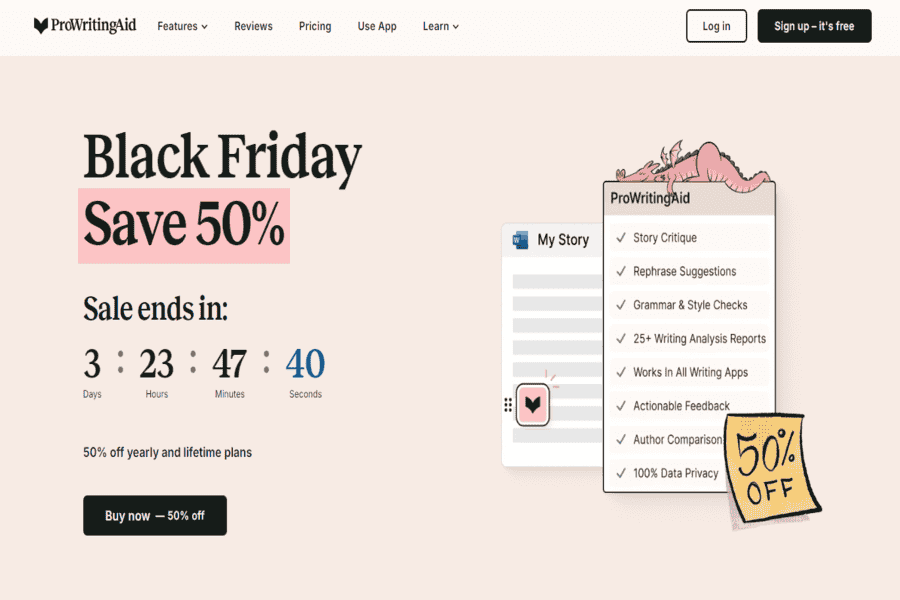
A writing assistant that helps refine style, grammar, and structure while offering character and plot development tools.
Pros:
Excellent for polishing drafts; integrates with multiple platforms.
Cons:
Focused more on editing than a generation.
Pricing Package:
$10/month or $120/year.
Relevance and Accuracy: 4/5
Creativity and Engagement: 3/5
Comprehensiveness and Insight: 4/5
Adaptability and Style: 4/5
Efficiency and User-Friendliness: 5/5
Social Media:
- Facebook: ProWritingAid
- Twitter: @ProWritingAid
- LinkedIn: ProWritingAid
- Instagram: @prowritingaid
- Email: [email protected]
Character Writer
A software tool designed to help authors create deep and realistic characters.
Pros:
Provides detailed character templates and psychology-based tools.
Cons:
Outdated interface; limited story development features.
Pricing Package:
$69.99 (one-time purchase).
Relevance and Accuracy: 4/5
Creativity and Engagement: 4/5
Comprehensiveness and Insight: 5/5
Adaptability and Style: 3/5
Efficiency and User-Friendliness: 3/5
WriterDuet
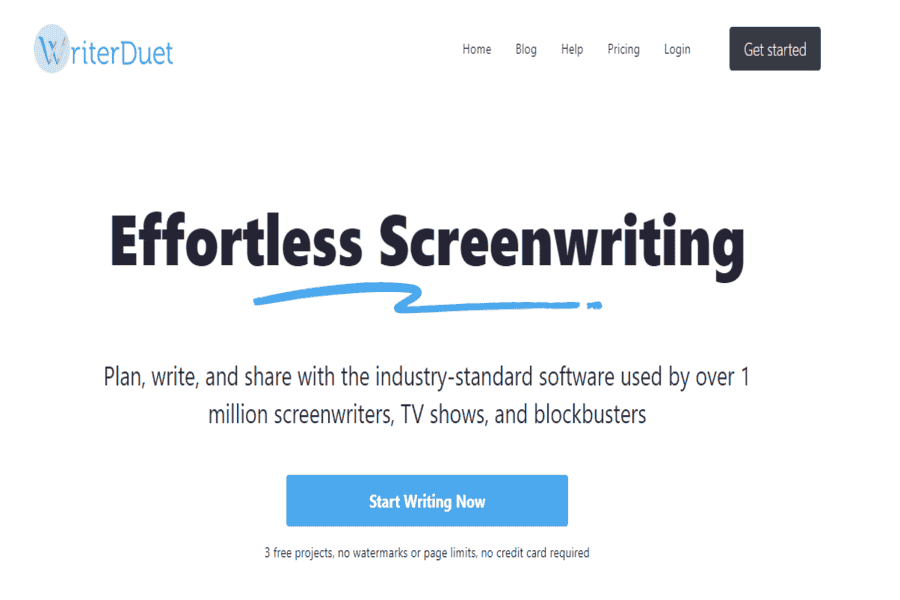
A collaborative screenwriting tool with features for character development and storytelling.
Pros:
Real-time collaboration; integrates with industry-standard formats.
Cons:
Focused more on screenwriting than novels.
Pricing Package:
Free basic plan; premium starts at $5/month.
Relevance and Accuracy: 4/5
Creativity and Engagement: 3/5
Comprehensiveness and Insight: 3/5
Adaptability and Style: 4/5
Efficiency and User-Friendliness: 5/5
Social Media:
- Facebook: WriterDuet
- Twitter: @WriterDuet
- LinkedIn: WriterDuet
- Email: [email protected]
Reedsy

An online platform that connects authors with professionals and offers tools for planning and writing stories.
Pros:
Great for collaboration and professional help; free writing tools.
Cons:
Heavily dependent on external professionals.
Pricing Package:
Free (basic tools); services vary in cost.
Relevance and Accuracy: 4/5
Creativity and Engagement: 4/5
Comprehensiveness and Insight: 4/5
Adaptability and Style: 4/5
Efficiency and User-Friendliness: 5/5
Social Media:
- Facebook: Reedsy
- Twitter: @ReedsyHQ
- LinkedIn: Reedsy
- Instagram: @reedsyhq
- Email: [email protected]
Trello
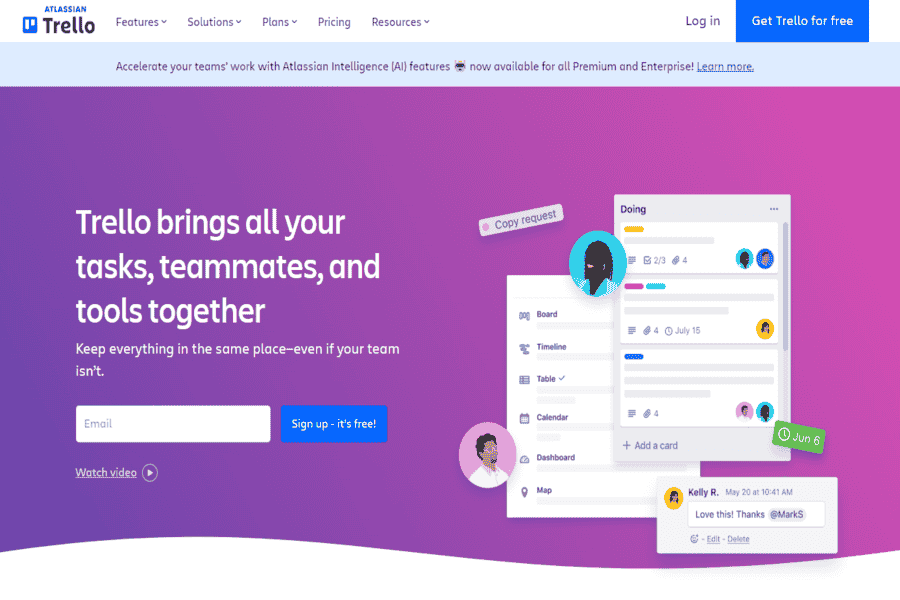
A project management tool that can be adapted for story planning and character tracking.
Pros:
Highly flexible; excellent for organizing story ideas visually.
Cons:
It’s not a dedicated writing tool.
Pricing Package:
Free basic plan; premium starts at $5/month.
Relevance and Accuracy: 3/5
Creativity and Engagement: 3/5
Comprehensiveness and Insight: 3/5
Adaptability and Style: 5/5
Efficiency and User-Friendliness: 5/5
Social Media:
- Facebook: Trello
- Twitter: @Trello
- LinkedIn: Trello
- Instagram: @trelloapp
- Email: [email protected]
Bibisco
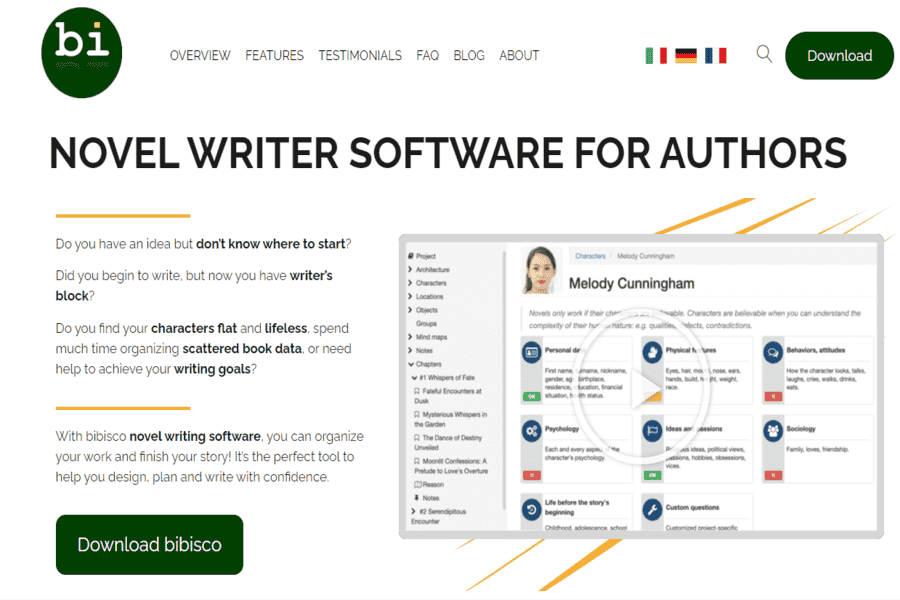
Open-source software allows authors to create characters’ plotlines and organize their stories.
Pros:
We focused on character development and intuitive interface.
Cons:
Limited collaboration features.
Pricing Package:
Free version; premium starts at €15.
Relevance and Accuracy: 4/5
Creativity and Engagement: 4/5
Comprehensiveness and Insight: 4/5
Adaptability and Style: 3/5
Efficiency and User-Friendliness: 5/5
Social Media:
- Facebook: Bibisco
- Twitter: @bibisco
- Email: [email protected]
Manuskript
Free, open-source novel-writing software with dedicated character sheets, a plot outliner, and a distraction-free editor. A solid replacement in this list after Mariner Software’s Persona (and Mariner Software itself) went offline.
Pros:
Completely free; character and plot tools built into one app; works offline on Windows, Mac, and Linux.
Cons:
Interface is more utilitarian than polished commercial alternatives; no AI generation features, purely an organization tool.
Pricing Package:
Free, open-source.
Relevance and Accuracy: 3/5
Creativity and Engagement: 3/5
Comprehensiveness and Insight: 4/5
Adaptability and Style: 3/5
Efficiency and User-Friendliness: 3/5
Sudowrite
An AI writing platform built specifically for fiction authors, with tools for outlining (Story Bible), scene expansion, description, rewriting, and AI-generated character art.
Pros:
Purpose-built for fiction rather than general copywriting; strong at matching an author’s existing voice; includes a character visualization feature.
Cons:
No free tier beyond the trial; output still needs a human editing pass for consistency across a full manuscript.
Pricing Package:
Free trial, then from $10/month.
Relevance and Accuracy: 4/5
Creativity and Engagement: 5/5
Comprehensiveness and Insight: 4/5
Adaptability and Style: 4/5
Efficiency and User-Friendliness: 4/5
Zettlr
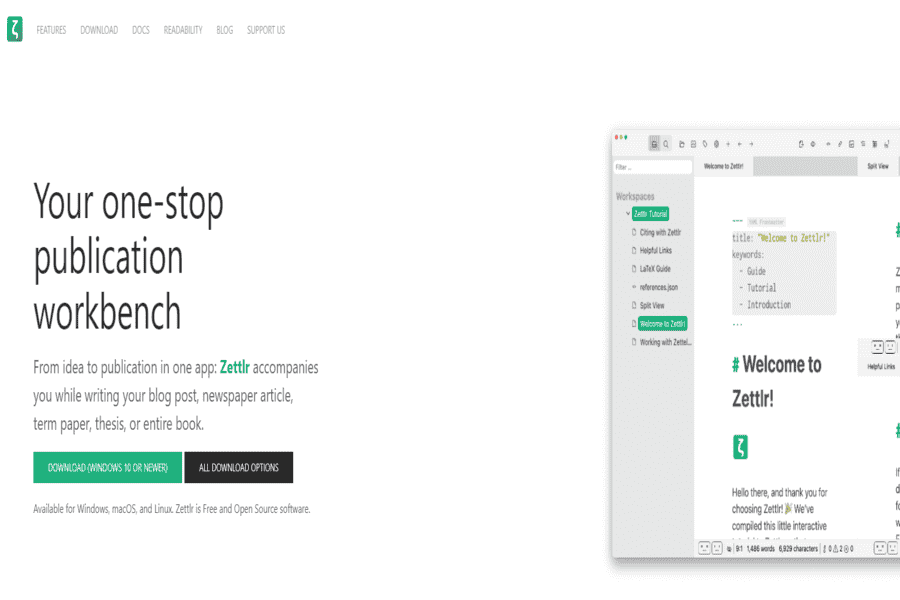
A markdown editor with tools for organizing notes, character profiles, and story structures.
Pros:
Open-source; integrates with citation managers for research.
Cons:
Requires familiarity with markdown syntax.
Pricing Package:
Free.
Relevance and Accuracy: 3/5
Creativity and Engagement: 3/5
Comprehensiveness and Insight: 4/5
Adaptability and Style: 3/5
Efficiency and User-Friendliness: 4/5
Social Media:
- Twitter: @zettlr
- Email: [email protected]
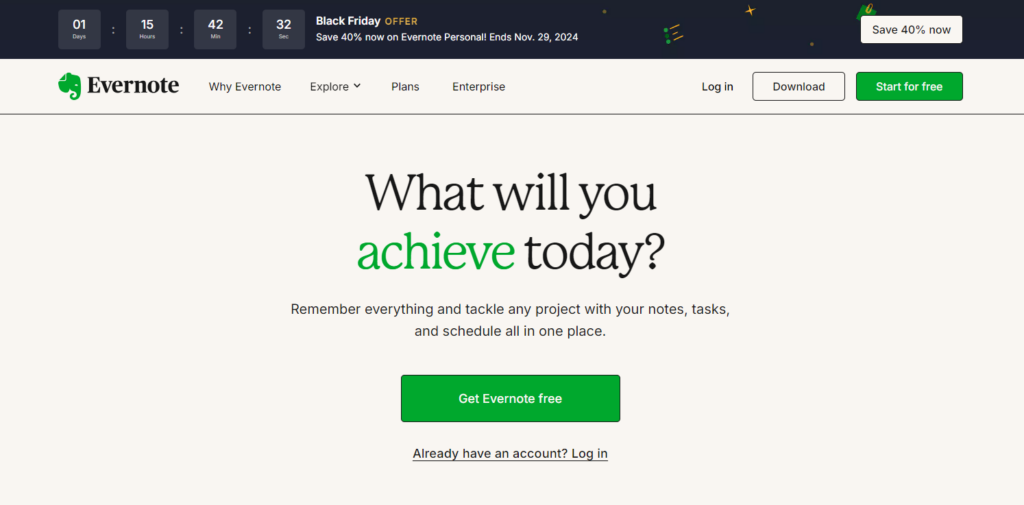
Evernote
A popular note-taking and organizing tool that can be adapted for planning stories and tracking characters.
Pros:
Excellent for organizing and syncing notes; great cross-platform support.
Cons:
It is not tailored specifically for story creation.
Pricing Package:
A free plan is available; the premium starts at $7.99/month.
Relevance and Accuracy: 3/5
Creativity and Engagement: 3/5
Comprehensiveness and Insight: 3/5
Adaptability and Style: 4/5
Efficiency and User-Friendliness: 5/5
Social Media:
- Facebook: Evernote
- Twitter: @evernote
- LinkedIn: Evernote
- Instagram: @evernote
- Email: [email protected]
Challenges of Using AI for Story and Character Generation
AI-generated stories and characters have real limits. Output trained on existing fiction tends toward familiar patterns and tropes rather than genuine originality, and left unchecked can lean on stereotypes instead of depth. Ownership is a live legal question. Who holds the rights to AI-assisted text is still being worked out, and using AI output without disclosure carries real risk depending on the platform or publisher involved. On the craft side, current tools still struggle with long, intricate plots and character arcs that need to stay consistent across tens of thousands of words; they’re better at generating a scene or a character sketch than holding an entire novel’s internal logic together.
Where This Is Headed
The clearest near-term gains are in interactivity and personalization. Stories and games that adapt to a reader’s or player’s choices in real time, rather than following one fixed branching script. Character tools are getting better at holding a consistent voice and backstory across a long project instead of drifting after a few chapters. And a fair amount of investment is going into bias mitigation and transparency, driven by the same stereotyping and representation concerns raised above. None of this replaces a writer’s judgment about what makes a story actually work, it’s aimed at cutting the time between an idea and a workable draft.
The tools above split roughly into three groups: dedicated AI story generators (Character.ai, Sudowrite, Artbreeder) for actually drafting content; novel-organization software (Scrivener, Plottr, Campfire, World Anvil, Novel Factory, Bibisco) for structuring a long project; and general-purpose tools (Trello, Evernote, Zettlr) writers have adapted for planning. None of them replace a writer’s judgment about what makes a story work. They’re useful for breaking through blank-page paralysis, generating variations fast, and keeping a large cast or plot consistent, which is where most of the real time savings are.