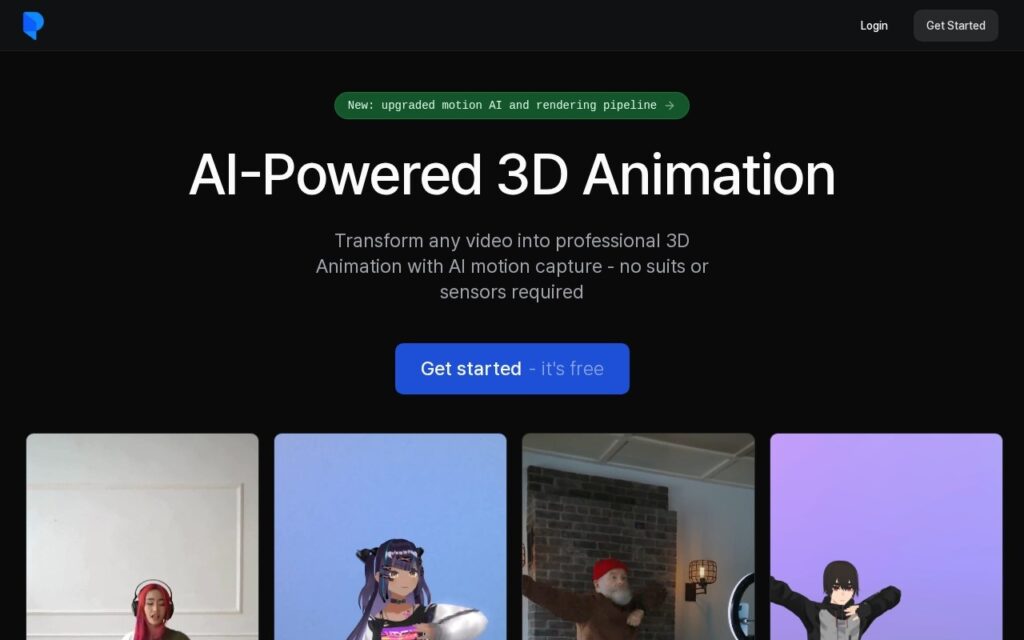
Plask Motion reads motion out of ordinary video and applies it to a 3D character. No suit, no markers, no volume: a phone recording of someone moving becomes animation data, then exports to Unreal, Unity, Maya or Blender, with MMD and VRM character support including blinking and physics.
Motion capture has been the clearest example of a capability locked behind capital. A capture stage costs more than most indie studios will ever raise, and hand-keyed animation is slow and specialised, so small teams simply went without. Video-based capture removes the equipment from the equation entirely.
AI-assisted cinematography handles lighting and camera, and post-processing adds motion blur, depth of field and tone mapping. The free tier allows 15 seconds of capture a day, with $18 and $50 monthly plans for 10 minutes and an hour, plus a 7-day trial. Video capture is less accurate than a marker system, cleanup work remains, and complex or occluded movement is where it degrades.