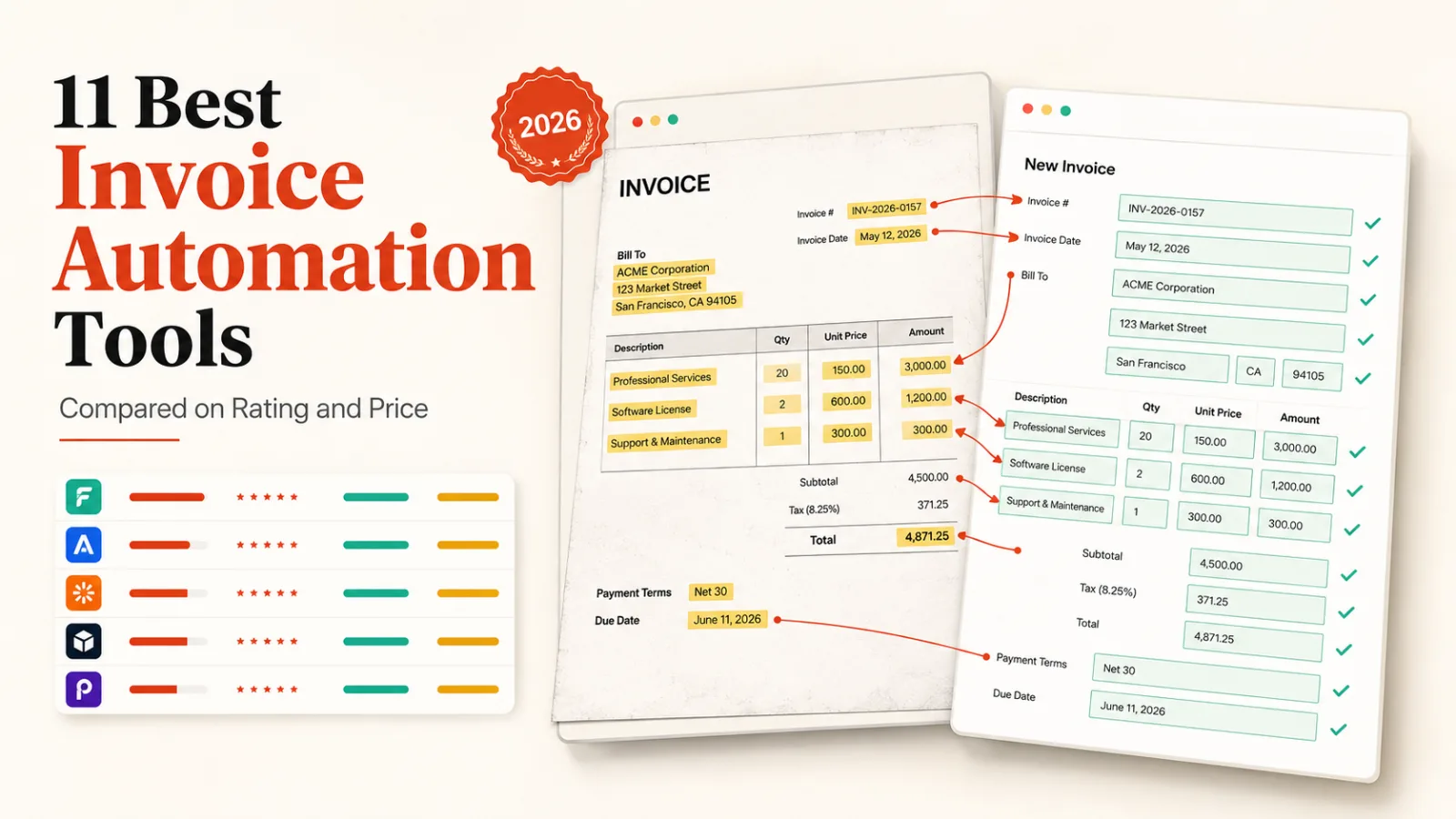
If you want invoice automation software, Parseur is the highest-rated in our catalogue and has a free tier to test on. Vic.ai is the pick if the goal is hands-off accounts payable rather than extraction alone.
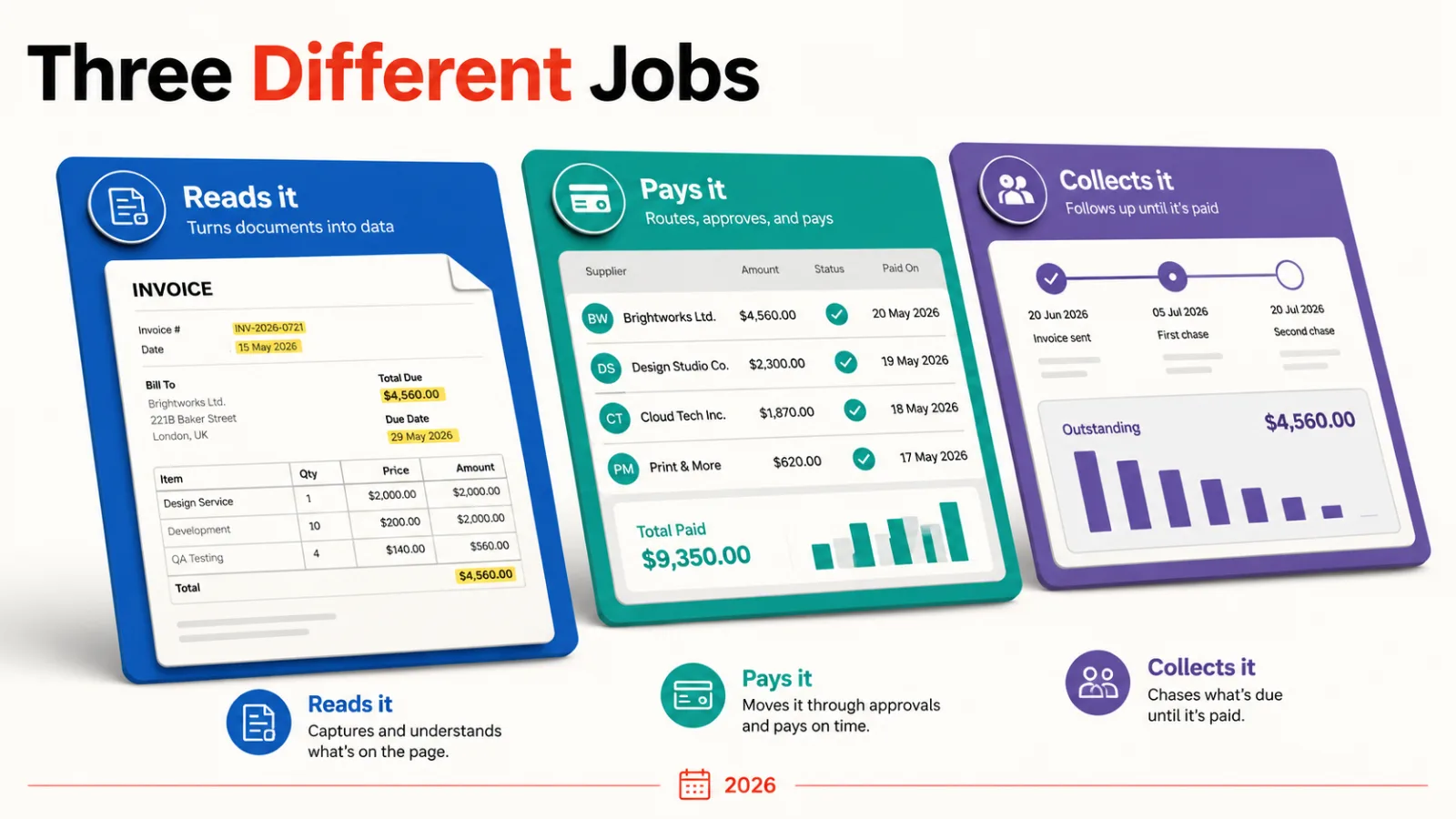
The eleven below split into three jobs that get confused with each other. Some read the document, some run the whole payable, and some chase the money you’re owed, and buying the wrong one is the usual mistake.
How this list is ordered, and what it leaves out
These eleven are ordered by our editorial rating, then by whether a free plan exists, then by starting price. That rating comes from comparing features, pricing and positioning against the rest of our finance and fintech catalogue.
We don’t push the same invoice batch through every platform, so you won’t find an accuracy percentage from us. Every price and limitation below comes from that product’s listing, and each listing carries its own last-reviewed date.
Two higher-rated tools are missing on purpose. ABBYY and DataSnipper both score above most of this list, but ABBYY is a general recognition suite and DataSnipper is audit software, and neither is invoice-first.
| Tool | Rating | Free plan | From | Main job |
|---|---|---|---|---|
| Parseur | 4.4 | Yes | $39 | Reads the document |
| Rossum | 4.3 | No | On request | Reads and routes it |
| Parsio | 4.1 | Yes | $24 | Reads the document |
| Vic.ai | 4.1 | No | On request | Runs the payable |
| Tabs | 4.1 | No | On request | Bills and collects |
| Booke AI | 4.0 | No | $20 | Books the entry |
| PredictAP | 4.0 | No | On request | Codes property invoices |
| Lido | 3.9 | See below | On request | Reads into a spreadsheet |
| Jinna.ai | 3.6 | Yes | $29.99 | Sends and chases |
| Numra | 3.6 | No | On request | Runs the payable |
| Exante | 3.5 | No | On request | Chases the money |
1. Parseur
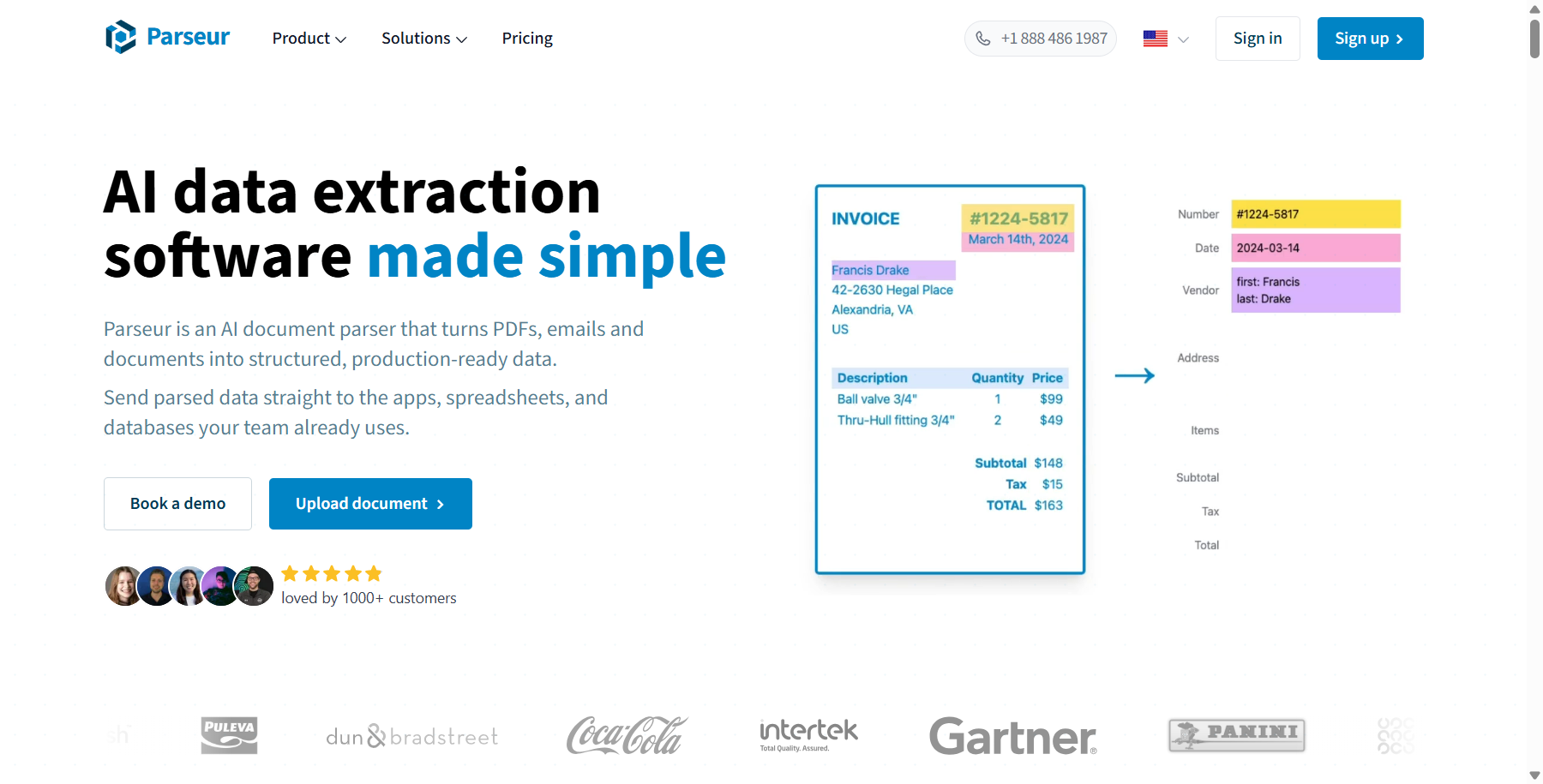
Parseur turns emails, scanned documents and images into structured data, running three extraction engines side by side: an AI parser, zonal recognition and plain text parsing. It has been operating since 2016.
Having three engines is the actual argument. Templated supplier invoices and freeform ones need different handling, and one approach alone leaves you re-keying whichever kind it can’t manage.
A free tier lets a small operation test extraction before paying, and plans start at $39 a month. Pricing is per page, so cost tracks document volume rather than seats, and it falls as usage grows.
Two costs worth knowing. High document counts get expensive on volume pricing, and credits expire each billing period on monthly plans, so a quiet month is money gone. Extraction on unfamiliar layouts still needs spot-checking.
2. Rossum
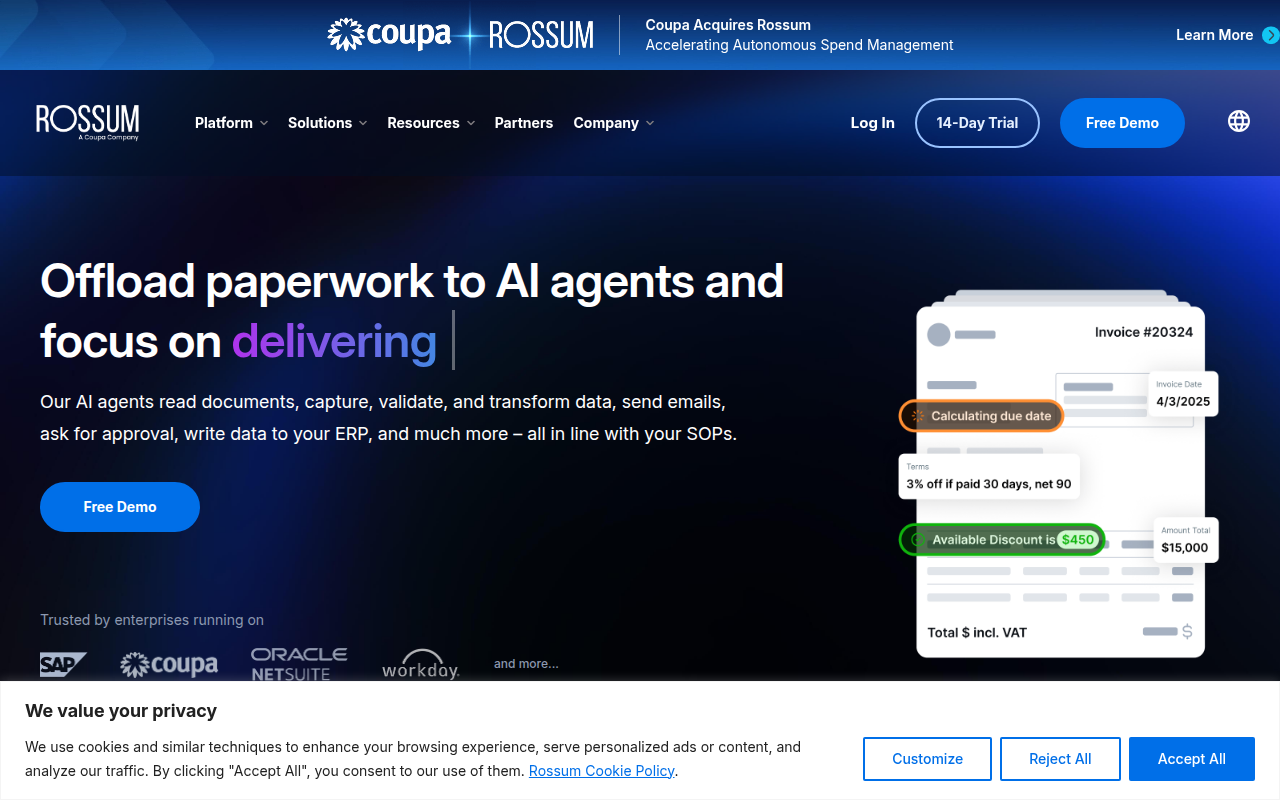
Rossum handles transactional paperwork end to end, reading invoices and orders, validating what it found, then writing the result into finance systems and routing exceptions to a person.
Covering the whole transaction is what separates it from extraction tools. Only genuine problems reach a human, which is a different promise from handing back a filled form for someone to check.
Worth knowing before you shortlist it. Its own site now carries a Coupa acquisition banner and its logo reads “A Coupa Company”, an ownership change our listing hasn’t caught up with. Roadmaps tend to follow the acquirer.
Nothing is published on price, and this is an enterprise implementation rather than something you sign up for. A small finance team will find the buying process heavier than the product.
3. Parsio
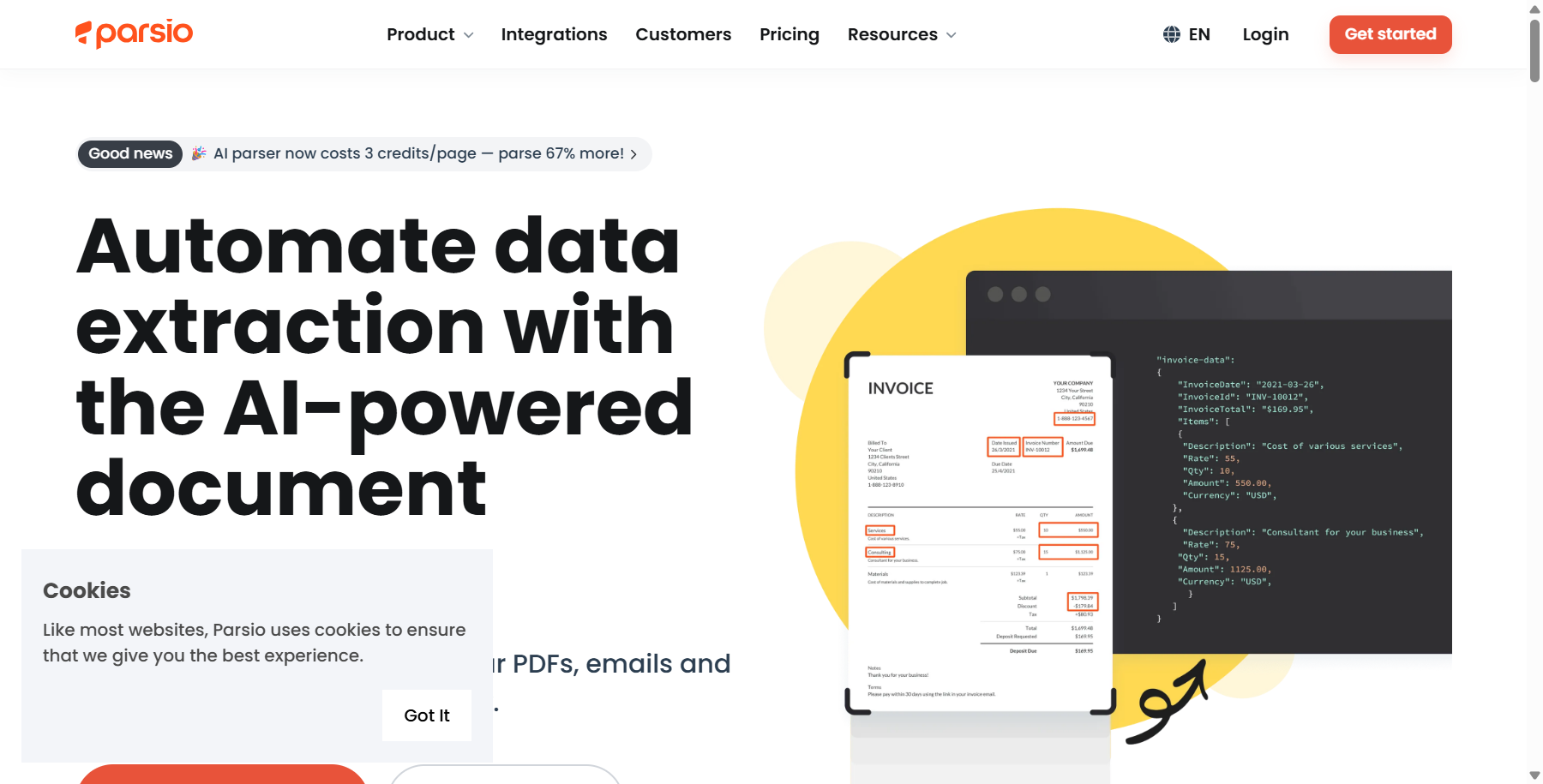
Parsio is a no-code parser that pulls structured data out of emails, invoices and business cards, with four parser types covering templated and freeform documents.
Its founder built it from an operational problem rather than wrapping a model, which shows in the setup. You point it at a repetitive document format and it learns the shape without anyone writing code.
A free sandbox plan is enough to validate a use case, and paid plans start at $24 a month. Costs run on credits, so the parser type you choose changes the price per document.
The model-powered parser costs more credits than template parsing, which matters at volume. It’s a smaller team than the category leaders, and inconsistent layouts still need manual tuning.
4. Vic.ai
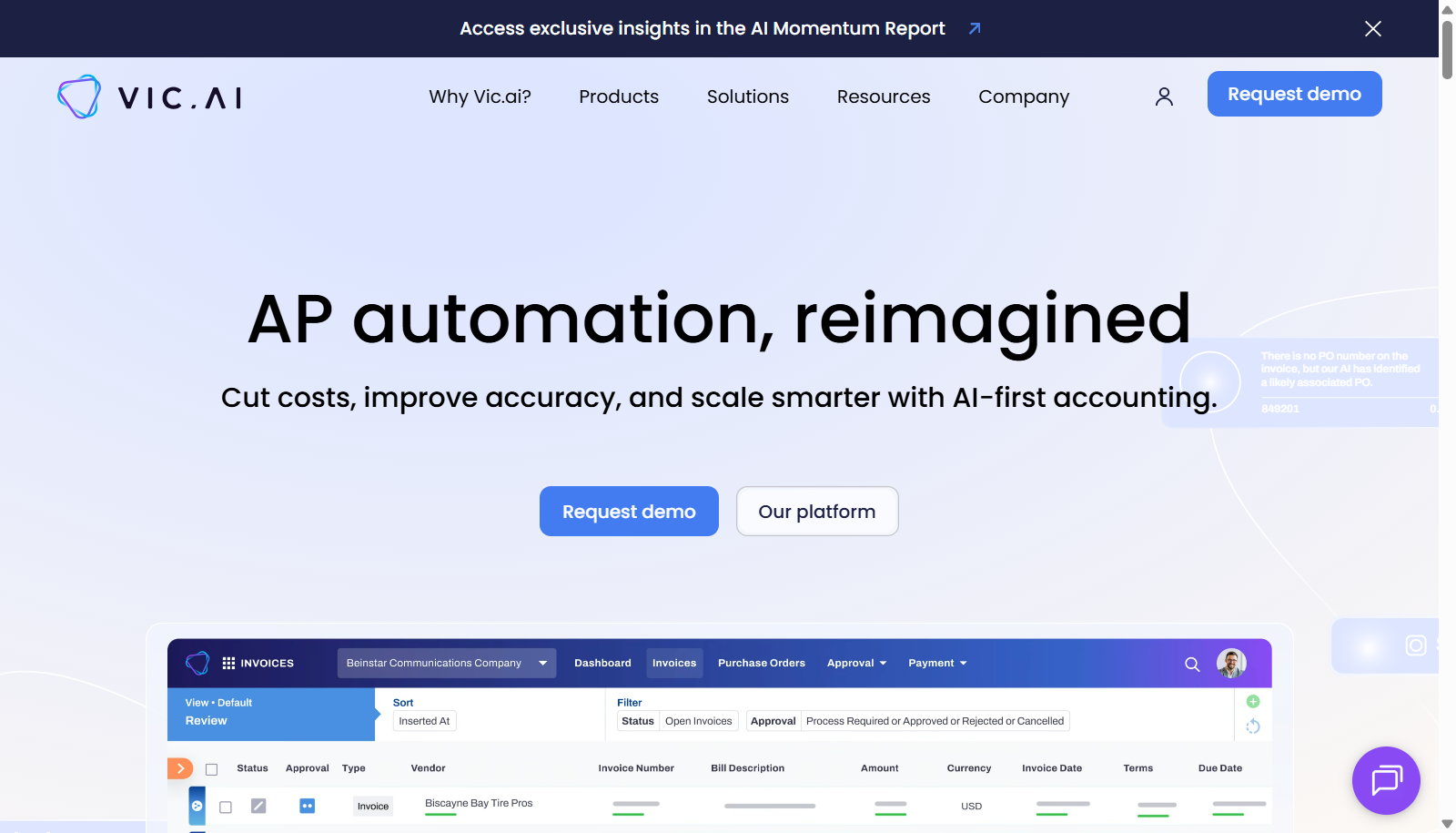
Vic.ai captures, codes, matches and routes supplier invoices for approval, and it was built for accounts payable specifically rather than finance generally. Two Norwegian founders started it in 2017.
Confidence scoring is the design decision that matters. The system escalates what it isn’t sure about instead of processing everything at one accuracy level and leaving you to find the errors afterwards.
Pricing runs through enterprise sales with no published figure, though a pilot program lets you test fit before committing to a contract. Backing comes from ICONIQ Growth and GGV Capital.
The narrow focus cuts both ways. It does one workflow properly, so a team wanting broader finance automation will need something alongside it, and its funding history is quieter than larger rivals.
5. Tabs
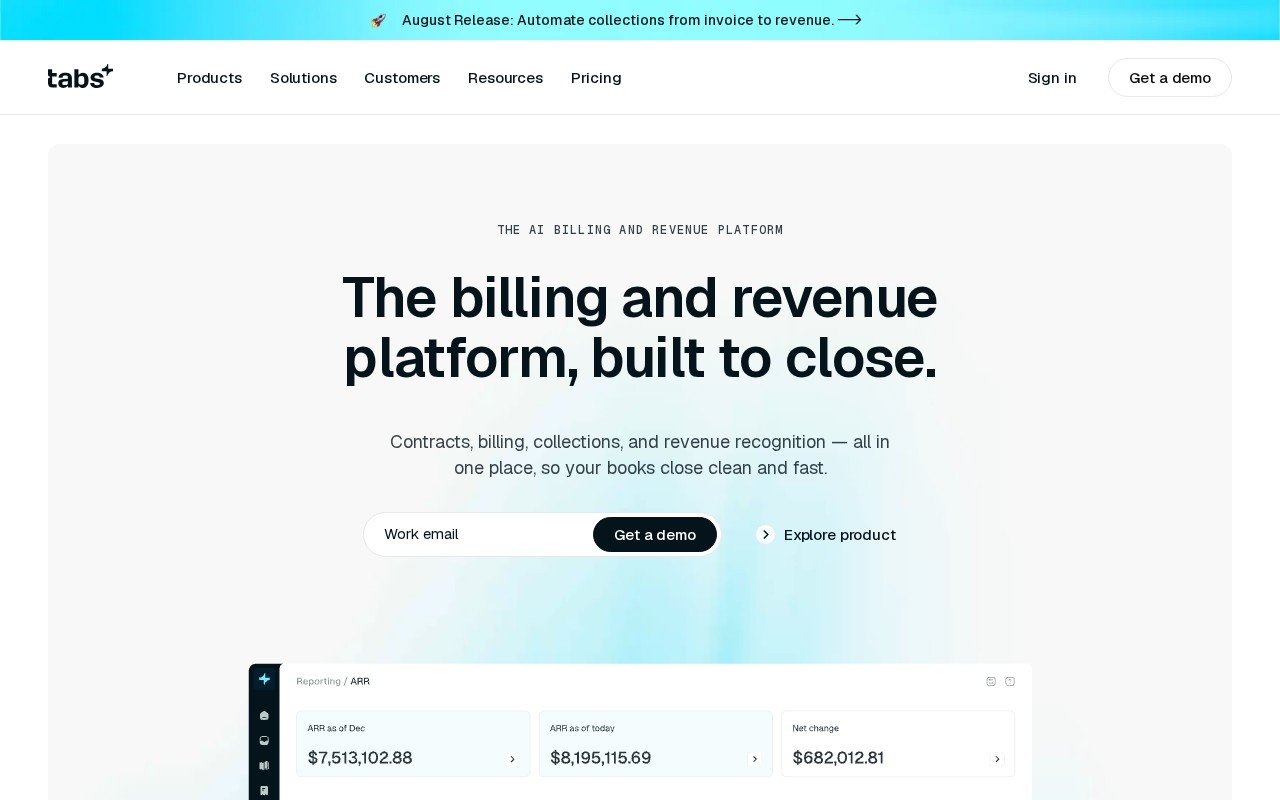
Tabs reads the signed contract, then bills against it, collects, and recognises the revenue. It covers usage-based, subscription and hybrid pricing in one system.
This is the outbound side of the problem, not the supplier side. It bills from the contract rather than from someone’s reading of the contract, which is where most billing disputes start.
No pricing is published. Deployment is measured in weeks rather than quarters, which is quick for something sitting this close to revenue.
Extracted contract terms still need human sign-off in an audited process, so it doesn’t remove the review. It’s also hard to migrate away from once invoices run through it, which is worth weighing before you start.
6. Booke AI
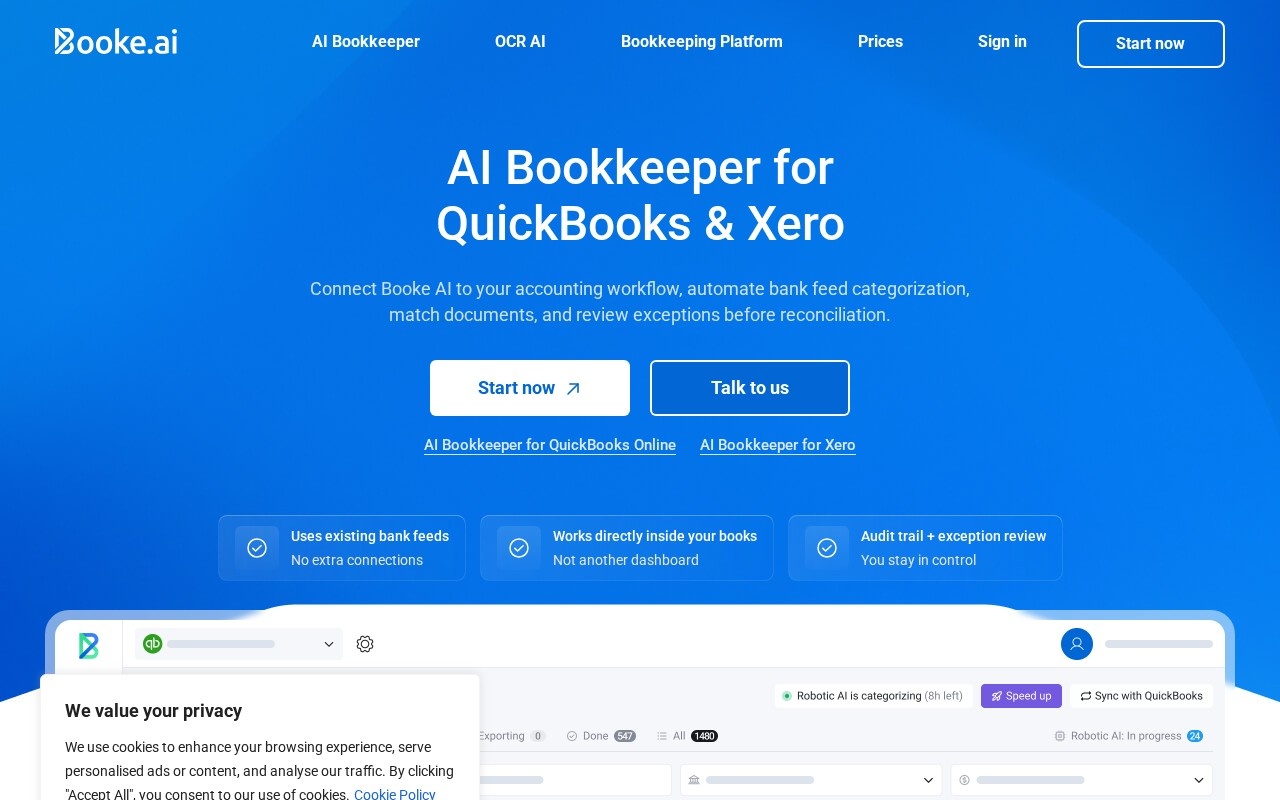
Booke AI works inside QuickBooks and Xero, reading invoices and receipts, categorising transactions against a firm’s chart of accounts and reconciling the result. It started in 2020.
It’s aimed at bookkeeping firms rather than finance departments. Categorisation improves from the firm’s own corrections rather than a generic model, and it drafts the client messages that chase ambiguous transactions.
Pricing starts at $20 and runs per client, which scales cleanly for a firm adding and dropping clients monthly. There’s no long-term contract and no prepayment.
There’s no free tier, so you pay from the first client. Per-client fees compound across a large roster, and it supports QuickBooks and Xero only, which rules it out on any other platform.
7. PredictAP
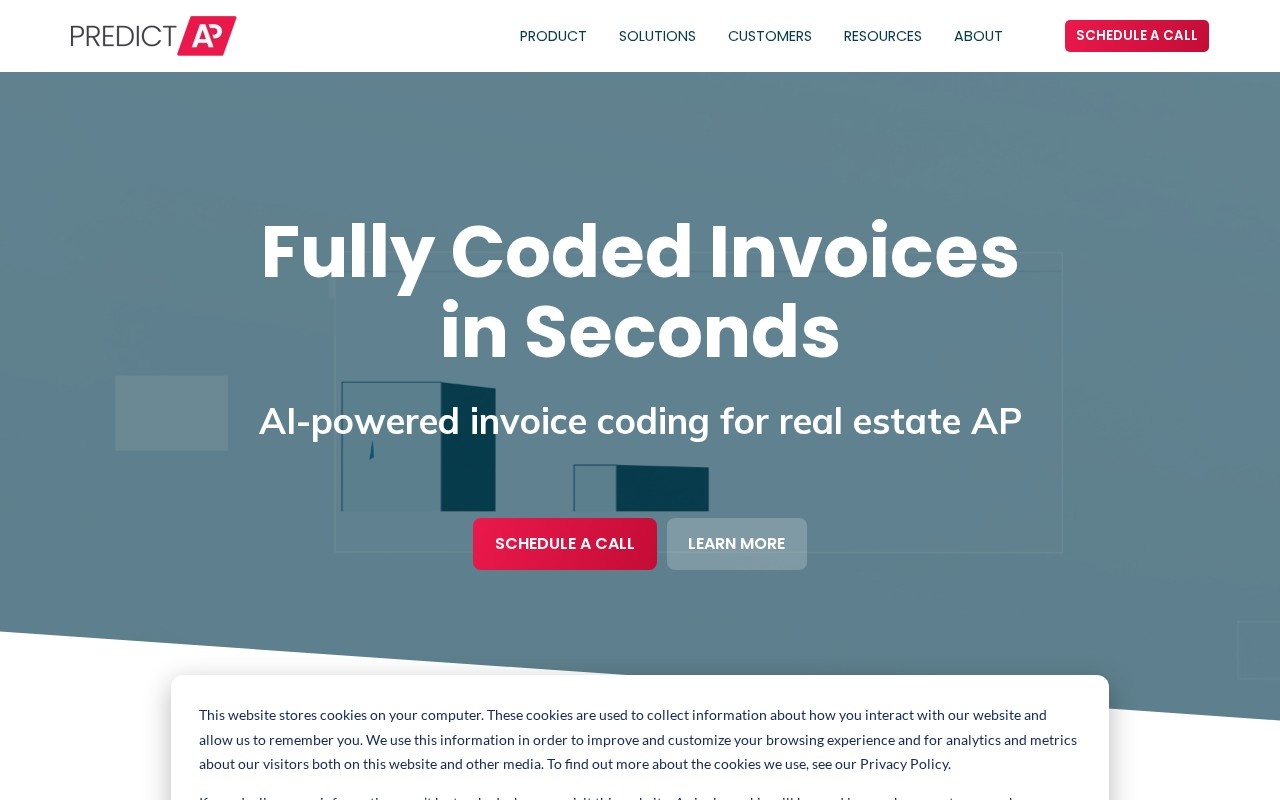
PredictAP codes real estate invoices automatically the moment they’re uploaded, and it plugs into Yardi Payscan and Nexus Payables, the systems property teams already run.
The narrowness is the point. Property invoice coding is high volume and rule-governed, exactly the shape of work automation handles well. Coded invoices still route to a person for approval.
Nothing is published on price. Its listing records roughly 45 seconds per invoice, and that figure is the vendor’s own rather than anything measured independently.
It’s tied to a specific software stack, so it’s the wrong tool outside real estate. If your team doesn’t run Yardi or Nexus, most of the integration value disappears.
8. Lido
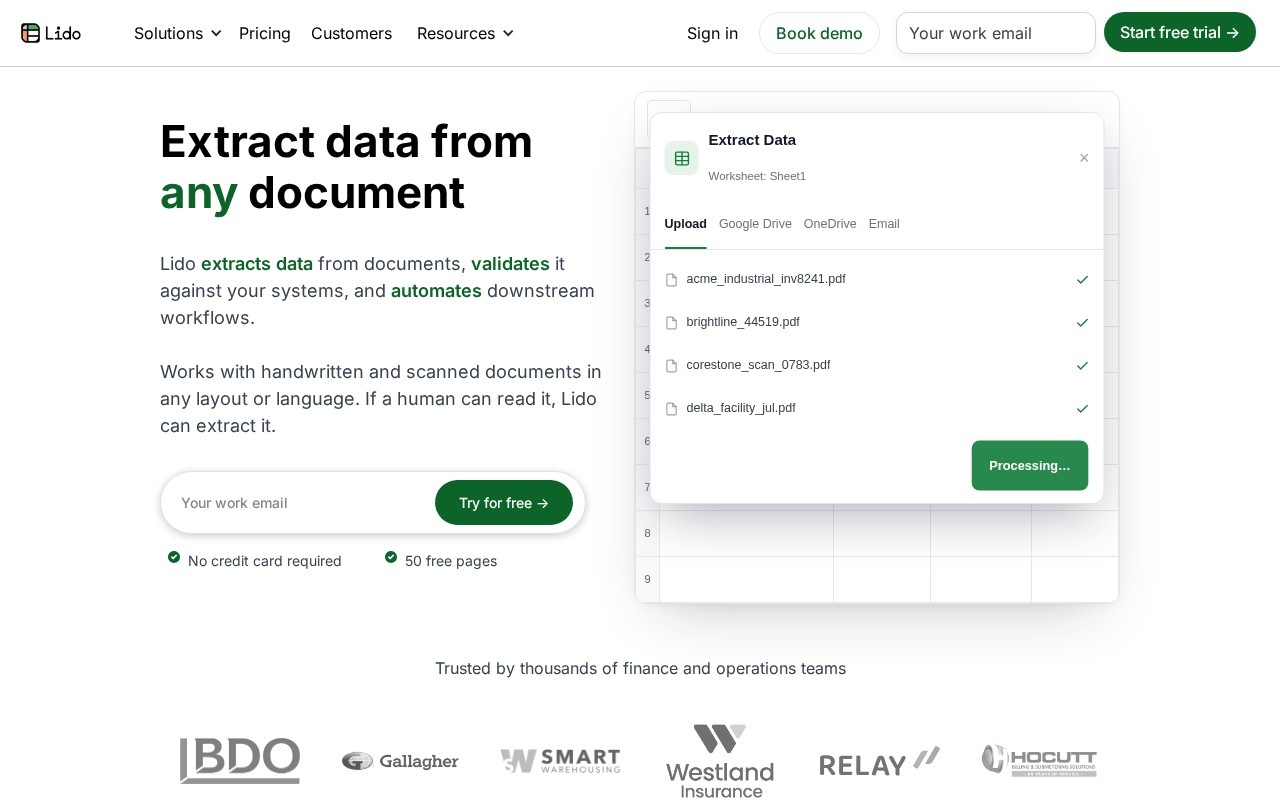
Lido pulls data out of scanned documents and into a spreadsheet. It knows specific document types rather than extracting generically: invoices, purchase orders, bank statements and bills of lading.
Landing output in a spreadsheet suits a finance team that already works there. It also offers compliant processing for regulated documents, which narrows the shortlist quickly if that applies to you.
Check the free allowance yourself before budgeting. Lido’s site advertises 50 free pages with no card required, while our listing records no free tier, and we haven’t reconciled the two.
Accuracy falls off on poor scans and unusual layouts, which is true of everything here but worth restating. Output needs checking before it reaches an accounting system.
9. Jinna.ai
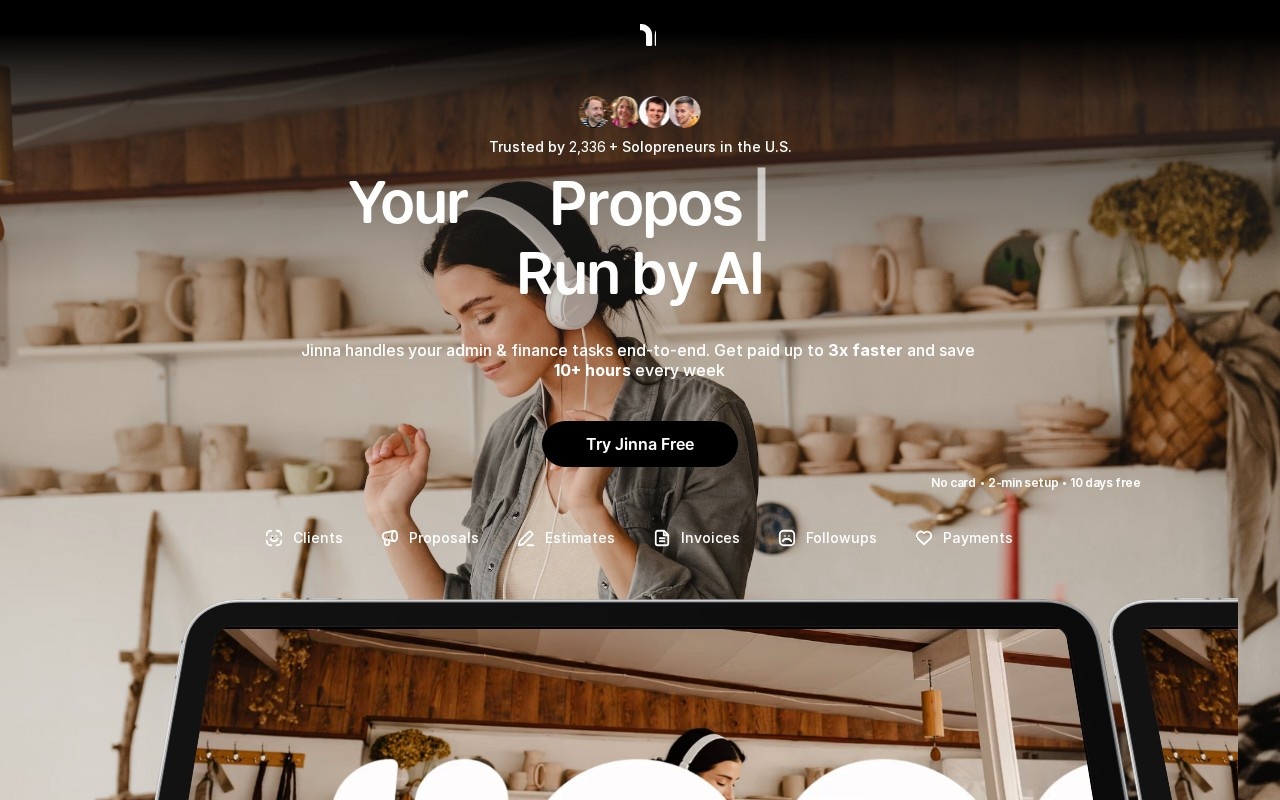
Jinna.ai is built for solopreneurs rather than finance teams. It drafts, sends and chases invoices, and you can create one by voice, by typing, or by uploading a file.
Chasing is the part worth paying for. The follow-ups are written for you and the tone is adjustable, which is the job most freelancers avoid until the money is badly late.
A free plan covers real usage rather than one trial invoice, and paid plans start at $29.99 a month. Payment links are built into every invoice.
It’s the youngest product here, incorporated in 2025, so the track record is short. The free plan caps at four invoices a month, which a busy freelancer passes quickly.
10. Numra
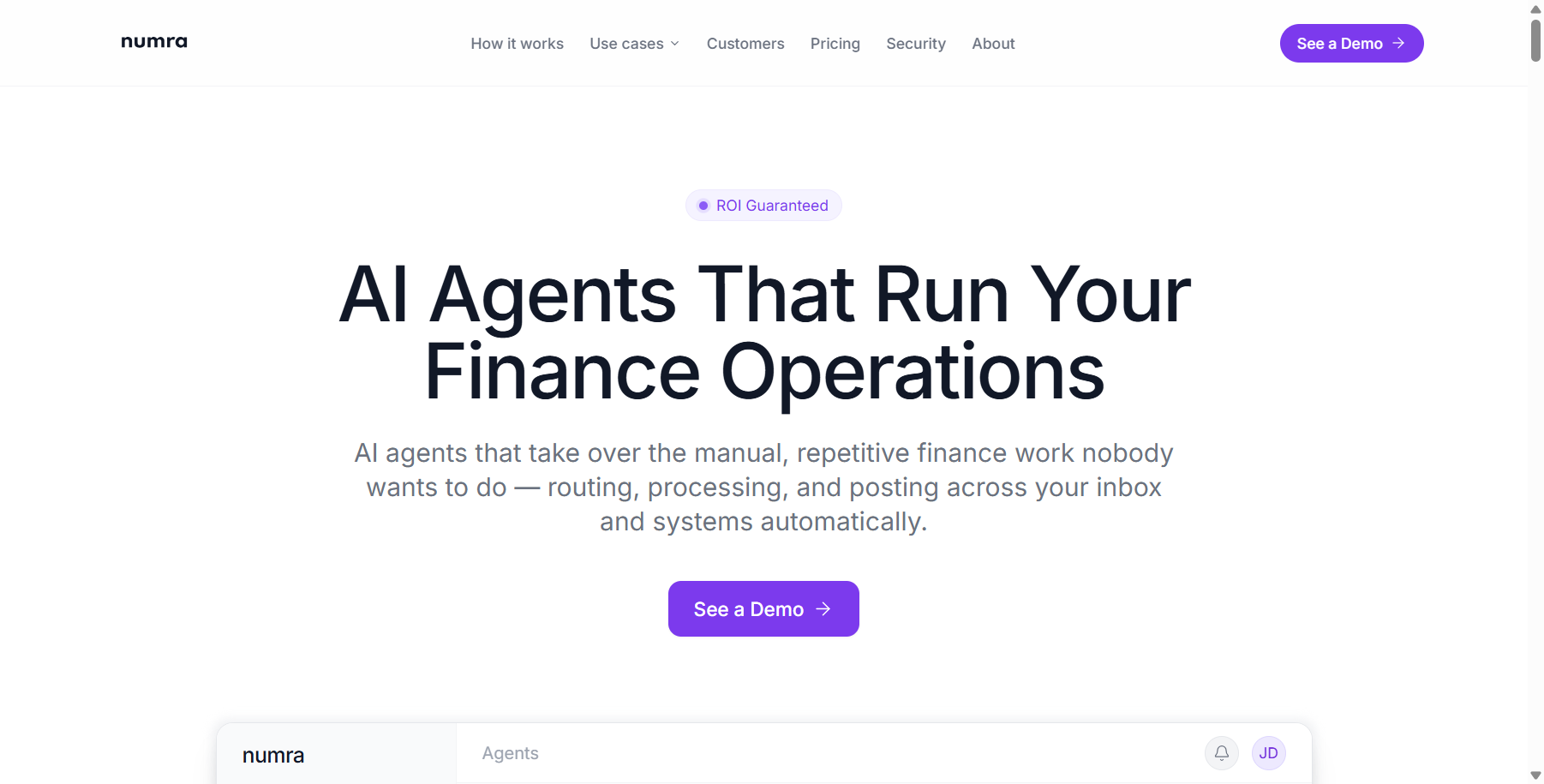
Numra runs a named finance assistant called Mary across payable and receivable work, processing invoices, routing payments and handling reconciliations from the inbox into your systems.
It works inside the finance systems you already run rather than asking you to move onto a platform. That keeps the adoption cost low, which matters more than feature count on a small team.
Nothing is published on price, and the company sells on demonstrated return before signing. It raised a small round, roughly $1.6 million, which is modest for this category.
Founded in 2023 under a different name, so brand recognition is still building. The narrow payable and receivable focus means larger teams need other tools for the rest of finance.
11. Exante
Exante chases unpaid invoices so nobody has to make that call. It works the full cycle from sent to paid, including the replies and disputes that come back.
Handling responses is what separates it from a reminder schedule. Answering a query about a disputed line is what shortens the cycle, and it’s the part a calendar reminder never covers.
No rates are published and pricing needs a demo. It’s the lowest-rated entry here, which reflects how narrow the job is rather than how well it does it.
Its own listing names the honest limit: most late payment is the customer’s cash position, not a missing reminder. Automated chasing can also strain a relationship if the tone or timing is wrong.
How we rate these
Our rating comes from comparing published features, pricing and positioning against the rest of the finance catalogue. It isn’t a lab score, and we don’t run one invoice batch through all eleven to produce it.
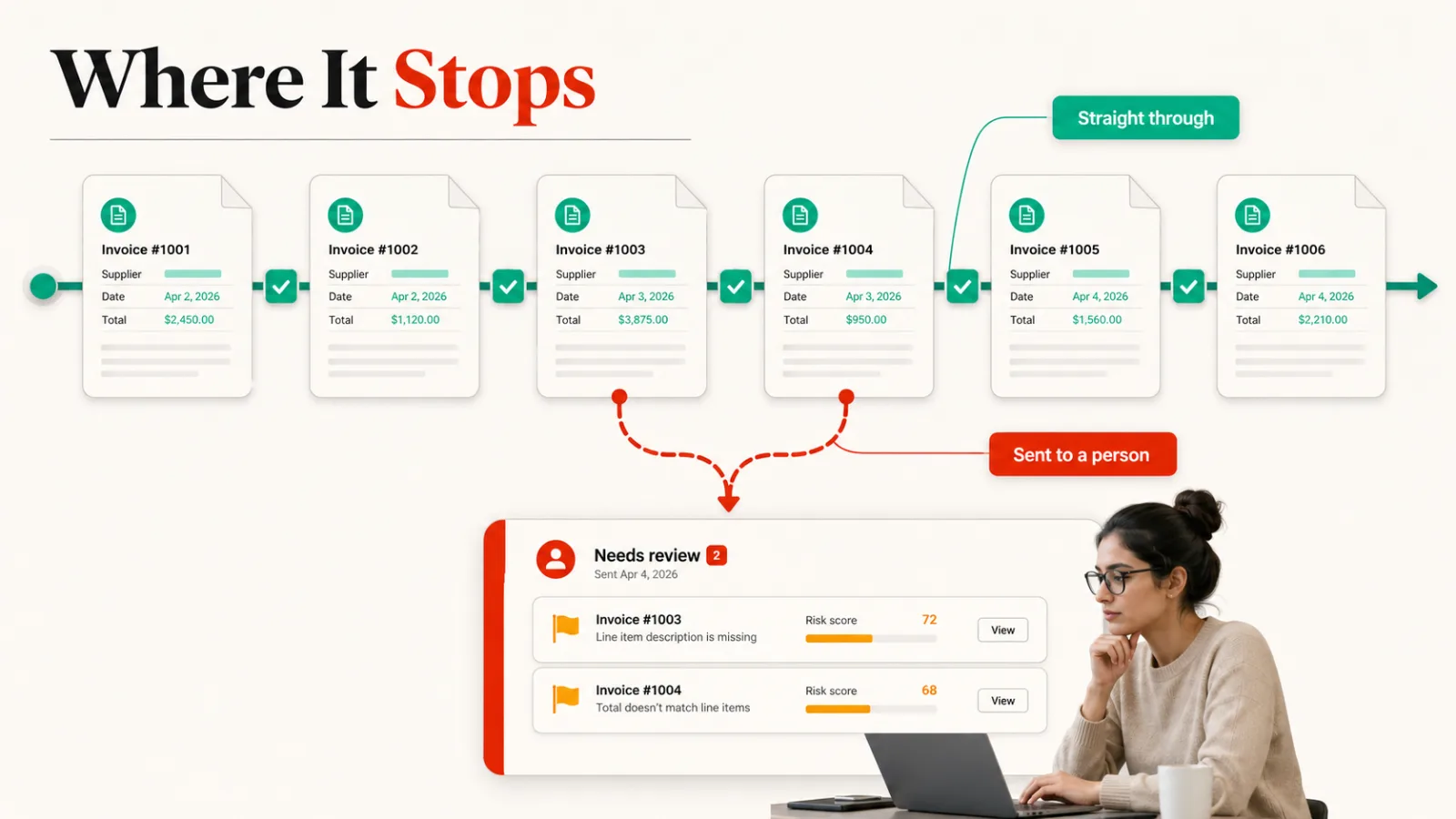
What would be worth measuring is straight-through rate: the share of invoices that reach payment with nobody touching them. Every vendor here implies a number and none publishes a comparable one.
We verified each product was live within the last six weeks. Exante’s listing is the most recent, checked on 20 August 2026, and PredictAP’s stated 45 seconds per invoice is the vendor’s own figure.
What to check before you buy
- Money flow: supplier bills coming in, or your invoices going out, are different products.
- Price model: per page, per client, per seat or quoted, and each scales differently.
- Free access: real on three of eleven, and worth confirming on the vendor’s own page.
- Platform fit: some support QuickBooks and Xero only, others expect a larger system.
- Exceptions: what happens to a document the system can’t read confidently.
- Exit: how invoice history comes back out if you leave.
How to choose between them
Start with which direction the money moves. Supplier bills point you at Vic.ai, Rossum, PredictAP or Numra, while your own invoicing points at Tabs, Jinna.ai or Exante.
If the real problem is re-keying rather than approvals, you want extraction and not a payable platform. Parseur, Parsio and Lido all do that job, and two of them let you test free.
Watch the pricing shape as much as the number. Seven of these eleven quote through sales, so budget for a process rather than a card payment. Volume pricing rewards growth, while per-client pricing punishes a big roster.
Our roundup of AI workflow automation tools covers the wider automation layer. If the document side is new to you, the different types of invoices is worth reading first.
Questions buyers ask
What is invoice automation software?
Invoice automation software reads an invoice, pulls out the fields that matter, and pushes them into an accounting or payment system without anyone typing them. Some tools stop at reading, and others run approval and payment too.
Which of these have a free plan?
Three: Parseur, Parsio and Jinna.ai. Lido’s site advertises 50 free pages while our listing records none, so check that one directly. The remaining seven all quote through a sales conversation.
Do these replace a bookkeeper?
No, and the listings don’t claim it. They remove data entry, coding and chasing. Deciding what an unusual invoice means, and whether it should be paid at all, stays with a person, which is why the better tools route exceptions to one.
How accurate is the extraction?
Accurate enough on clean, familiar layouts and less so on poor scans or unfamiliar suppliers. No vendor here publishes a figure you can compare, so treat any accuracy claim as marketing until you’ve run your own documents through a trial.
What does invoice automation cost?
Published pricing here runs from $20 to $39 a month, and the model matters more than the number: per page, per client or per seat. Seven of the eleven publish nothing and quote after a demo.
Is one tool enough, or do I need two?
One is enough if the money moves in a single direction. A business with heavy supplier bills and slow-paying customers has two separate problems, and no tool here covers both ends well.