AI motion capture tools are transforming how VR developers create realistic character animation — capturing human movement and translating it into virtual characters faster, more accurately, and with less specialized hardware than traditional mocap required.
How AI Enhances Motion Capture for VR
AI contributes in a few concrete ways: real-time performance capture from video or sensor data (cutting post-production time), automatic retargeting of captured motion onto different character rigs, motion synthesis that blends and recombines existing clips into new animations, and facial capture systems accurate enough to preserve subtle expressions rather than flattening them into generic animation.
Benefits
The real gains fall into four areas. Realism: AI captures subtler movement and facial nuance than older systems, producing more lifelike characters. Efficiency: automated data cleaning, retargeting, and real-time capture cut production time significantly compared to manual mocap pipelines. Creative flexibility: motion synthesis and style transfer let you generate new animations by blending and remixing existing captures rather than shooting everything from scratch. Accessibility: markerless, remote-capable capture (no suit, no dedicated studio) has brought real mocap capability within reach of solo developers and small studios that couldn’t previously afford it.
Top 20 AI Motion Capture Tools for VR Development
Xsens MVN
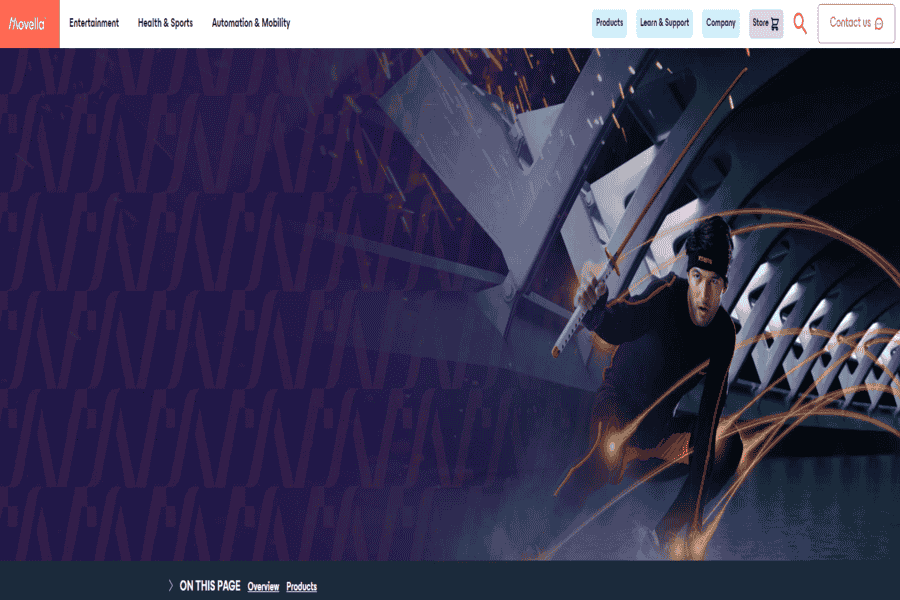
Xsens MVN offers a professional motion capture solution that utilizes AI to capture high-fidelity body movements for VR and 3D animations.
Benefits:
Highly accurate motion data, real-time processing, and easy integration with VR platforms.
Pricing Package:
Starts at $12,000/year.
Rokoko Studio

An intuitive motion capture tool that uses AI to track body movements with Rokoko’s Smartsuit Pro and Smartsuit Glove.
Benefits:
Real-time streaming is VR-ready and cost-effective for indie developers.
Pricing Package:
Smartsuit Pro starts at $2,495; Rokoko Studio subscription starts at $24/month.
Perception Neuron
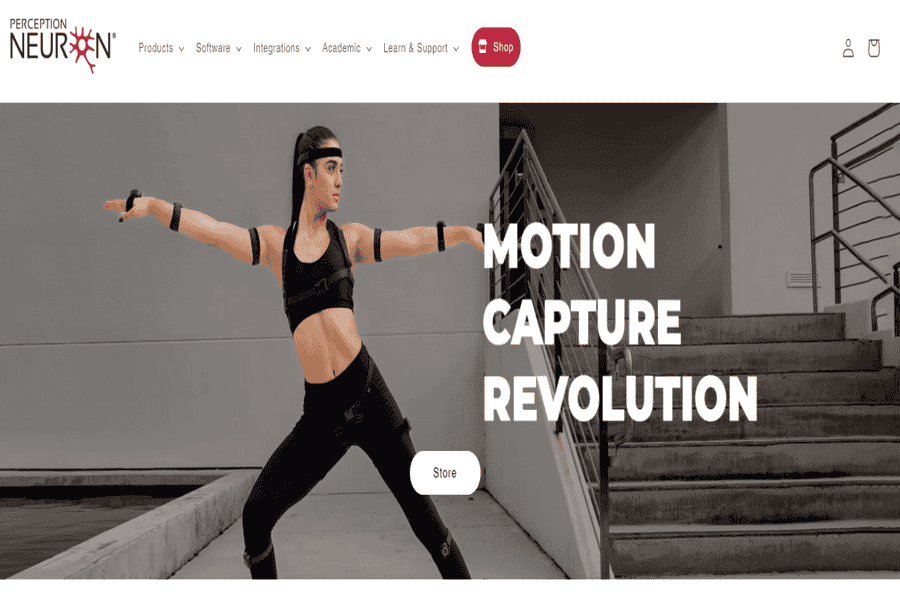
Perception Neuron offers an affordable and flexible mocap system ideal for VR, powered by AI for high-accuracy motion capture.
Benefits:
Portable, flexible sensor configurations, affordable entry-level pricing.
Pricing Package:
Starts at $1,499.
Vicon Shōgun
Vicon Shōgun provides high-end optical motion capture solutions, perfect for VR and large-scale projects.
Benefits:
Industry-standard precision, real-time tracking, and multi-user capability.
Pricing Package:
Custom pricing.
Qualisys Motion Capture
A robust motion capture solution that combines AI-powered software with high-quality cameras for VR-ready captures.
Benefits:
Extremely precise data, large-area tracking, and integration with VR engines.
Pricing Package:
Custom pricing.
MotionBuilder
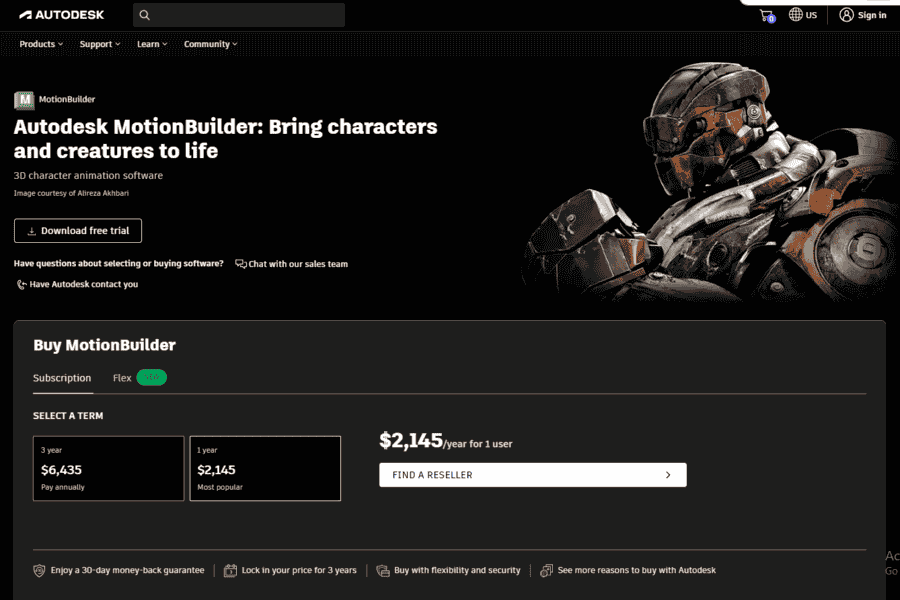
Autodesk’s MotionBuilder is a powerful AI-enabled software for refining and editing motion capture data for VR and 3D animation.
Benefits:
Advanced motion editing, animation layering, and VR integration.
Pricing Package:
Starts at $1,950/year.
Notch
Benefits:
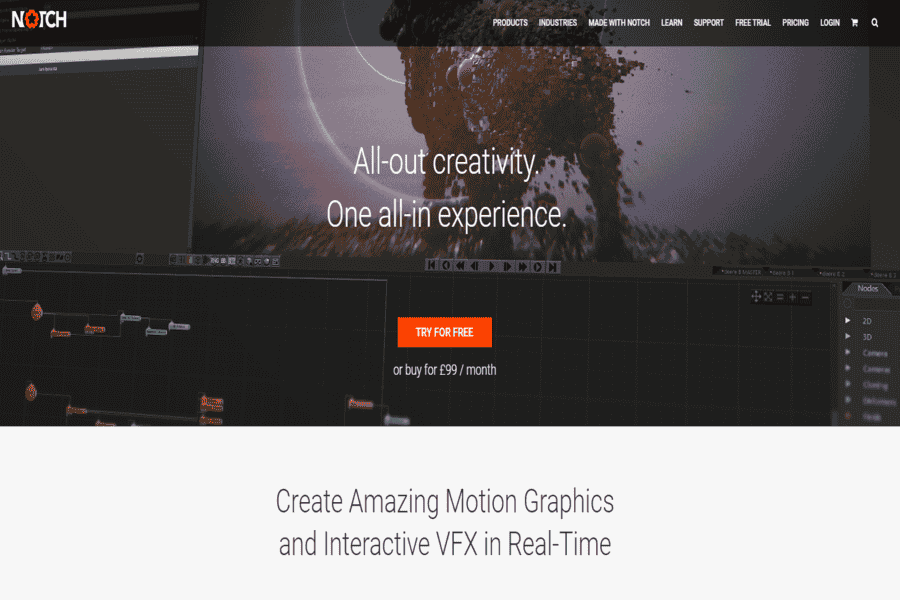
Notch is an AI-powered real-time motion capture and graphics tool ideal for VR and live events.
Real-time feedback, intuitive interface, highly customizable.
Pricing Package:
Starts at $99/month.
OptiTrack
OptiTrack offers precise optical motion capture systems that use AI algorithms for robust VR-ready data capture.
Benefits:
High accuracy, real-time streaming, scalable for large spaces.
Pricing Package:
Custom pricing.
iPi Motion Capture
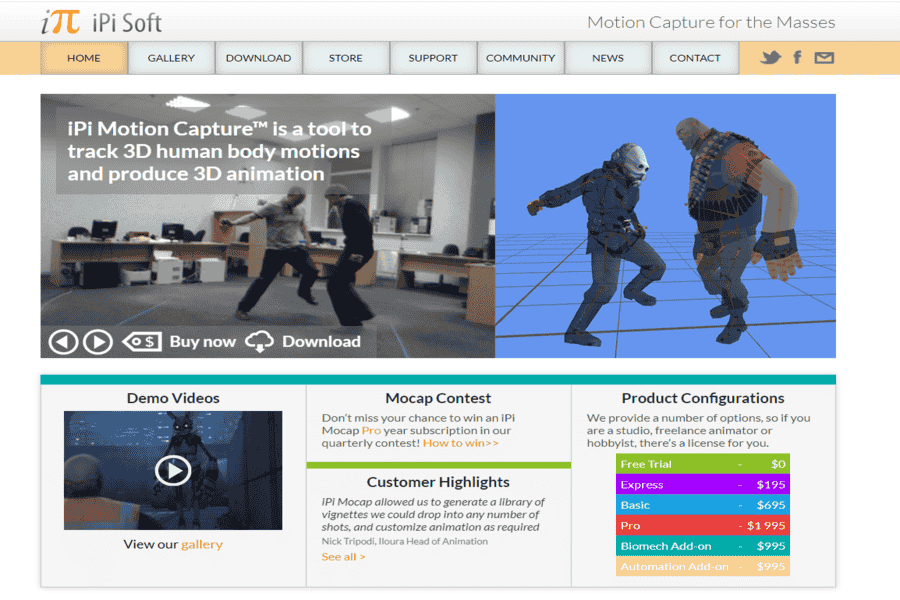
A markerless motion capture software using AI to track full-body movements, ideal for VR and indie projects.
Benefits:
No suit or markers are needed, affordable, or accessible.
Pricing Package:
Starts at $165/year.
DeepMotion
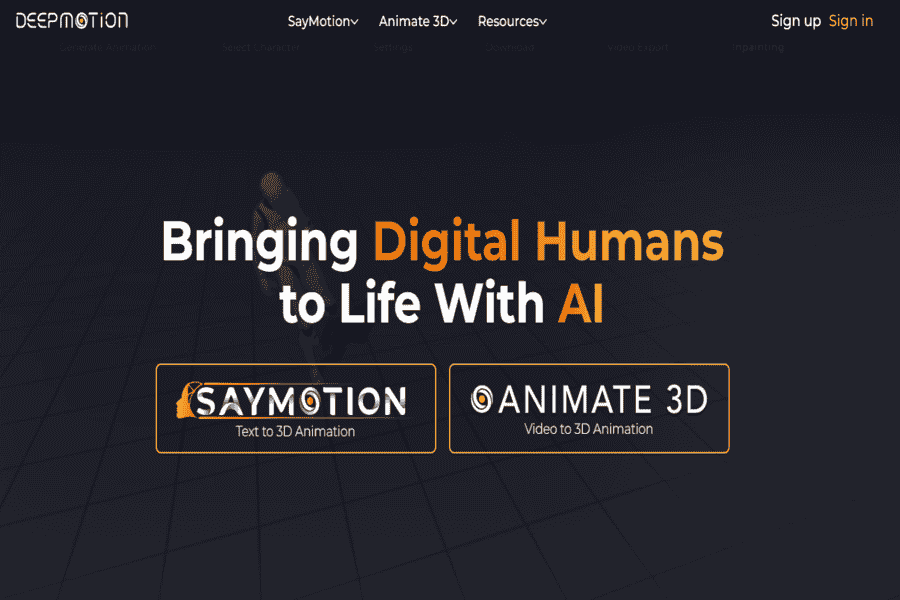
DeepMotion offers AI-powered markerless motion capture and animation services, providing data ready for VR development.
Benefits:
Markerless, easy-to-use, AI-powered tracking, cloud-based.
Pricing Package:
Starts at $20/month.
Faceware Studio

Specializing in facial capture, Faceware Studio uses AI to create highly accurate facial animations for VR avatars.
Benefits:
Realistic facial expressions and real-time performance are integrated well with VR software.
Pricing Package:
Starts at $2,995.
Kinect for Azure (discontinued)

Status update: Microsoft discontinued the Azure Kinect DK hardware in October 2023, and the Body Tracking SDK is deprecated with no further updates. Existing units still work, but this isn’t a viable choice for a new project — consider OptiTrack, Xsens MVN, or Move.ai above/below for active alternatives with ongoing support.
Benefits (historical):
Was affordable, integrated with Azure cloud, and had reliable body-tracking accuracy while it was sold and supported.
AI Pose Estimation by Google

Open-source AI model that estimates human poses from images or video for VR motion capture purposes.
Benefits:
Free, markerless tracking, suitable for custom VR applications.
Pricing Package:
Free.
Manus Prime II Gloves
AI-powered VR gloves by Manus are used for precise hand and finger tracking in VR and mocap applications.
Benefits:
High-fidelity finger tracking, VR integration, ergonomic design.
Pricing Package:
Starts at $2,990.
Cubemos Skeleton Tracking

AI-powered software that provides full-body skeletal tracking using regular 2D cameras.
Benefits:
Markerless, quick setup, suitable for small VR projects.
Pricing Package:
Starts at €49/month.
NaturalPoint Motive
High-performance optical motion capture software is powered by AI algorithms for VR applications.
Benefits:
Real-time tracking, robust data capture, and precise measurements.
Pricing Package:
Custom pricing.
VRChat SDK
VRChat’s AI-powered SDK enables full-body tracking for user-created VR experiences within VRChat.
Benefits:
Free, integrated VR platform with great community resources.
Pricing Package:
Free.
Leap Motion (Ultraleap)
An AI-driven motion sensor for capturing hand and finger movements in VR applications.
Benefits:
Affordable, precise hand tracking, lightweight setup.
Pricing Package:
The controller starts at $109.
Move.ai

Note: this slot previously listed “Lightstorm Entertainment VR Tools,” but James Cameron’s Lightstorm Entertainment is a film production studio, not a company that sells motion capture software — that entry didn’t point to a real product. Replaced with Move.ai, an AI-powered markerless motion capture platform that works from ordinary video (no suits or markers required), with tiers from single-camera to studio-grade multi-camera setups.
Benefits:
No mocap suit or markers needed — capture from regular video; scales from solo indie use up to studio-grade multi-camera rigs.
Pricing Package:
Move One starts around $50/month for individuals; Move Pro, Move Live, and the enterprise Genesis tier are custom-priced.
VRMocap
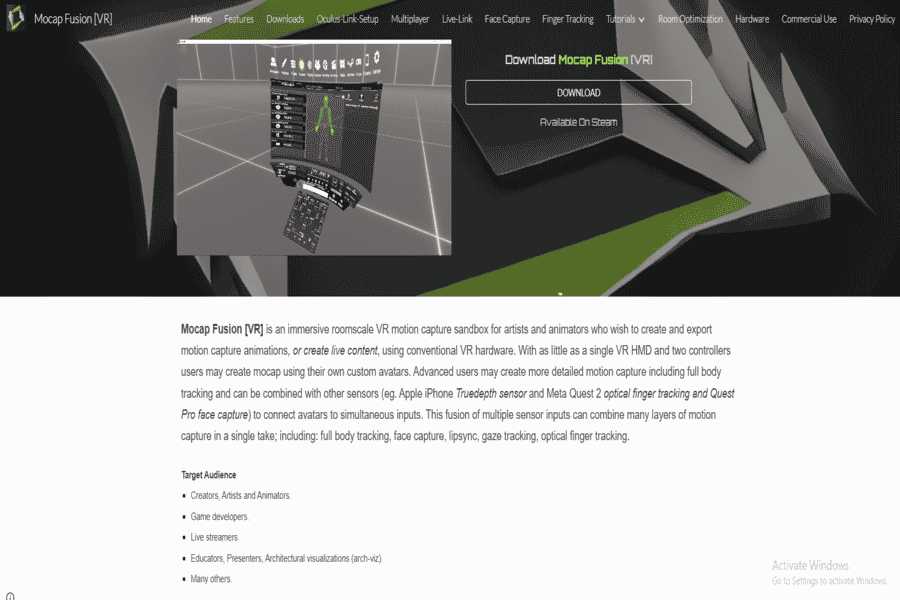
VRMocap provides AI-based motion capture for VR developers with a simple setup and real-time streaming.
Benefits:
Easy to use, affordable, VR integration.
Pricing Package:
Starts at $19.99/month.
Challenges and Where This Is Headed
The real technical hurdles: high-fidelity capture still often needs specialized (and expensive) hardware, real-time processing of motion data is computationally demanding, and noise or occlusion in the capture environment degrades data quality, requiring real cleanup work. On the AI side, models need substantial quality training data, don’t always generalize well to unusual movement or environments, and raise genuine ethical questions around data privacy and the potential to misuse captured likeness or performance data — worth a real policy, not an afterthought, if you’re capturing real people. AI itself helps with some of this (noise reduction, data augmentation to diversify training sets), but doesn’t eliminate the underlying tradeoffs.
Where this is headed: more real-time capture and remote collaboration (teams working on the same mocap project from different locations), AI-driven motion synthesis advancing toward generating animation from simple text or sketch input rather than requiring a full capture session, increasingly subtle facial and micro-expression capture, and smarter automatic retargeting that adapts captured motion to new characters and environments with less manual cleanup. Data privacy and ethical-use frameworks will need to mature alongside the capability — capturing someone’s exact likeness and movement raises real consent and misuse questions that get more pressing as the technology gets more convincing.
Conclusion
AI motion capture tools are poised to redefine the future of VR development. By automating complex tasks, improving accuracy, and unlocking new creative possibilities, these tools empower developers to create more immersive and realistic VR experiences. As AI technology advances, we can anticipate even more innovative and powerful tools that will push the boundaries of virtual reality.