The best AI voice assistants now do more than answer questions. They route support calls, summarize meetings, control smart-home devices, and handle simple work tasks while you keep your hands free. An AI voice assistant is software that listens to spoken input and responds with speech or action, ranging from consumer helpers like Siri to enterprise voice agents that resolve customer calls end to end. The right pick depends entirely on the job you need done: customer support, natural conversation, smart homes, meeting notes, research, or content work. This roundup ranks 15 leading options by use case, with pricing and free-tier notes where the research confirms them, so you can match one to your workflow fast.
How We Picked and Ranked These AI Voice Assistants
This shortlist is built around the jobs readers actually hire a voice assistant for: open-ended conversation, customer-support automation, smart-home control, meeting transcription, and hands-free productivity. We ordered the list so the assistants that solve the most common voice-AI jobs sit near the top, with enterprise voice agents and niche consumer tools placed by genuine fit rather than brand familiarity.
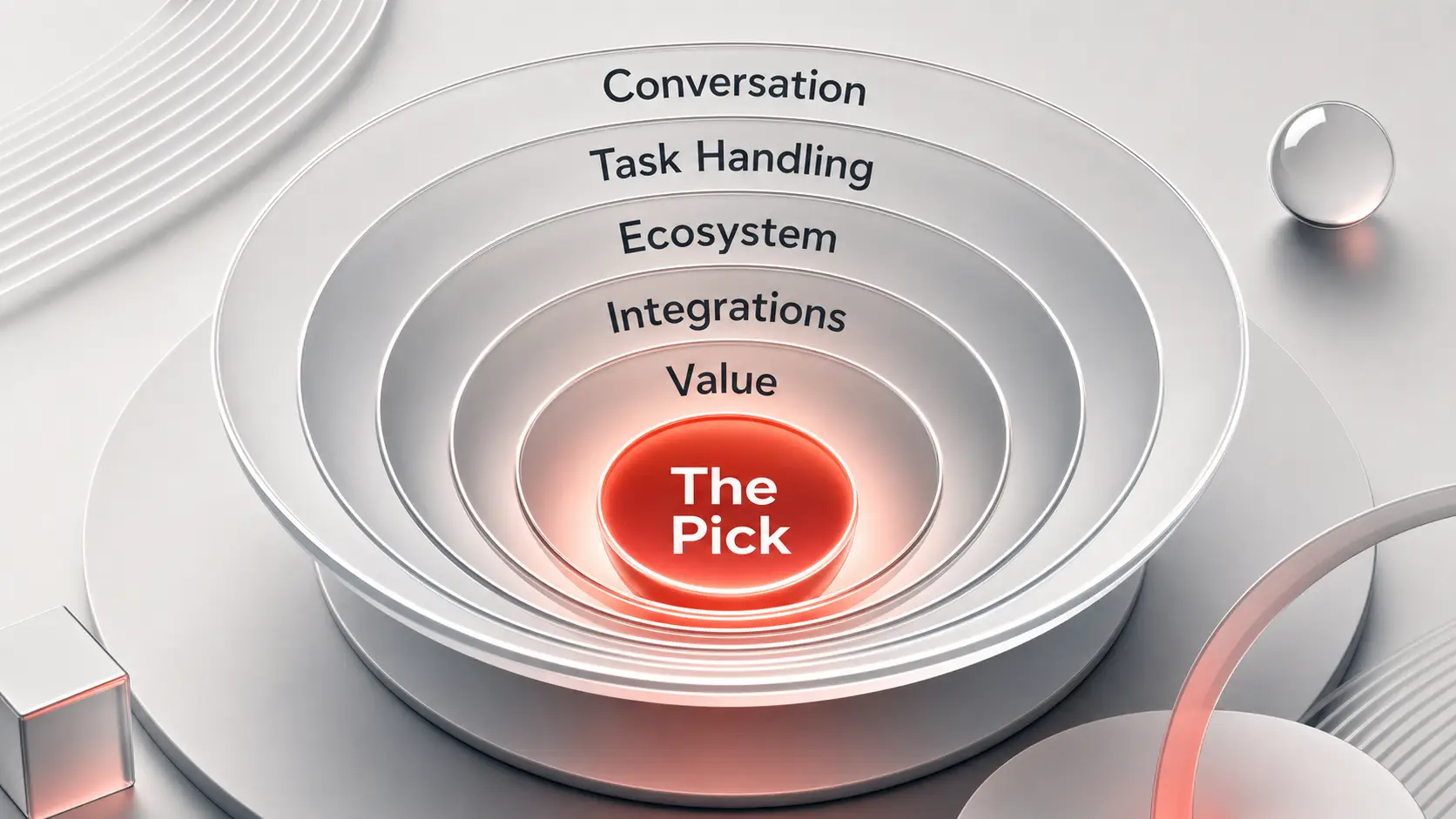
The ranking lens follows five criteria seen across the strongest competing roundups:
- Conversation quality and how natural the back-and-forth feels
- Task handling, meaning whether the assistant answers or actually executes
- Ecosystem compatibility and how well it fits the apps you already use
- Integrations with third-party tools and channels
- Value for money against the pricing or trial the tool offers
The list mixes consumer assistants and enterprise voice agents on purpose, because the search results for this topic mix both. One honest caveat up front: several enterprise tools here use contact-sales pricing, so you cannot compare their exact cost the way you can with a $20 consumer plan.
Best AI Voice Assistants at a Glance
Here is the full shortlist in rank order, with the core decision data you need to scan fast. Contact-sales tools show their pricing model rather than an invented figure.
| Name | Best For | Starting Price |
|---|---|---|
| Zendesk voice AI agents | Customer-service automation | Contact Zendesk |
| PolyAI | Voice-first call handling | Contact PolyAI |
| Siri | Apple device users | Free |
| Alexa | Smart-home control | Free for Prime; $19.99/mo otherwise |
| Google Assistant | Call assistance on Android | Free |
| Gemini | Natural conversation | $19.99/month (Pro) |
| Bixby | Samsung device control | Free |
| Otter.ai | Meeting notes and transcripts | $8.33/user/month |
| ChatGPT With Voice | General conversation | $20/month (Pro) |
| Perplexity | Cited research | $20/month (Pro) |
| Microsoft Copilot Voice | Hands-free productivity | $20/user/month |
| Meta AI | Social-app interactions | Free |
| Jasper AI | Marketing content | $59/seat/month |
| Spitch | Enterprise omnichannel | Contact Spitch |
| VOCALLS | Contact-center automation | Contact VOCALLS |
If you generate audio rather than converse, our breakdown of the Best text to speech software Covers that side, and our roundup of AI voice generators and text-to-speech tools Goes deeper on synthetic voice output.
The 15 Best AI Voice Assistants
Each entry below states what the tool is, why it earns its spot, who it suits, and the decision data that matters. Pricing is shown only where the research confirms it.
1. Zendesk Voice AI Agents: Best for Customer Support
Zendesk voice AI agents Are native voice automation built for support teams that want calls routed, resolved, and closed inside Zendesk. This is the pick for a service organization, not a single person looking for a pocket helper.
What sets it apart from a standalone voice platform is that cases, context, and resolution flows live in one place. The assistant works across channels with shared context, so a call and a chat about the same issue stay connected. That continuity is the reason it leads this list for support automation rather than for casual use.
- Best for: Enhancing customer and employee service with omnichannel automation
- Standout feature: Native Zendesk integration with end-to-end automated resolutions
- Free tier or trial: Yes, a 14-day trial
The caveat: a 14-day window is tight for proving out a support workflow, and this is the wrong tool if you want a general assistant for personal tasks.
2. PolyAI: Best for Voice-First Call Handling
PolyAI deploys voice-based virtual agents that answer and handle inbound and outbound service calls, including multilingual conversations. It suits a contact center that needs to handle high call volume without a native service workspace attached.
Where Zendesk leans on its own platform, PolyAI is voice-first and built to drop into your existing tech stack and deploy across channels. The multilingual support is its strongest draw for global call operations.
- Best for: Voice-first service and high-volume call handling
- Standout feature: Voice-based virtual agents with multilingual support
The honest limit is transparency: there is no public pricing or free trial, and the research notes limited analytics and no no-code testing sandbox, so plan for a sales conversation before you can evaluate it properly.
3. Siri: Best for Apple Device Users
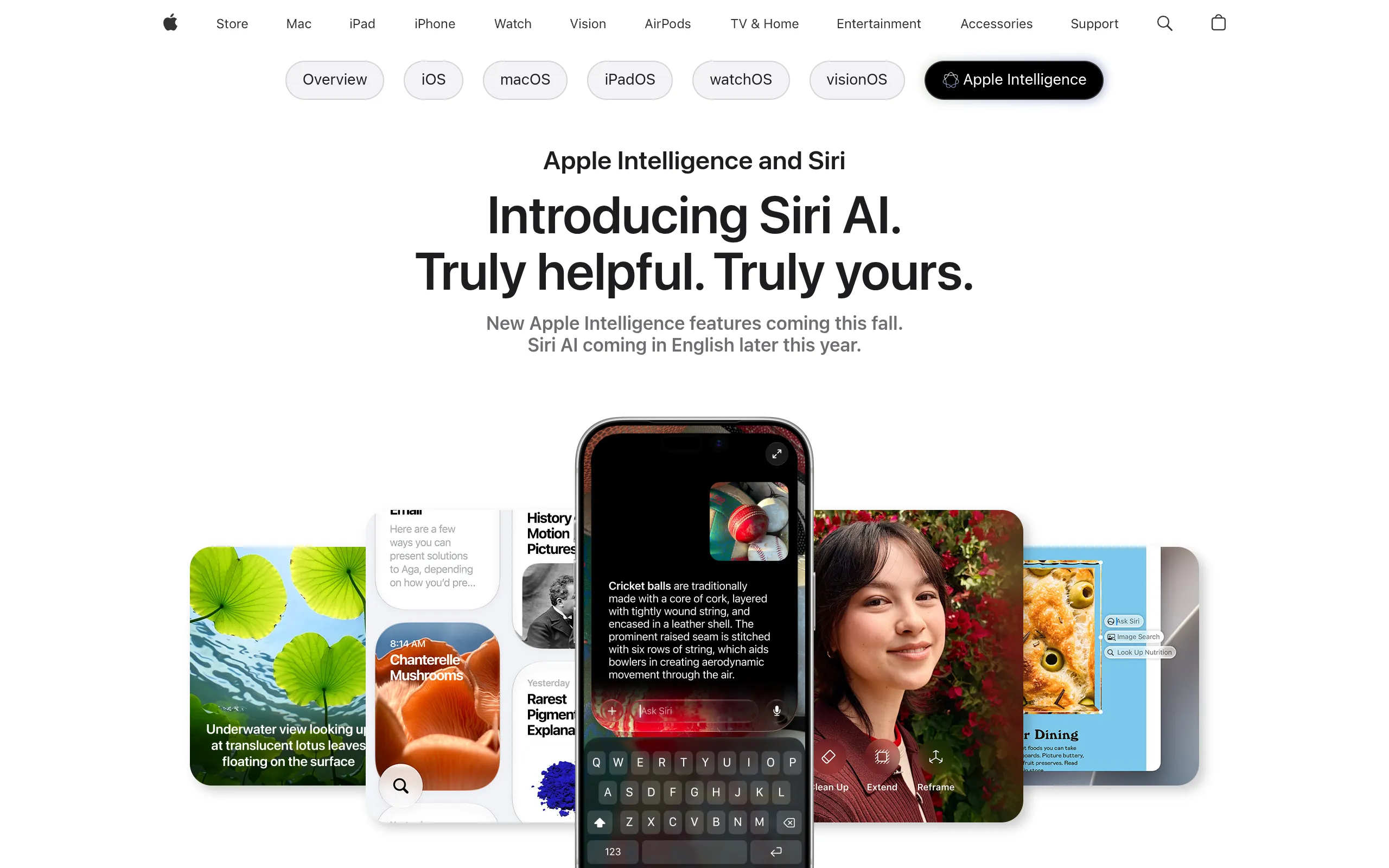
Siri is Apple’s device-level voice assistant, built to run spoken commands, app actions, and system controls across Apple hardware. It is the natural choice if your daily life already runs on an iPhone, iPad, Mac, or Apple Watch.
Compared with Alexa, Siri trades broad smart-home flexibility for privacy and quick on-device control. It is fast at the basics: reminders, launching apps, and short commands. It is not built for cross-platform productivity or non-Apple ecosystems.
- Best for: Privacy-conscious Apple users who want quick device-level commands
- Standout feature: Voice-activated commands with deep Apple app integration
- Starting price: Free
The known weakness: Siri can still be inconsistent at understanding commands, and its capabilities feel narrower than newer conversational assistants.
4. Alexa: Best for Smart-Home Control
Alexa is Amazon’s always-on voice assistant for controlling smart-home devices, triggering Skills, and handling routine voice requests. If your goal is to control lights, speakers, and connected devices by voice, this is the strongest fit on the list.
Its edge over Google Assistant is breadth of smart-home support and the customizable Skills ecosystem. The flip side is that it shines inside Amazon’s world and does much less for professional productivity.
- Best for: Accessibility and smart-home control
- Standout feature: Customizable Skills and broad device support
- Starting price: Free for Amazon Prime members; $19.99/month for non-members
The tradeoff is ecosystem lock-in: you get the best experience only with Amazon devices, and it is weak for cross-app work.
5. Google Assistant: Best for Call Assistance
Google Assistant handles spoken search, call assistance, call screening, and simple Google-service actions. It suits an Android user who wants quick voice help and a screen for unwanted calls.
Against Gemini, it reads more like a classic command-and-control assistant than a conversational AI. Its integration with Google services and call screening are the reasons to keep it.
- Best for: Call assistance and quick Google-service workflows
- Standout feature: Integration with Google services and call screening
- Starting price: Free
The caveat is privacy concerns over data storage, plus weaker usefulness once you step outside Google’s ecosystem.
6. Gemini: Best for Natural Conversation
Gemini is Google’s multimodal AI assistant, built to converse naturally, reason across inputs, and personalize interactions through custom agents. It is the pick when you want an assistant that feels smart on open-ended questions rather than just executing commands.
It improves on Google Assistant with genuinely conversational interaction and multimodal reasoning. The free tier lets you try it before committing to the paid Pro plan.
- Best for: Natural, conversational interactions
- Standout feature: Multimodal model with personalized AI agents
- Starting price: $19.99/month (Pro)
- Free tier or trial: Yes
The limitation: it can hallucinate, and third-party integrations stay thin outside Google’s own services.
7. Bixby: Best for Samsung Users
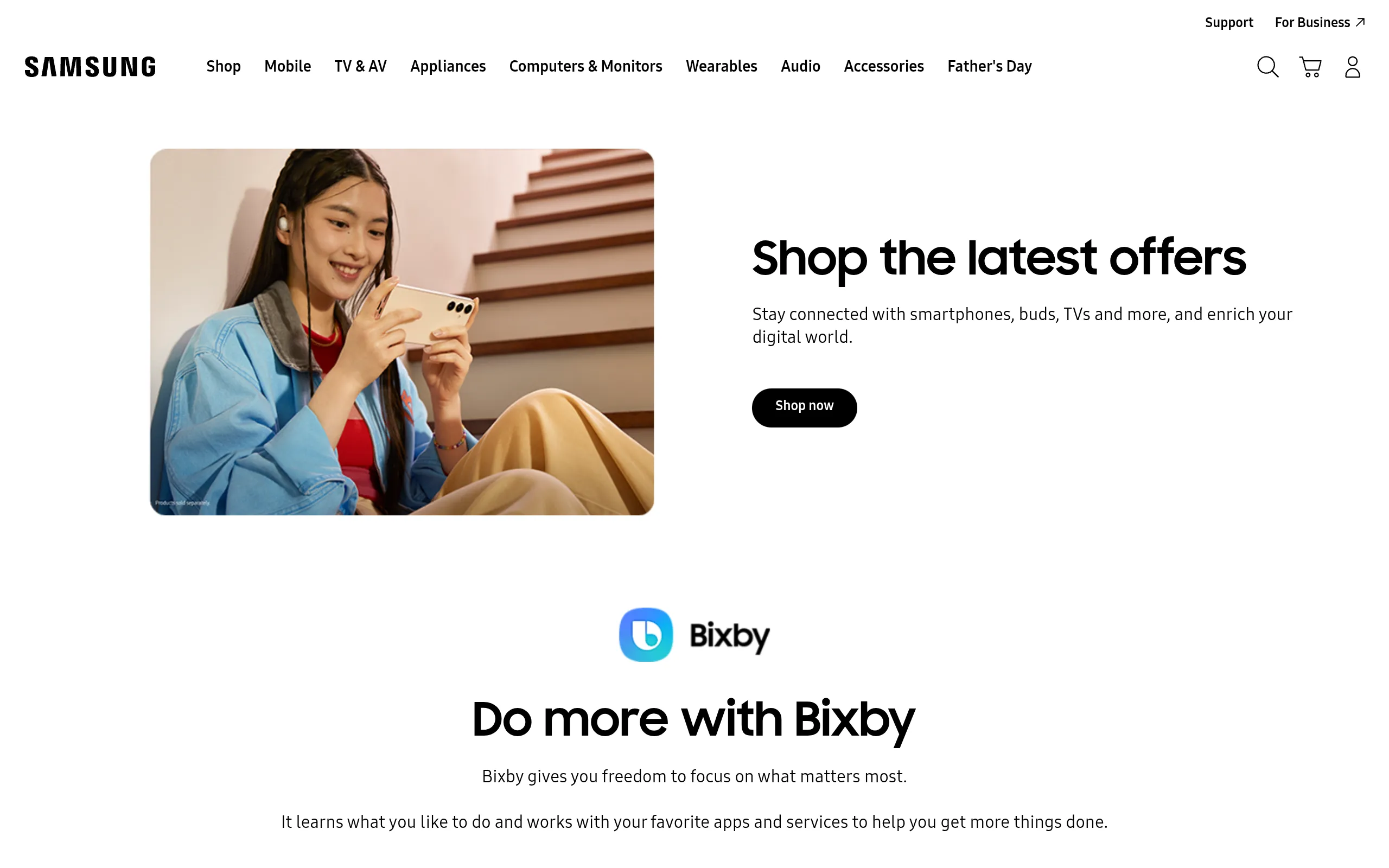
Bixby is Samsung’s voice assistant for controlling device settings, SmartThings devices, and routines on Samsung hardware. It earns its place for Galaxy owners who want hands-free control across phones, TVs, and appliances.
Set against Siri, Bixby is tuned for Samsung device control and SmartThings automation rather than Apple continuity. Its custom quick commands and Routines are the practical draw.
- Best for: Samsung device control
- Standout feature: SmartThings integration and Bixby Routines
- Starting price: Free
The honest limit: it supports fewer languages, lags on general searches, and does little outside Samsung hardware.
8. Otter.ai: Best for Meeting Notes
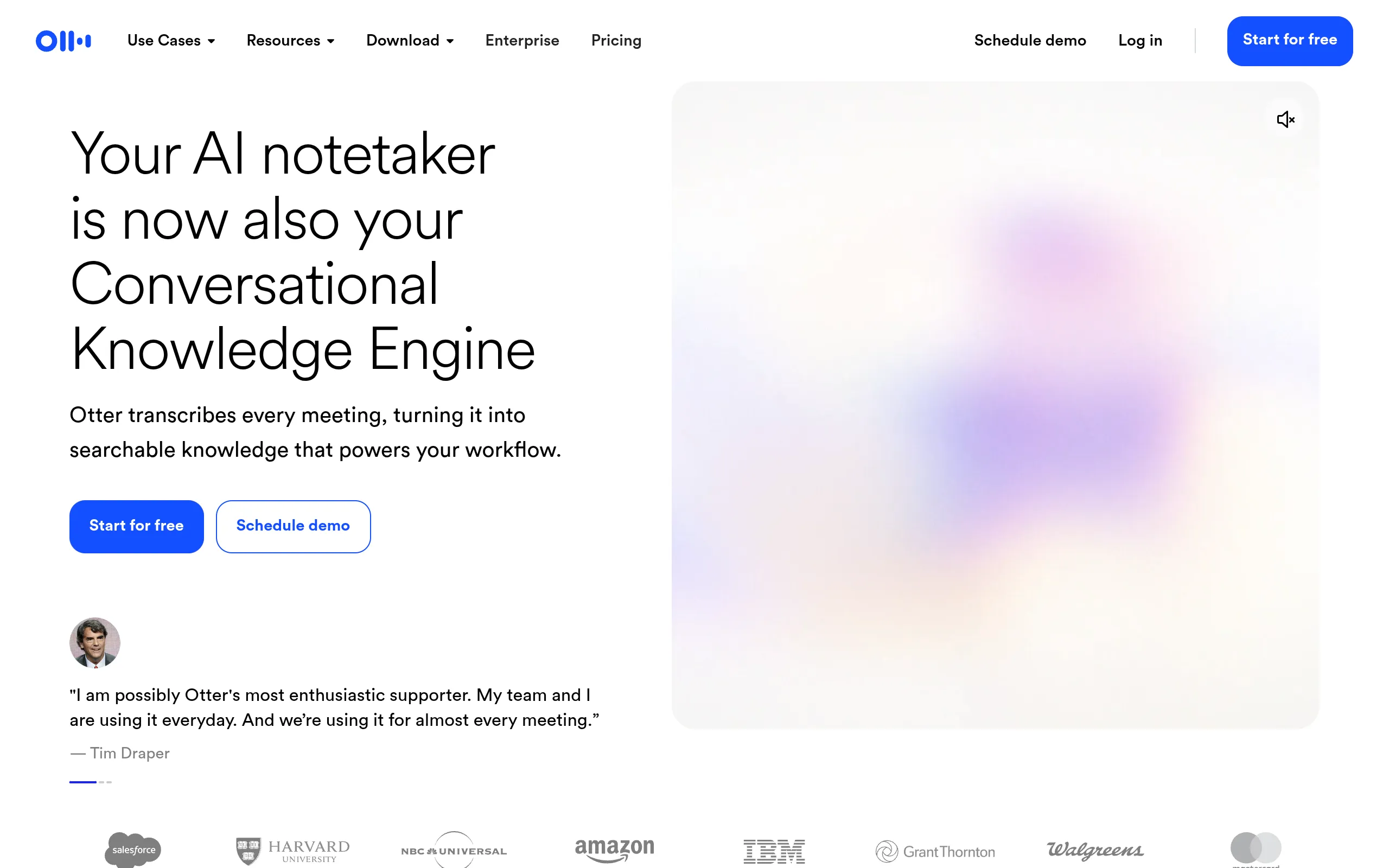
Otter.ai records speech in real time, transcribes it, and turns meetings into searchable notes and summaries. It is the right tool if your pain is capturing what was said, not controlling devices by voice.
Unlike Microsoft Copilot Voice, Otter is purpose-built for meeting transcription and summaries rather than broad productivity. Real-time transcription with automated summaries is what makes it stick for teams that live in calls.
- Best for: Meeting notes, summaries, and transcriptions
- Standout feature: Real-time transcription with automated meeting summaries
- Starting price: $8.33/user/month (billed annually)
- Free tier or trial: Yes
The caveat: it is not a general voice assistant, and accuracy can dip in noisy rooms or with strong accents.
9. ChatGPT with Voice: Best for General Conversation
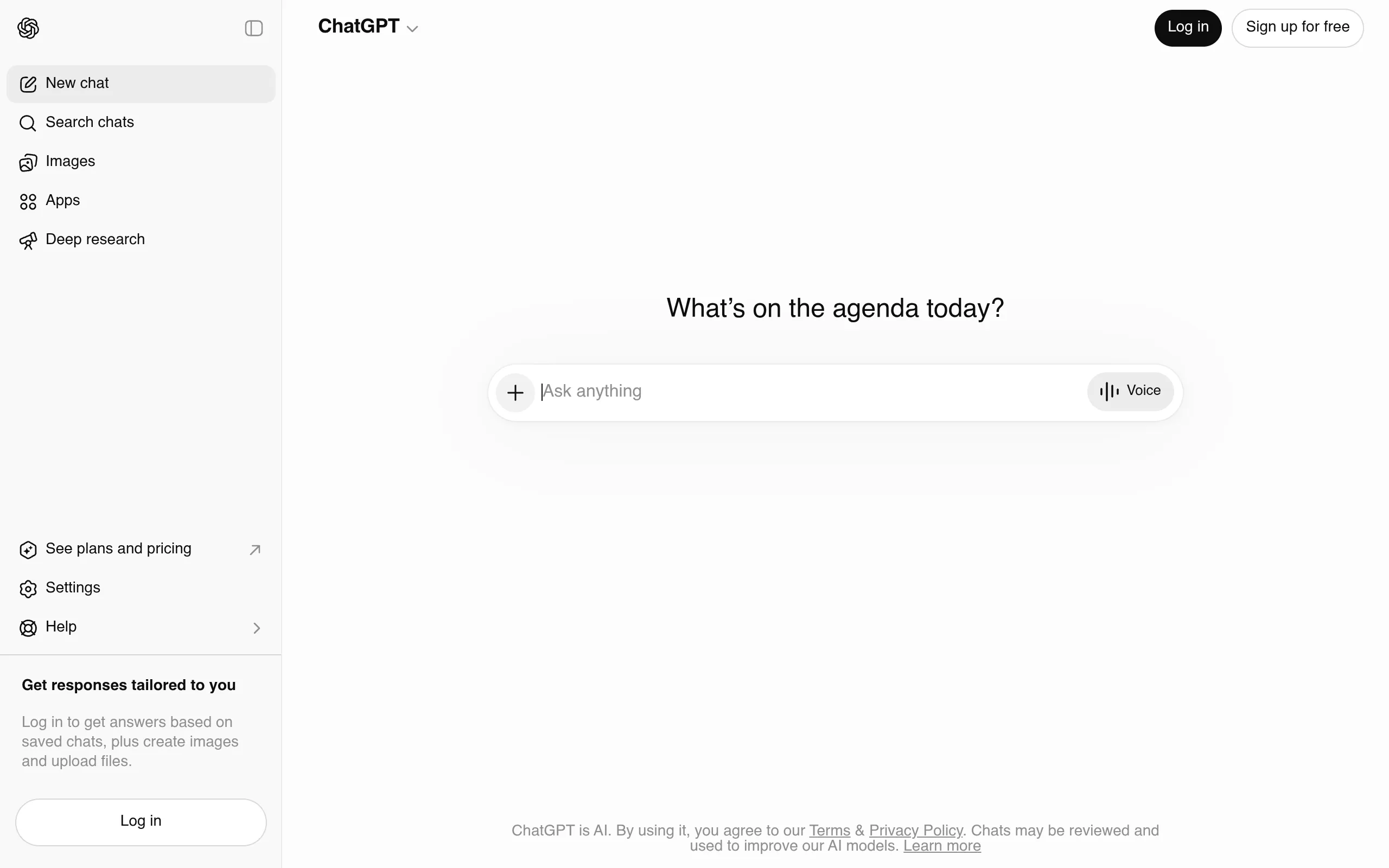
ChatGPT with Voice holds two-way spoken conversations, answers questions, and reasons through requests across voice and image. It suits anyone who wants a hands-free brainstorming partner, tutor, or general conversational AI.
Where Perplexity leans into citations, ChatGPT is the broader conversation layer. Its hands-free, multimodal exchange feels closest to talking through a problem with a capable colleague.
- Best for: General conversations
- Standout feature: Hands-free two-way conversation with multimodal input
- Starting price: $20/month (Pro)
The limit worth knowing: it is built to answer, not to execute actions across your external apps or devices.
10. Perplexity: Best for Cited Research
Perplexity searches the web in real time and returns answers with citations attached. It is the pick when you need fast, sourced answers to a fact-heavy question rather than open chat.
Its difference from ChatGPT with Voice is the citation-first design: every answer points to where it came from. That makes it the research tool of the group.
- Best for: In-depth, cited research
- Standout feature: Direct answers with citations and real-time web search
- Starting price: $20/month (Pro)
The caveat: it cannot execute tasks or interact with other apps, so it informs decisions rather than acting on them.
11. Microsoft Copilot Voice: Best for Hands-Free Productivity
Microsoft Copilot Voice converts speech to text and supports hands-free work inside Microsoft tools. It fits an Office-heavy team that wants to dictate, draft, and navigate without typing.
Against ChatGPT with Voice, Copilot is optimized for Microsoft app workflows rather than general talk. Its voice-to-text and multilingual support are the reasons to choose it inside a Microsoft shop.
- Best for: Hands-free productivity
- Standout feature: Voice-to-text functionality with multilingual support
- Starting price: $20/user/month (billed annually)
The honest limit: it works best inside Microsoft apps and can slow down under heavy demand.
12. Meta AI: Best for Social-App Interactions

Meta AI is a voice-and-text assistant embedded across Meta’s apps, supporting social interactions, image generation, and a full-duplex speech demo. It suits someone who wants an assistant inside Facebook, Instagram, and WhatsApp for casual, personalized use.
Where Gemini aims at productivity, Meta AI is socially embedded and free. That placement inside the apps people already open is its main pull.
- Best for: Personalized social connections
- Standout feature: Full-duplex speech demo plus image generation and editing
- Starting price: Free
The caveat: it can be less accurate than rivals and often needs detailed prompts to land a good result.
13. Jasper AI: Best for Marketing Content
Jasper AI generates marketing copy and supports voice dictation alongside brand-voice management. It is the pick for a marketing team that needs on-brand campaign content and hands-free drafting.
Unlike ChatGPT with Voice, Jasper is purpose-built for marketing and brand consistency. Its brand voice feature keeps high-volume output sounding like one company.
- Best for: Marketing and content creation
- Standout feature: Voice-to-text dictation with brand voice management
- Starting price: $59/seat/month
- Free tier or trial: Yes
The honest limit: it runs expensive for individuals, and output still needs editing and fact-checking before it ships.
14. Spitch: Best for Enterprise Omnichannel
Spitch is enterprise voice AI for omnichannel assistance, with voice biometrics and large-scale service automation. It suits a big support organization that needs secure voice authentication alongside omnichannel handling.
Compared with VOCALLS, Spitch leans on biometrics plus omnichannel reach rather than dashboard-driven automation. The biometric authentication is its clearest differentiator for security-sensitive operations.
- Best for: Omnichannel enterprise assistance
- Standout feature: Voice biometrics and omnichannel capabilities
The caveat: there is no public pricing, and it likely needs significant configuration, so it is not a plug-and-play choice.
15. VOCALLS: Best for Contact-Center Automation
VOCALLS automates contact-center interactions with voicebots, chatbots, and real-time analytics dashboards. It fits a contact center ready to automate repetitive calls and watch performance live.
Against Spitch, VOCALLS is more of an automation-first platform with dashboards and bot orchestration at its core. Its real-time analytics are the draw for teams that manage by the numbers.
- Best for: Automation-heavy contact centers
- Standout feature: Voicebots, chatbots, and real-time analytics dashboards
The honest limit: it is enterprise-first with no public pricing, and it expects a working knowledge of contact-center operations to get value.
Which AI Voice Assistant Is Best for Your Workflow?
The right assistant depends far more on the job you need done than on which name sounds most advanced. Use these mappings to shortcut the decision.
For Customer Service Teams
Start with Zendesk voice AI agents if you already run Zendesk, since the resolution flows stay in one place. Choose PolyAI for voice-first call handling at volume, or Spitch and VOCALLS when you need enterprise biometrics or contact-center dashboards. All four use contact-sales pricing, so budget for a demo first.
For Apple, Android, and Samsung Users
Match the assistant to your hardware. Siri is the fast, private default on Apple devices, Google Assistant covers Android with call screening, and Bixby fits Samsung owners who want SmartThings control. Each is free, and each is strongest inside its own ecosystem.
For Smart Homes and Meetings
Pick Alexa for the widest smart-home device support, and Otter.ai when your real problem is meeting notes rather than device control. These solve narrow jobs well and stay out of your way otherwise.
For Conversation, Research, and Marketing
Reach for ChatGPT with Voice for general conversation, Gemini if you want a Google-native conversational assistant with a free tier, Perplexity for cited research, and Jasper AI for on-brand marketing copy. Copilot Voice belongs here too if your day lives in Microsoft 365.

If your job leans toward planning and follow-through rather than conversation, our guide to the Best AI scheduling and task management tools Pairs well with any assistant here.
Choosing Your Voice Assistant by Priority
If you only want one, decide by your top priority. Want the most natural conversation? Start with ChatGPT with Voice or Gemini. Need device control? Pick Siri, Alexa, or Bixby by hardware. Living in meetings? Otter.ai. Running a support operation? Zendesk voice AI agents or PolyAI.
The core tradeoff runs through every choice: broad conversational quality, real task execution, and ecosystem fit rarely come in one package. Consumer assistants and enterprise voice agents solve genuinely different problems, so do not judge a call-center platform against a pocket helper. Free tools like Siri and Alexa cost nothing to try, paid consumer plans give you a clear monthly figure, and contact-sales tools need a conversation before you can compare them at all. Pick the assistant that matches your main workflow, then run your real use case through its free tier or trial before you pay. Compare the rest of our AI voice and text-to-speech picks If voice output matters as much as voice input.
Frequently Asked Questions
What is the best AI voice assistant overall?
There is no single best for everyone, because the strongest pick depends on your job. For support teams, Zendesk voice AI agents lead. For natural conversation, ChatGPT with Voice and Gemini are the top consumer choices. For device control, the answer is whichever assistant matches your hardware. Choose by your main workflow rather than by raw capability.
Which AI voice assistant is best for iPhone?
Siri is the best fit for iPhone users who want fast, private device-level commands. It runs natively across Apple hardware, handles reminders and app actions quickly, and processes many requests on-device. If you want richer conversation on the same phone, ChatGPT with Voice runs as an app alongside it.
Which AI voice assistant is best for Android?
Google Assistant and Gemini are the strongest options on Android. Google Assistant covers call screening and quick Google-service actions, while Gemini adds genuinely conversational, multimodal responses. Samsung owners can also use Bixby for device and SmartThings control.
Is there a free AI voice assistant?
Yes. Siri, Google Assistant, Bixby, and Meta AI are free, and Gemini offers a free tier before its paid Pro plan. As an example, an Android user could run Google Assistant for call screening, switch to Gemini’s free tier for conversation, and pay nothing while testing both against daily tasks.
What is the most human-like AI voice assistant?
Among the assistants here, ChatGPT with Voice and Gemini deliver the most natural, human-like conversation, since both are built for open-ended dialogue rather than fixed commands. Older command assistants like Siri and Bixby feel more transactional by comparison.
Picking the One That Matches Your Work
The honest reality is that no assistant wins on every axis, and the contact-sales enterprise tools cost real budget and setup time before they prove anything. So skip the search for a universal winner. Name your single most important job, pick the one assistant that owns it, and run your actual workflow through its free tier or trial first. Pay only after it earns the spot.