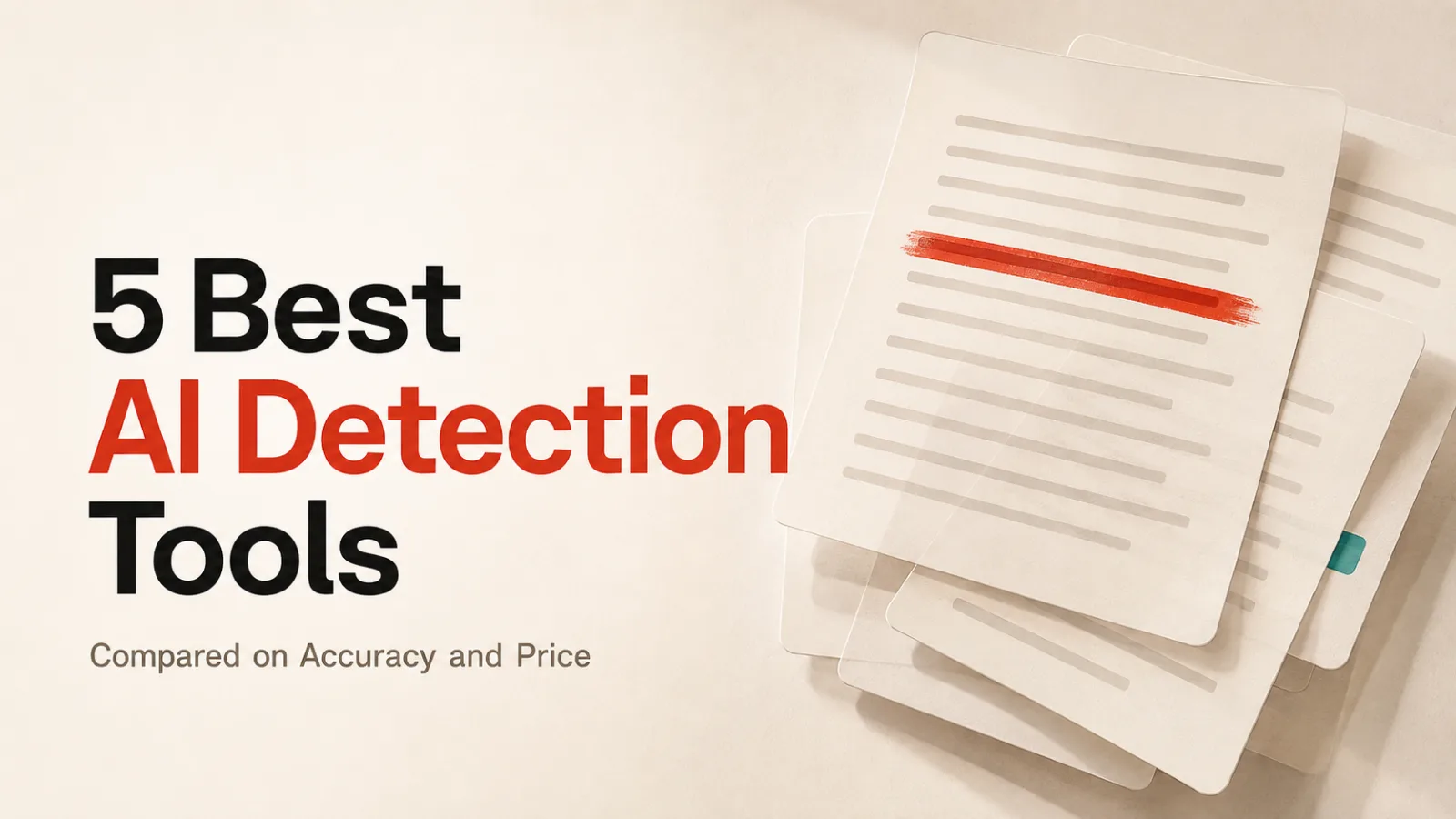
If you need an AI detection tool right now, start with Originality.AI For publishing work and GPTZero For classroom and individual checks. Both publish Confidence scores rather than a plain yes or no, which matters more than any accuracy claim on a pricing page.
Read the rest of this page before you act on any score, though. Every detector on the market gets things wrong in both directions, and the consequences of trusting one blindly fall on real people.
How this list is ordered
These five are Ordered by our editorial rating, with free-plan availability and starting price noted for each. That rating comes from reviewing each product’s features, pricing and positioning against the rest of our Writing tools catalogue.
We don’t run detectors against a controlled corpus of human and machine text, so You won’t find an accuracy percentage from us here. Anyone quoting one without publishing their test set is quoting the vendor.
| Tool | Rating | Free plan | From | Best for |
|---|---|---|---|---|
| Originality.AI | 4.5 | Limited | $12.95 | Publishers and agencies |
| GPTZero | 4.4 | Yes | $15 | Educators and individuals |
| Copyleaks | 4.2 | Yes | $9.99 | Multi-language and image checks |
| Smodin | 4.2 | Yes | $10 | Students wanting a toolbox |
| Turnitin | 4.0 | No | Quote only | Institutions already running it |
1. Originality.AI
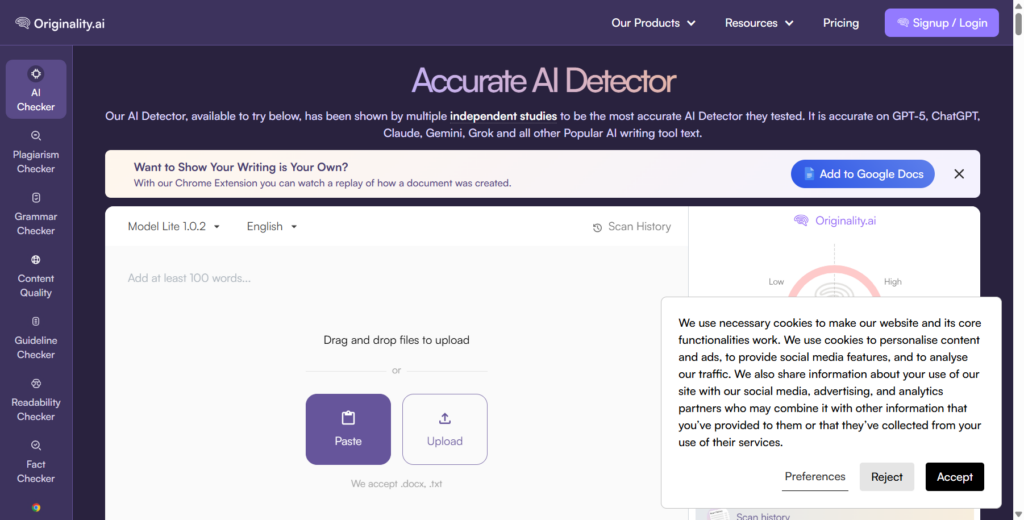
Originality.AI launched in November 2022, before ChatGPT went public, specifically to catch generated text. It’s built for Publishers and agencies checking work before it ships, not for students checking their own essays.
It leads this list because its Accuracy claims are independently benchmarked Rather than only self-reported. It also bundles live-web plagiarism checking, fact-checking and readability scoring, so one subscription covers what would otherwise need three.
The limitation worth knowing: There’s no unlimited free tier, and the free checker caps at a small word count. Pricing is credit-based, so you track usage instead of paying one predictable monthly fee.
2. GPTZero
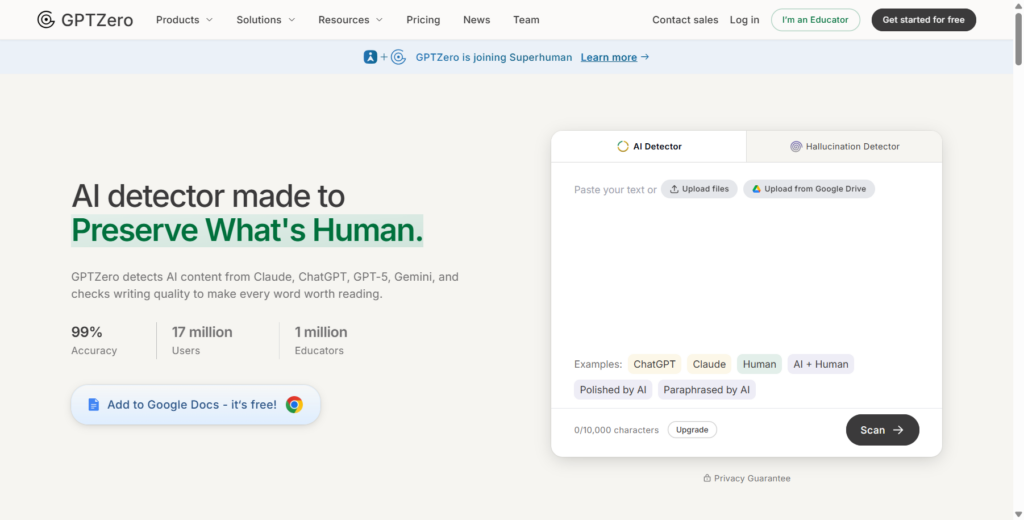
GPTZero is the detector most people have heard of. Edward Tian built the first version at Princeton and launched it in January 2023 with co-founder Alex Cui. It now reports 17 million users, including roughly 1 million educators.
It combines detection with plagiarism and hallucination checks in one pass, and its Free tier is genuinely usable For occasional individual checks. Superhuman acquired the company in June 2026, which brings more resourcing behind it.
Two limitations. Scanning full-length documents past the free character limit needs a paid plan, and that same acquisition Leaves open questions about the standalone product.
3. Copyleaks
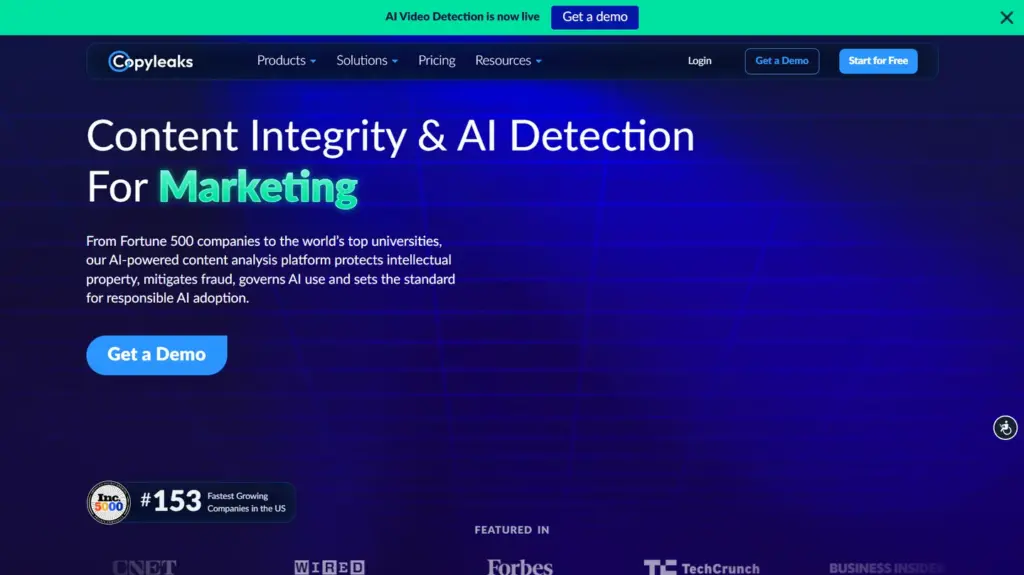
Copyleaks Came at this from the opposite direction. Alon Yamin and Yehonatan Bitton founded it in 2015 as a plagiarism checker, and it Added AI-content detection in 2023 Once generated text became a mainstream problem.
That order of operations shows. It scans across dozens of languages and Now handles images as well as text. That puts it ahead of most single-purpose checkers if your content isn’t all English prose.
Its credit-based pricing Gets hard to estimate at volume, and education and enterprise tiers sit behind a sales quote. You’ll also need annual billing to reach the advertised monthly rate.
4. Smodin
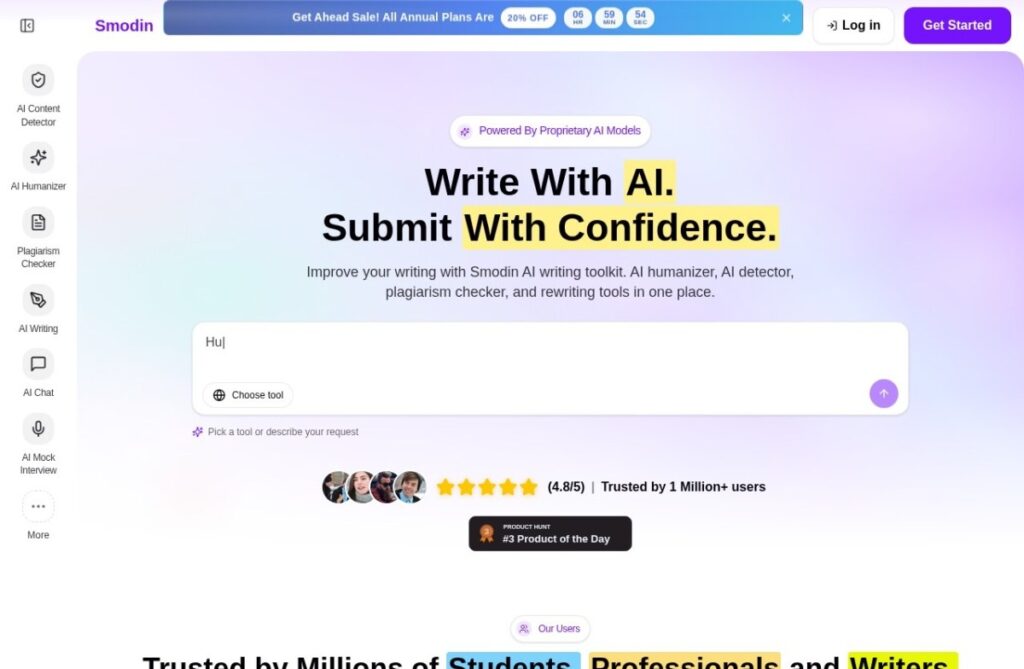
Smodin Isn't a detector first. It’s a Toolbox that happens to include one, alongside paraphrasing, a plagiarism checker, essay tools and translation across more than 100 languages. All of it sits on one account from $10.
That makes it a reasonable pick for a student who wants four or five utilities without four subscriptions. It’s The wrong pick if detection accuracy is your priority.
No single feature here matches a dedicated specialist, and the interface reflects that. It feels like A collection of separate tools rather than one workspace.
5. Turnitin
Turnitin Is the established name in academic integrity. It’s on this list for Corpus depth and institutional integration, not because it beats the others at detection.
It covers grading and feedback workflows too, and it plugs into the systems schools already run. If your institution has it, you’re using it, and the question is How much weight to give its output.
Less than people assume. Turnitin’s own positioning acknowledges that AI-writing detection is unreliable in both directions, and there’s no individual access, so procurement runs through the institution.
AI detection and plagiarism checking are different problems
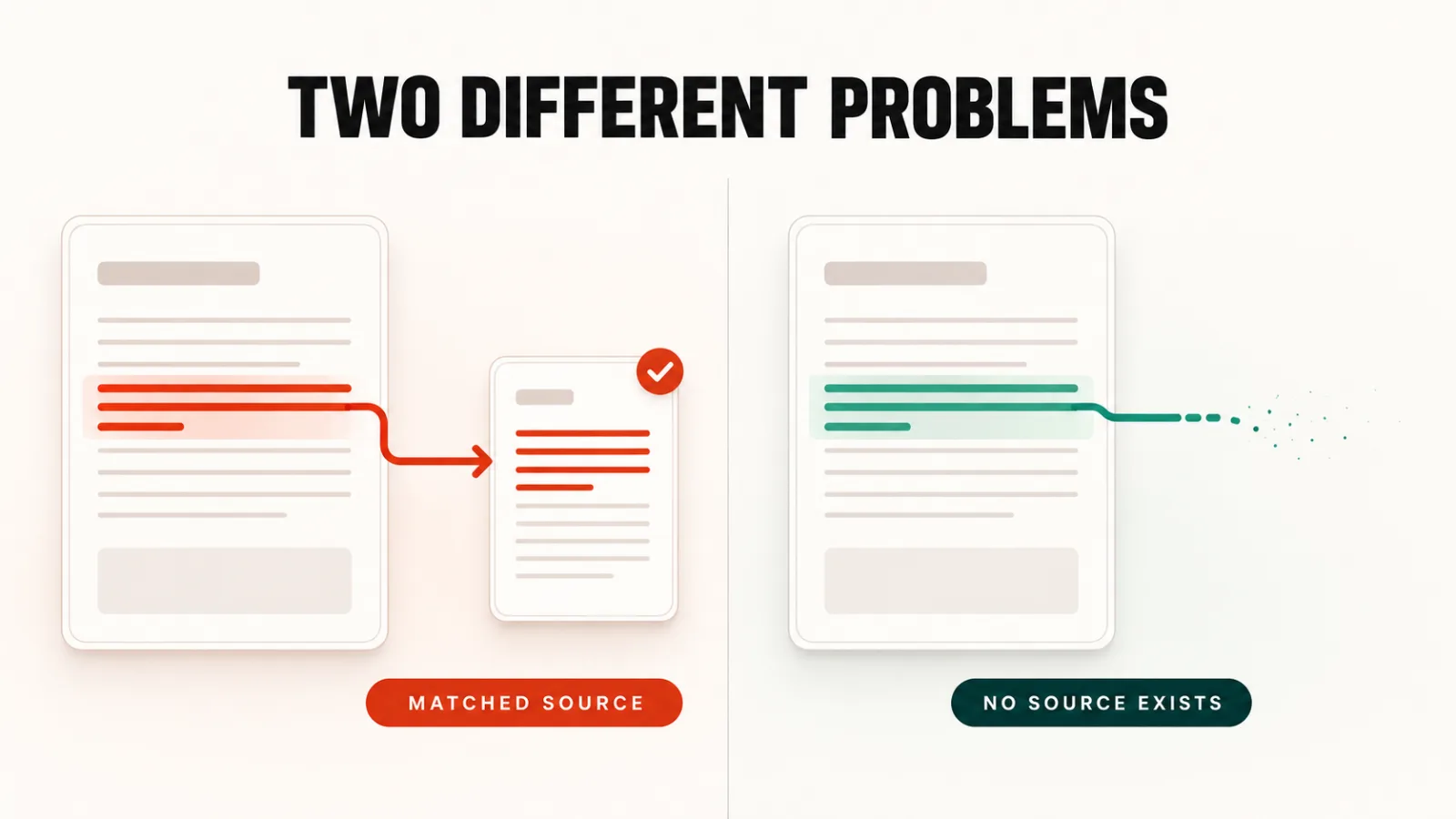
Conflating the two causes most of the damage. A plagiarism checker Compares text against a corpus and shows you the source it matched.
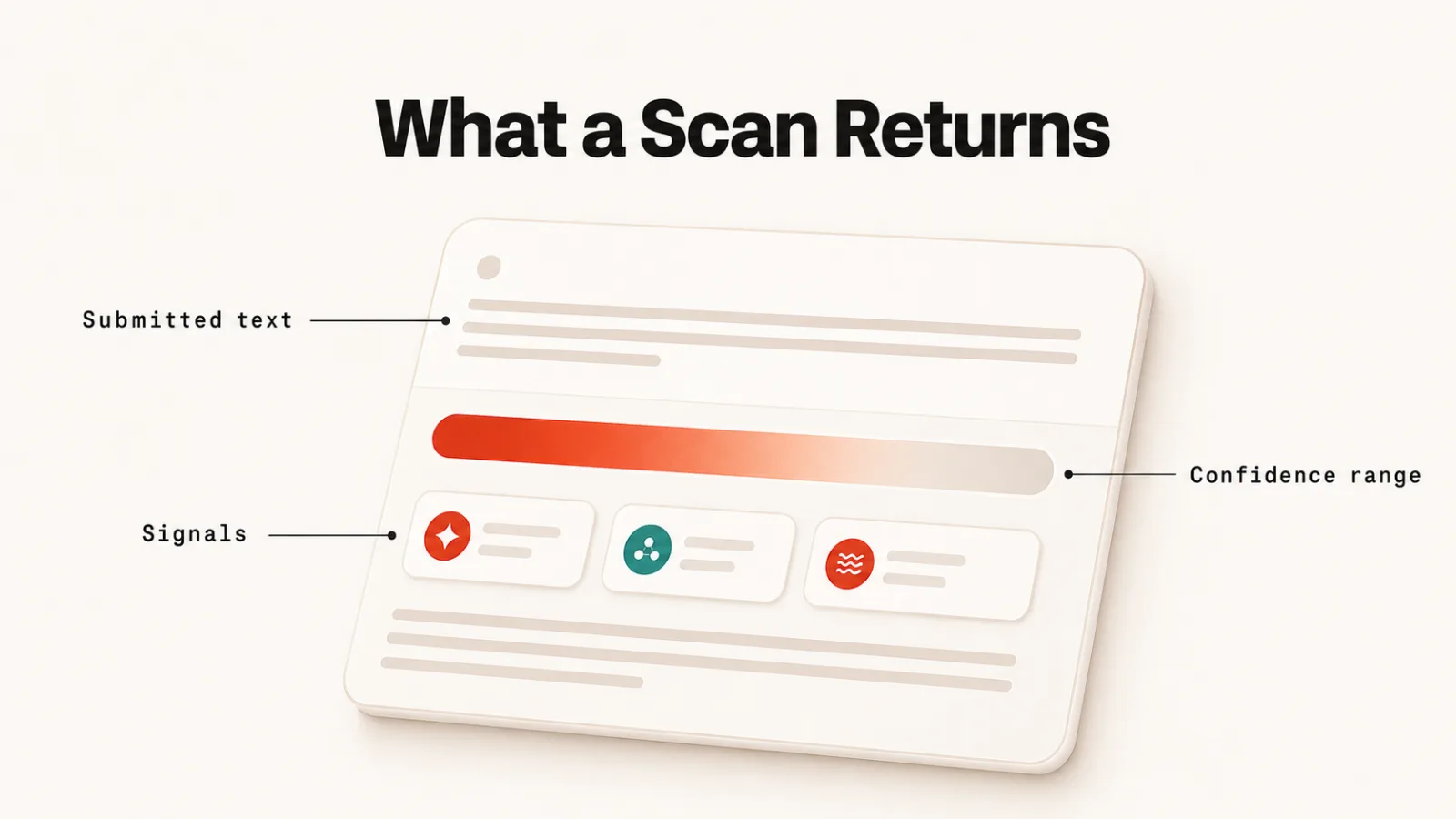
An AI detector can’t do that. It estimates How statistically predictable your writing is, then converts that estimate into a confidence score. There’s no source document to point at, because none exists.
This is why False positives cluster where they do. Writing that’s plain, formulaic or heavily edited reads as predictable, which is exactly what non-native English writers and technical writers produce.
Treat a high score as A prompt to look closer, never as a verdict. Every vendor on this list says some version of that in their own materials, and it’s the one point they all agree on.
Detectors we haven’t reviewed yet
A few names come up often that aren’t in our catalogue yet, so We’re not ranking them here: Winston AI, ZeroGPT, Pangram Labs, Scribbr and Quetext. We’ll add them once each one has a full review, and this page gets updated then.
We’d rather name them without a link than rank a product we haven’t written up.
Choosing between them
- Publishers and agencies shipping content to clients: Originality.AI, for the benchmarking and the bundled plagiarism check.
- Teachers and individuals checking occasionally: GPTZero, whose free tier handles light use.
- Multilingual teams, or anyone checking images: Copyleaks.
- Students on a budget who need paraphrasing and citations too: Smodin.
- Institutions already running it: Turnitin, weighted carefully.
If you’re writing rather than checking, our guides to AI writing assistants And Free AI writing tools Cover the other side of this. There’s also a piece on Making AI text sound more human, which is the same problem viewed from the other end.
Frequently asked questions
How accurate is an AI detection tool?
Accuracy varies by tool and by the text you feed it, and published vendor figures come from the vendors themselves. Independent benchmarking exists for some products, including Originality.AI. No detector is reliable enough to justify a decision on its own.
Is there a free AI detection tool?
Yes. GPTZero, Copyleaks and Smodin all have free tiers, and Originality.AI offers a limited free checker capped at a small word count. Free tiers suit occasional checks And are too limited for regular volume.
Can AI detectors be wrong about human writing?
Yes, and this is the main risk. Detectors score how predictable text is, so Plain or formulaic human writing can score as machine-generated. Non-native English writers are affected more than most.
What’s the difference between AI detection and plagiarism checking?
A plagiarism checker matches your text against existing sources and shows you what it matched. An AI detector estimates whether a machine wrote the text, With no source to point at. Four tools here do both.