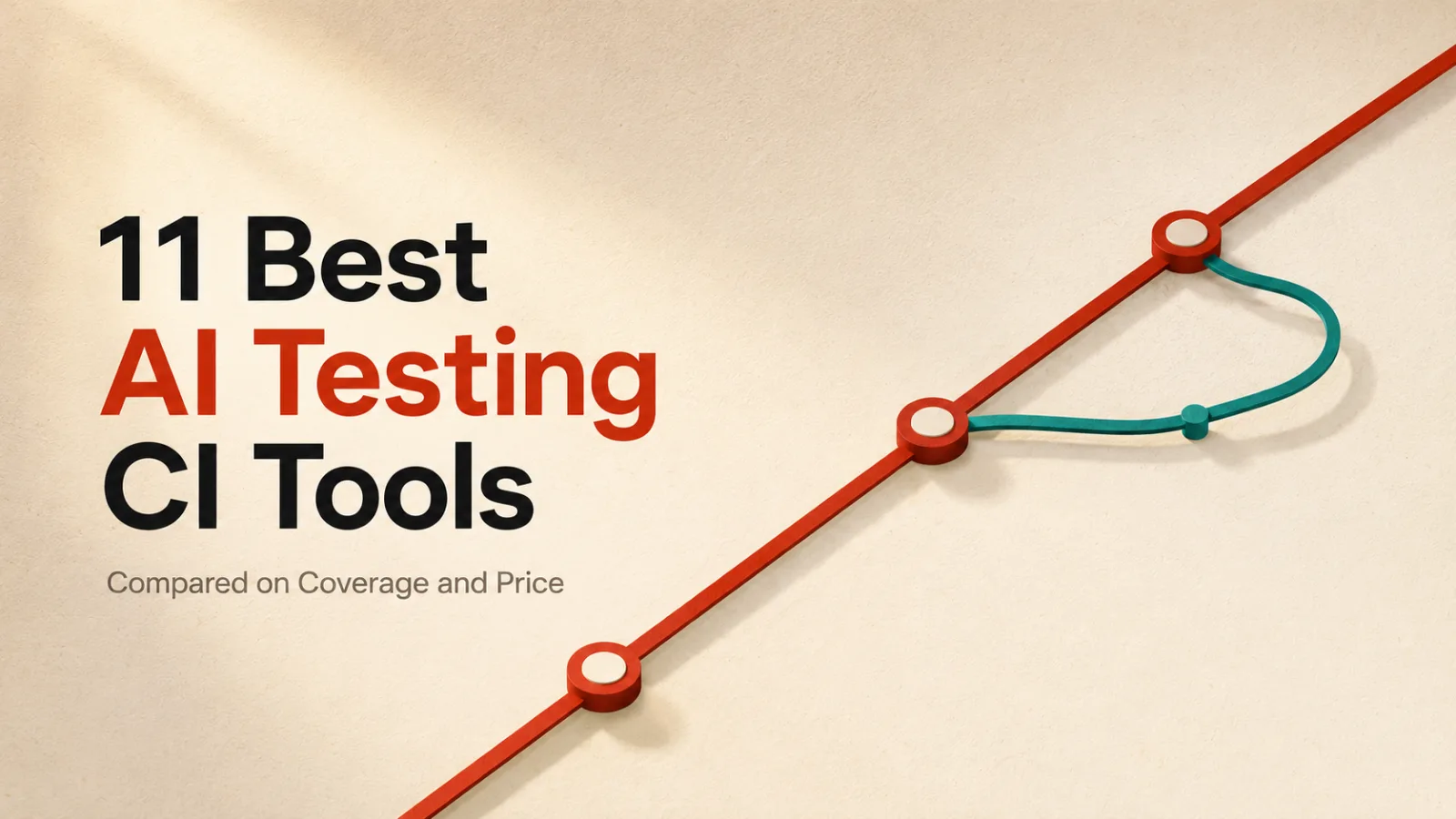
If you’re picking an AI testing tool for a CI pipeline right now, Antithesis Is the strongest option for distributed systems. Bugster Is the one a small team can afford, at $20 a month. Both write tests you didn’t hand-script.
The eleven below all do a version of the same trick: Generate tests from something other than code, then repair them when the screen changes. What separates them is which apps they cover and what happens to your bill.
How this list is ordered
These eleven are Ordered by our editorial rating, then by whether a free plan exists, then by starting price. That rating comes from reviewing each product’s features, pricing and positioning against the rest of our Coding tools catalogue.
We don’t run these agents against a shared benchmark app, so You won’t find a pass rate from us. Every price and limitation below is drawn from the listing for that product, each of which carries its own last-reviewed date.
One thing the ordering can’t capture: Mobile and web are close to separate markets here. Four of the eleven only make sense if you ship an app to a phone.
| Tool | Rating | Free plan | From | Best for |
|---|---|---|---|---|
| Antithesis | 4.5 | No | Quote | Distributed systems |
| Qodo | 4.4 | Yes | $30 | Coverage on existing code |
| Momentic | 4.1 | Yes | Quote | Web and mobile flows |
| KaneAI | 4.1 | No | $199 | Automation at scale |
| KushoAI | 4.0 | Yes | Quote | API suites from specs |
| Drizz | 4.0 | No | Quote | Mobile teams past Appium |
| Bugster | 3.9 | Yes | $20 | Teams with no QA function |
| Refraction | 3.9 | Yes | Not published | One-off unit tests |
| Fume | 3.9 | No | $500 | Teams already on Playwright |
| Autosana | 3.9 | No | $500 | Frequent app releases |
| QualGent | 3.9 | No | Quote | Flaky mobile suites |
1. Antithesis
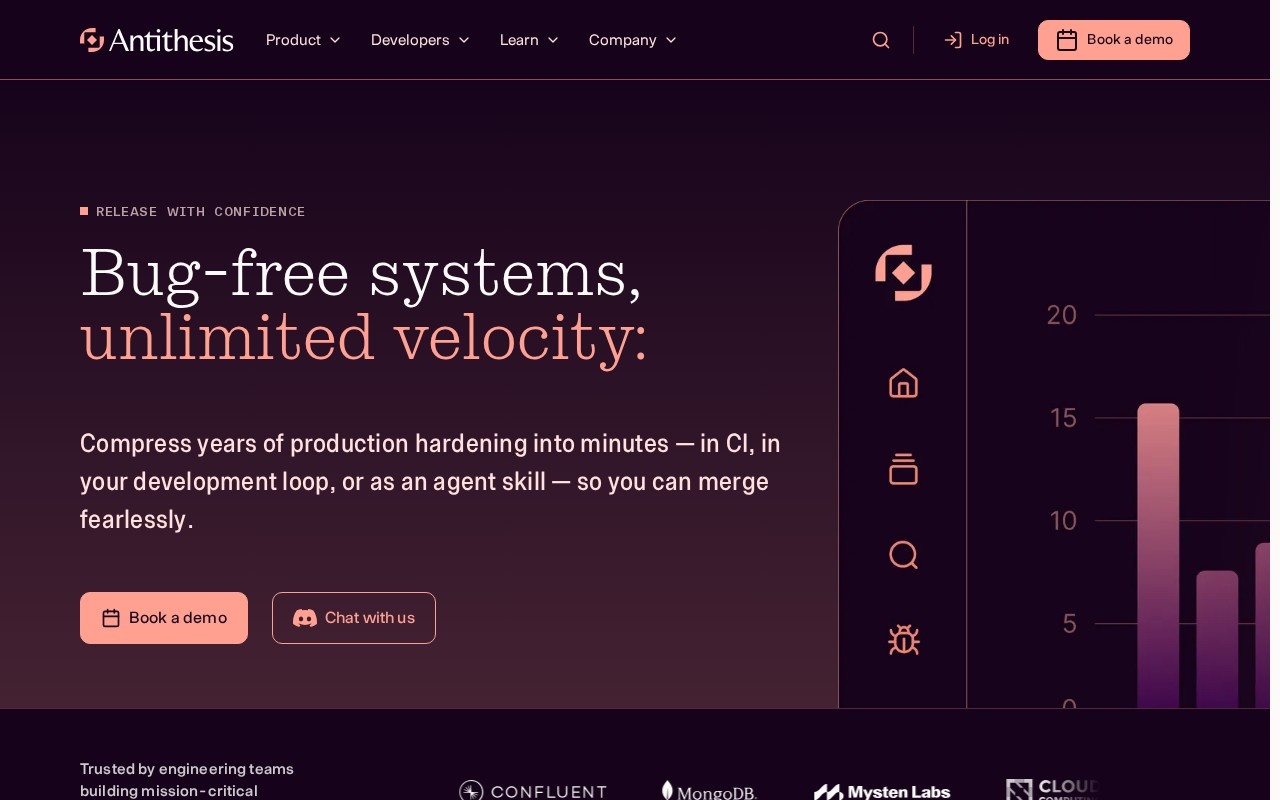
Antithesis runs your application inside a hypervisor that can rewind time, replay alternate execution paths and inject faults into the clock, network and storage layers. Will Wilson and Dave Scherer founded it in 2018, both from the team behind FoundationDB.
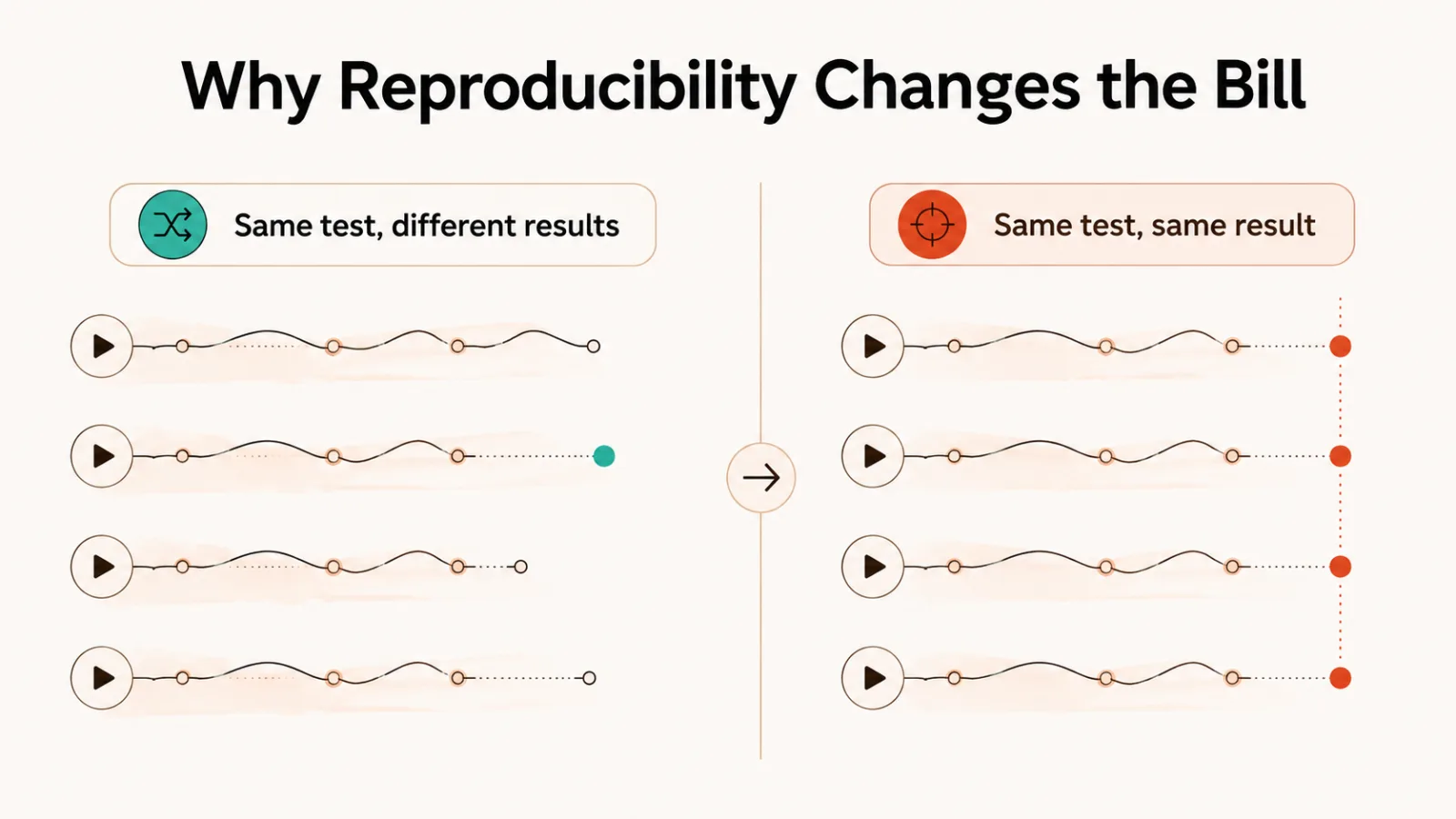
Because every run is deterministic, A bug it finds replays exactly. That kills the “can’t reproduce it” problem that makes distributed-systems debugging expensive. Palantir and MongoDB are among the customers.
Two things to weigh. Pricing runs on usage and Scales unpredictably with test complexity, and the platform is built for large distributed systems, so it’s overkill for a standard web app.
2. Qodo
Qodo Launched in 2022 as CodiumAI and built its reputation on one narrow job: writing meaningful tests for code that already exists. Code review and quality analysis sit alongside that now.
It aims at Genuine edge-case coverage rather than tests that pass without verifying behaviour. If your problem is thin coverage on a codebase you inherited, this is the closest fit on the list.
A free tier covers individual use and paid plans start near $30 a month. The limitation is emphasis: it’s Less oriented toward raw generation speed Than assistants built for that, and team features need a paid plan.
3. Momentic
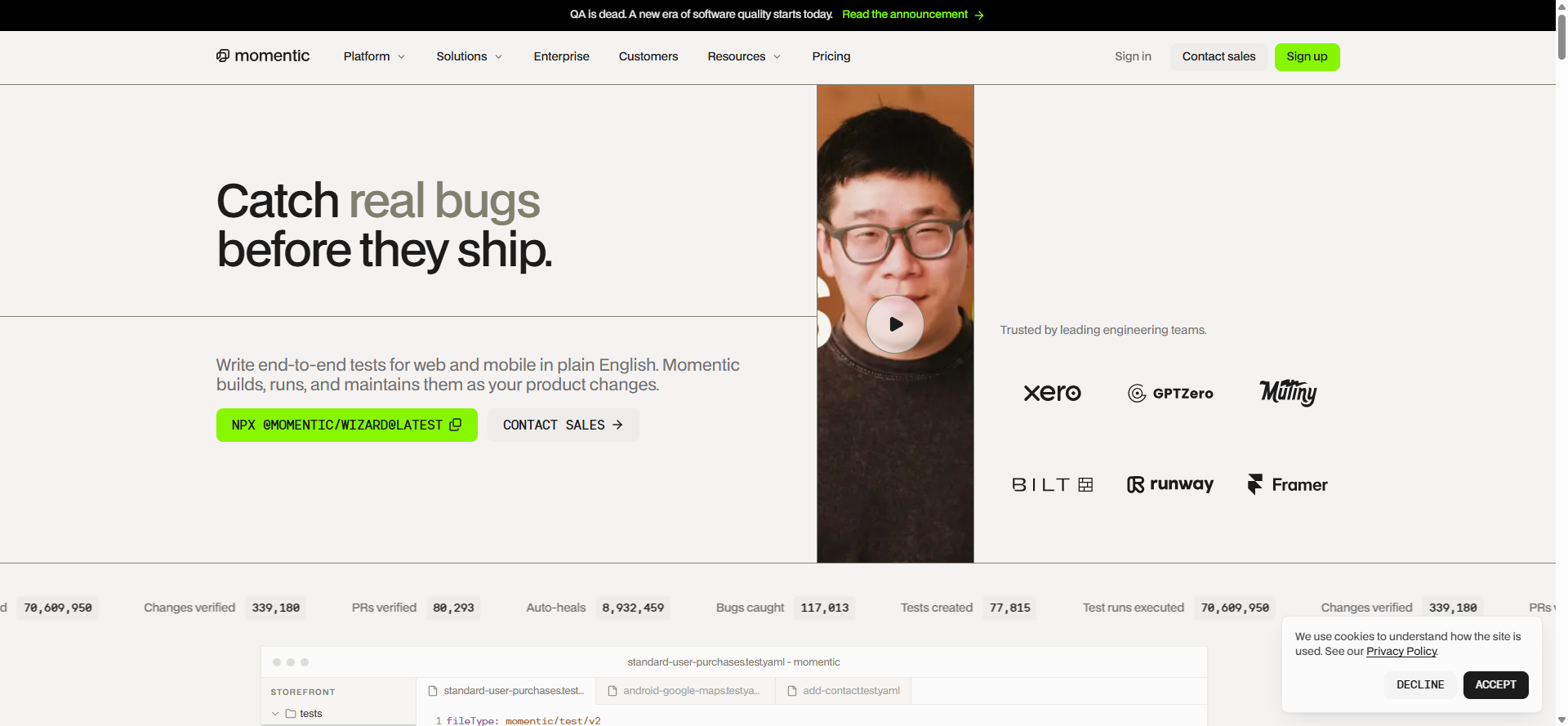
Momentic Turns plain-English descriptions of user flows into end-to-end tests for web and mobile, then keeps them running as the app changes. Jeff An and Wei-Wei Wu founded it in 2023.
When a button moves, the agent re-locates the element instead of failing the test. Notion, Xero, Webflow and Retool use it, and it raised A $15 million Series A in November 2025.
There’s a free tier, but No published price list, and third-party estimates put paid plans near $300 a month. Self-healing also needs review, since a test can heal toward the wrong element and keep passing.
4. KaneAI
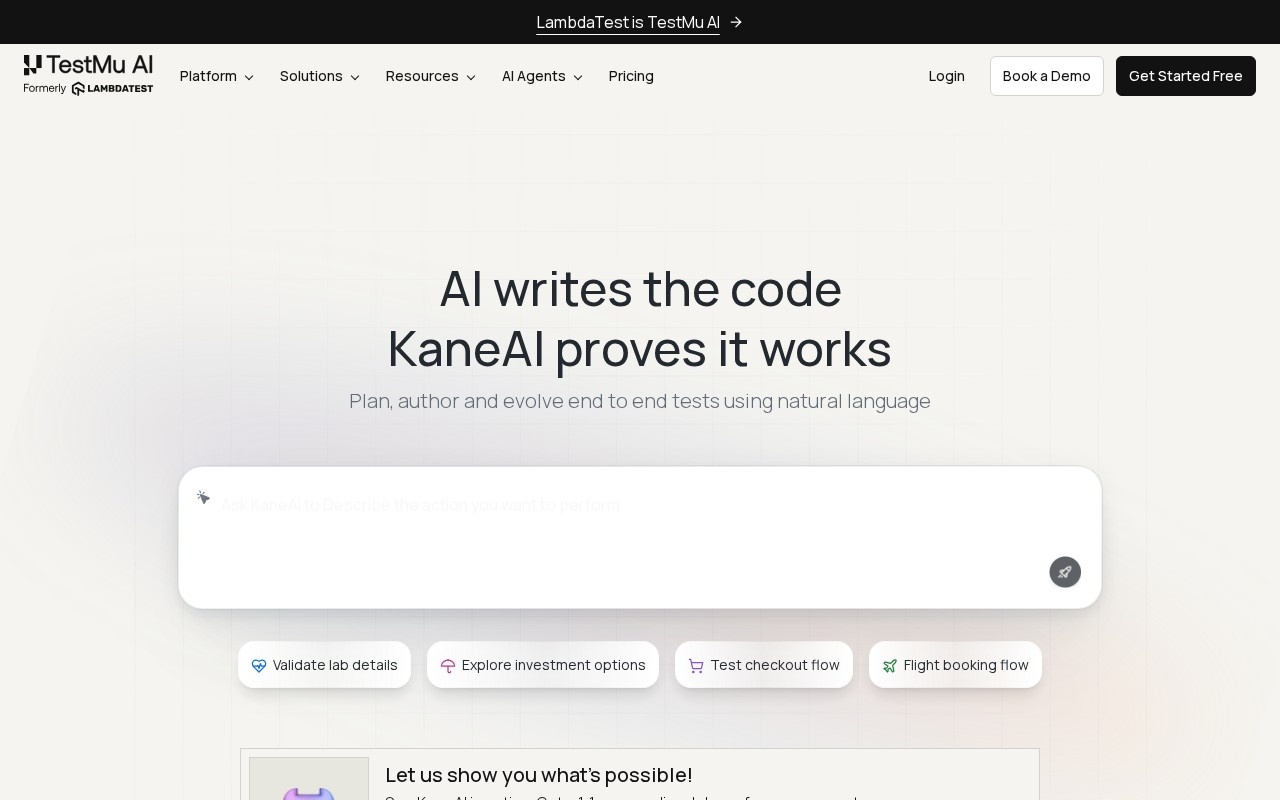
KaneAI Comes from TestMu AI, formerly LambdaTest, founded in 2017. Testers describe what a test should do, and it authors, runs and debugs the result in one workflow rather than three tools.
It reaches further than most here: Native iOS and Android testing across more than 10,000 real devices On the Mobile plan. Agent testing for voice and chatbot products comes with it.
Pricing is per agent per month, from $199 billed annually, and there’s no free tier. Each licence includes 500 authoring sessions, which Can run out during a heavy suite rewrite.
5. KushoAI
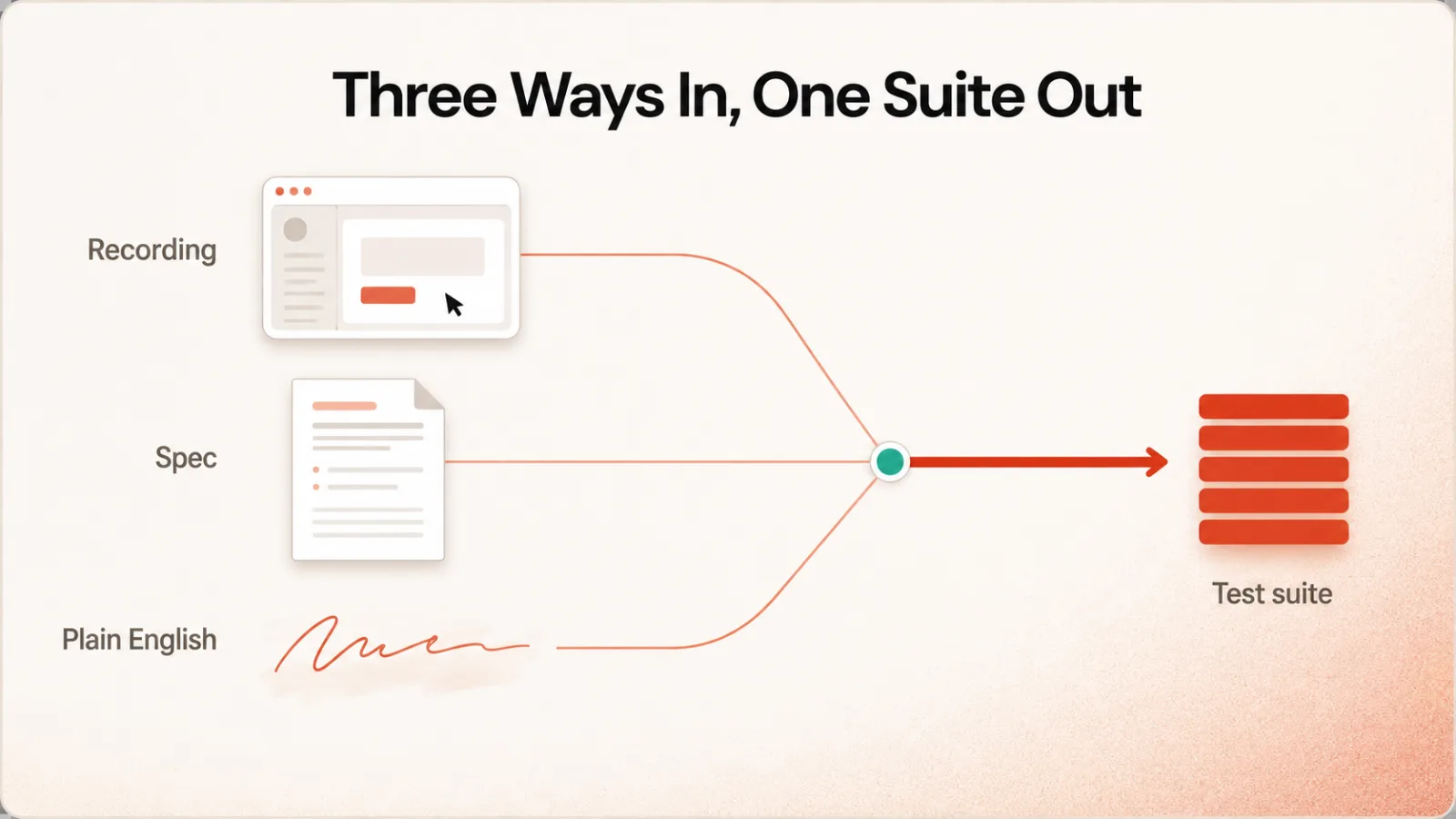
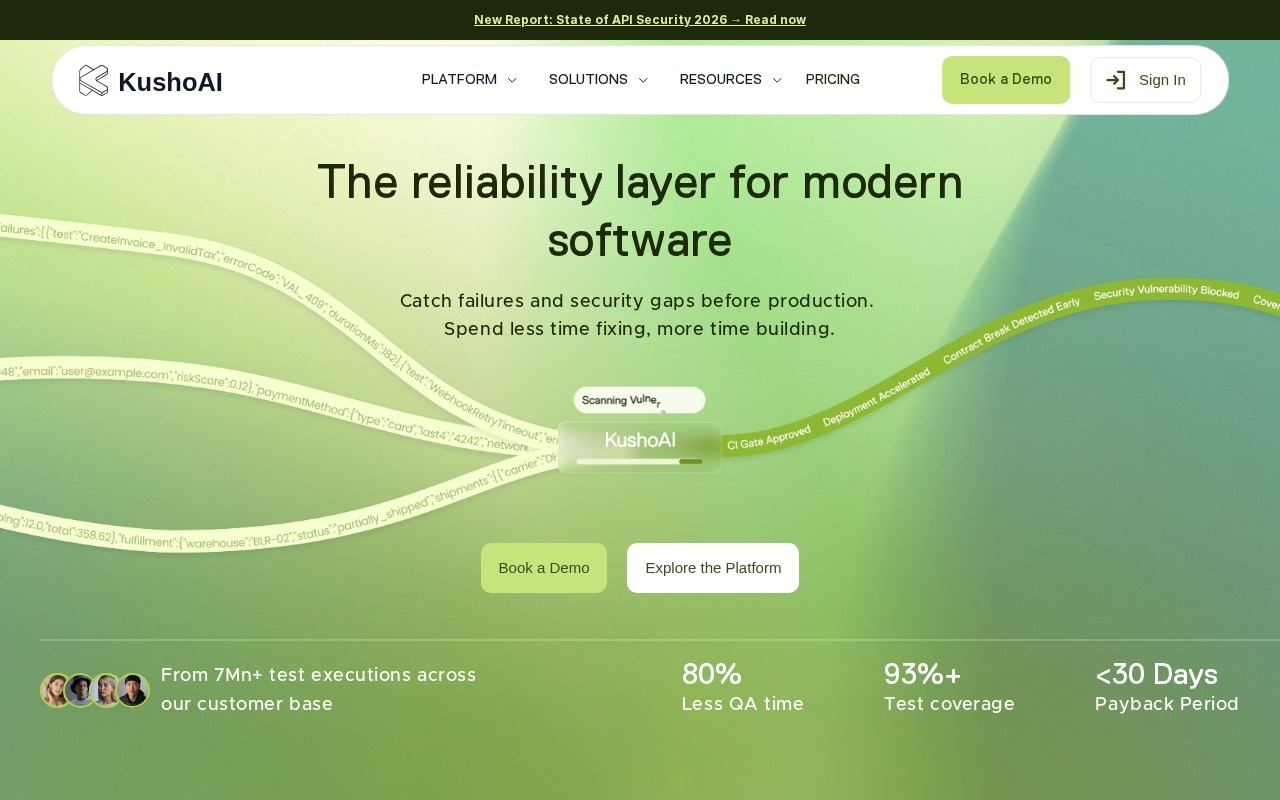
KushoAI Reads an OpenAPI, Swagger or Postman spec and generates functional, edge-case, security and load scenarios from it. Founded in 2022, based in San Francisco.
It keeps those tests current as the API changes and Plugs into a pipeline you already run Rather than asking for a separate environment. That makes it the most CI-native pick here.
A free Developer Edition covers individuals and small teams; enterprise pricing is custom. The catch is upstream: A poorly specified API produces weaker tests, so the spec quality sets the ceiling.
6. Drizz
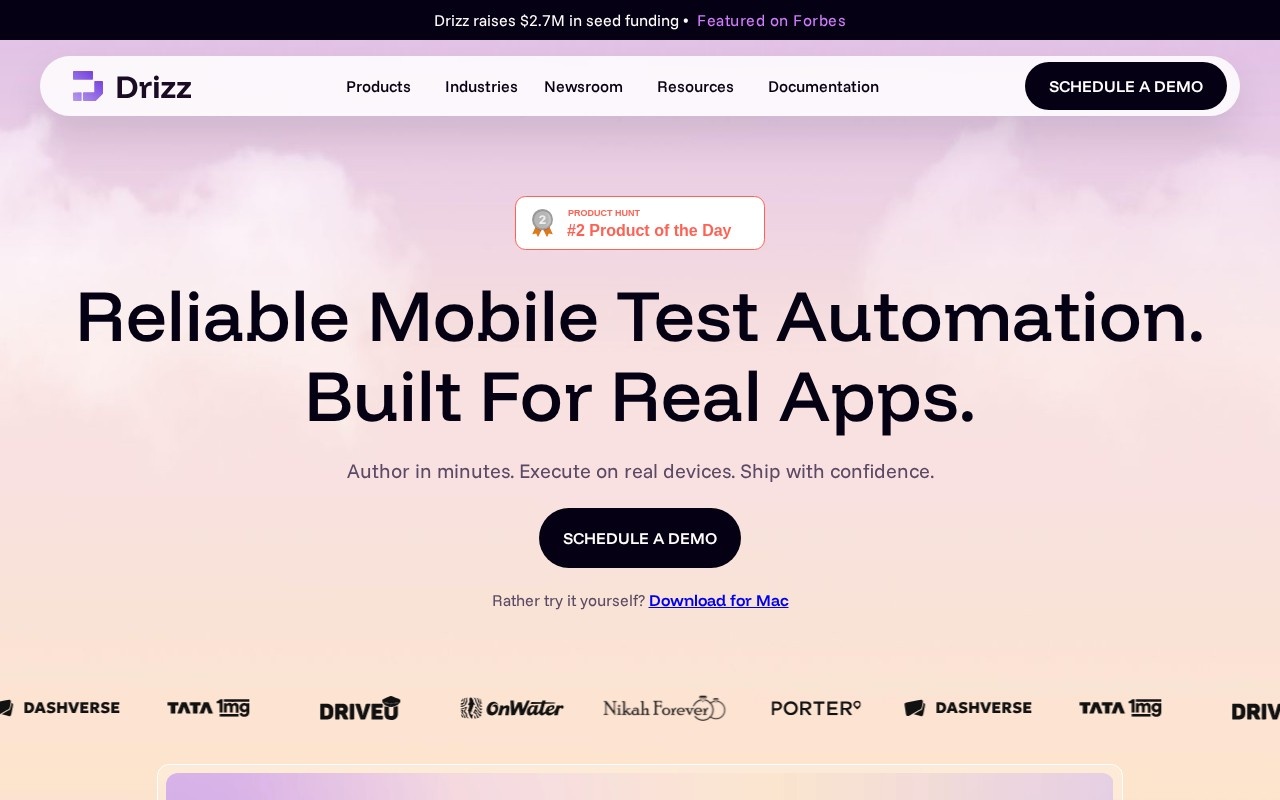
Drizz Executes plain-English test descriptions on real iOS and Android devices using vision that reads the screen the way a person does. Ex-Amazon, Coinbase and Gojek engineers founded the Bengaluru company in 2024.
One shared definition runs across iOS, Android and mobile web. It’s aimed at teams that have Outgrown selector-based frameworks like Appium or Espresso And the constant rewrites they bring.
A trial includes 50 runs, then pricing is pay-as-you-go with No published rate. Vision-based execution also depends on stable, well-labelled screen elements, and the company is young.
7. Bugster
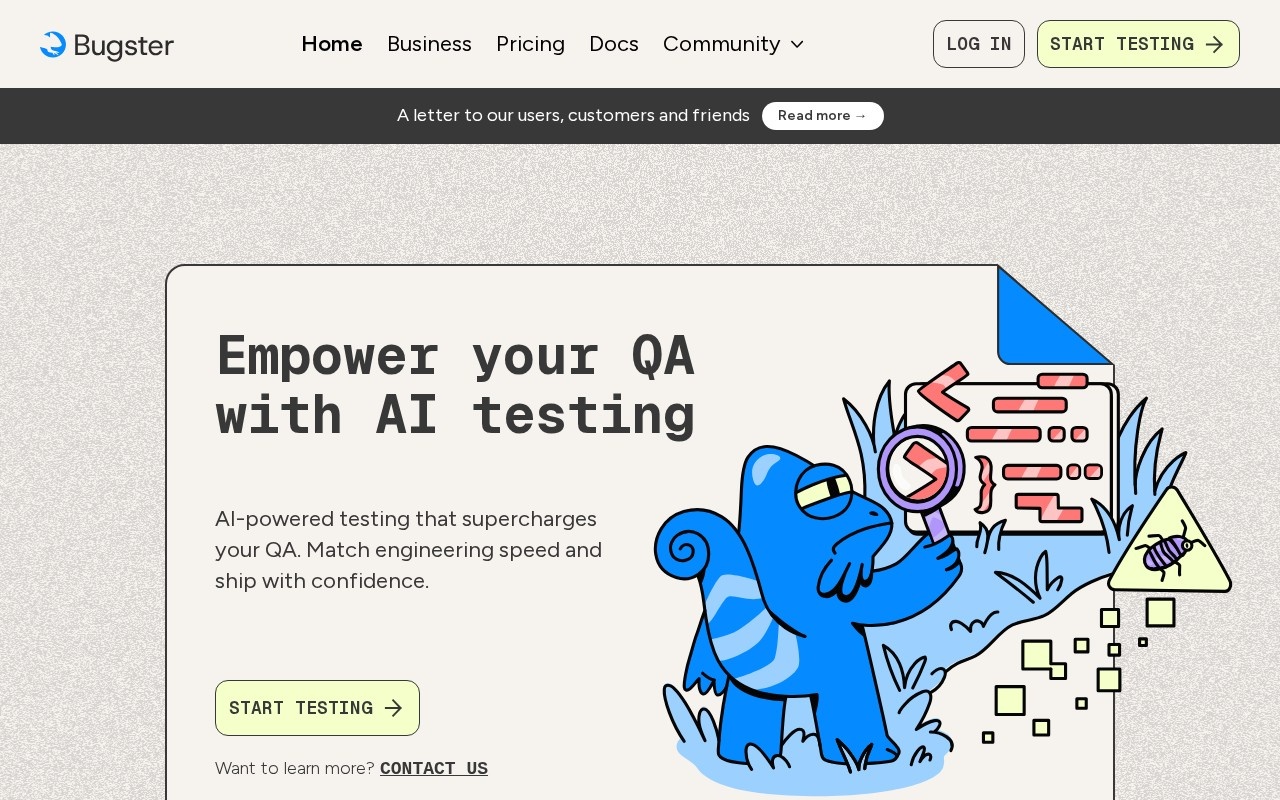
Bugster captures real interactions inside your application, generates end-to-end suites from those flows and adapts them when the screen changes. Two friends from Córdoba, Argentina founded it in 2023.
Tests run in real browsers On every pull request through a GitHub integration. It’s built for small teams and solo developers who want pipeline coverage without hiring a QA engineer.
The free tier covers 100 runs a month on one repository, the indie plan is $20 and the team plan $99. That free tier gets tight fast If you ship daily, and the workflow leans on GitHub.
8. Refraction
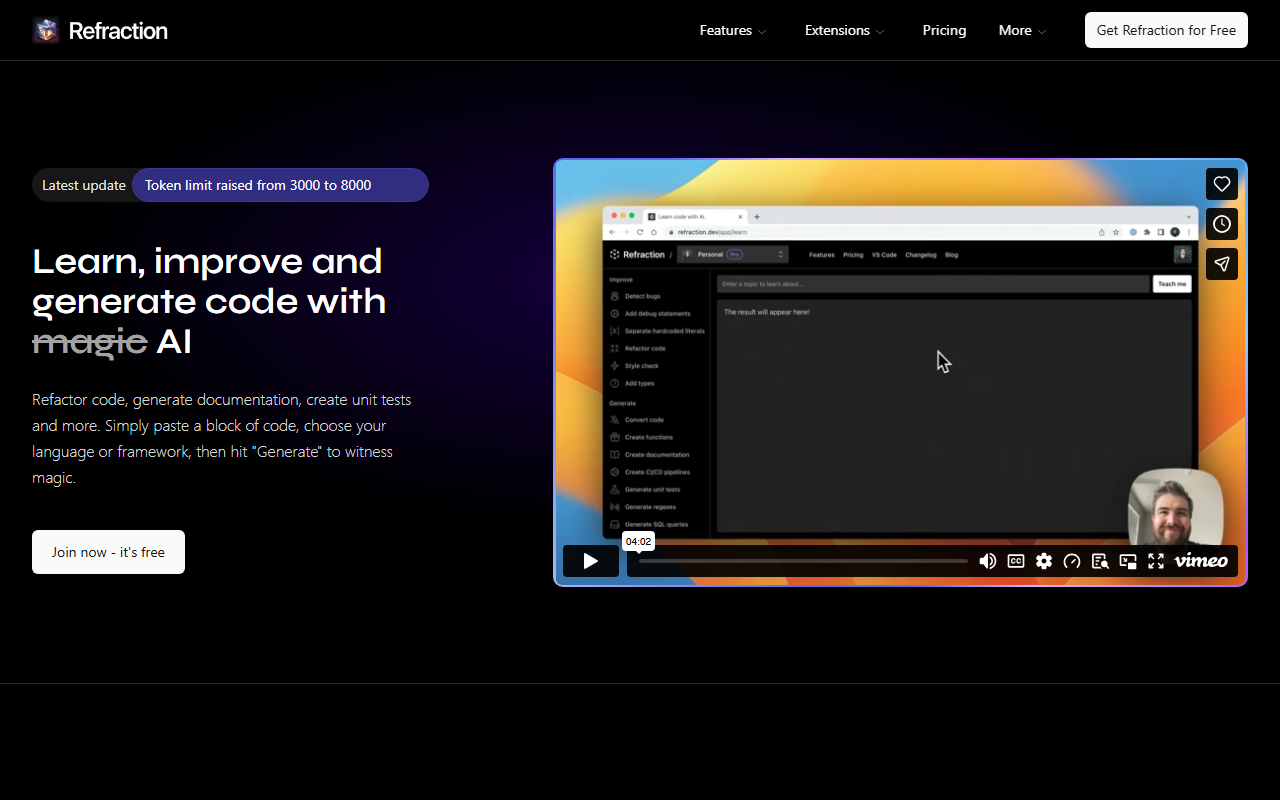
Refraction Takes a block of pasted code and returns the work developers defer: unit tests, refactors, documentation and explanations. It runs in the browser with no editor extension to install.
The scope is narrow and better for it. It targets The tasks that get skipped under deadline, where a decent generated first pass beats the nothing that would otherwise exist.
It’s free to use and the paste workflow is Clumsier than an in-editor assistant. Read what it produces: a test asserting the wrong behaviour is worse than no test. The name also collides with an unrelated robotics firm.
9. Fume
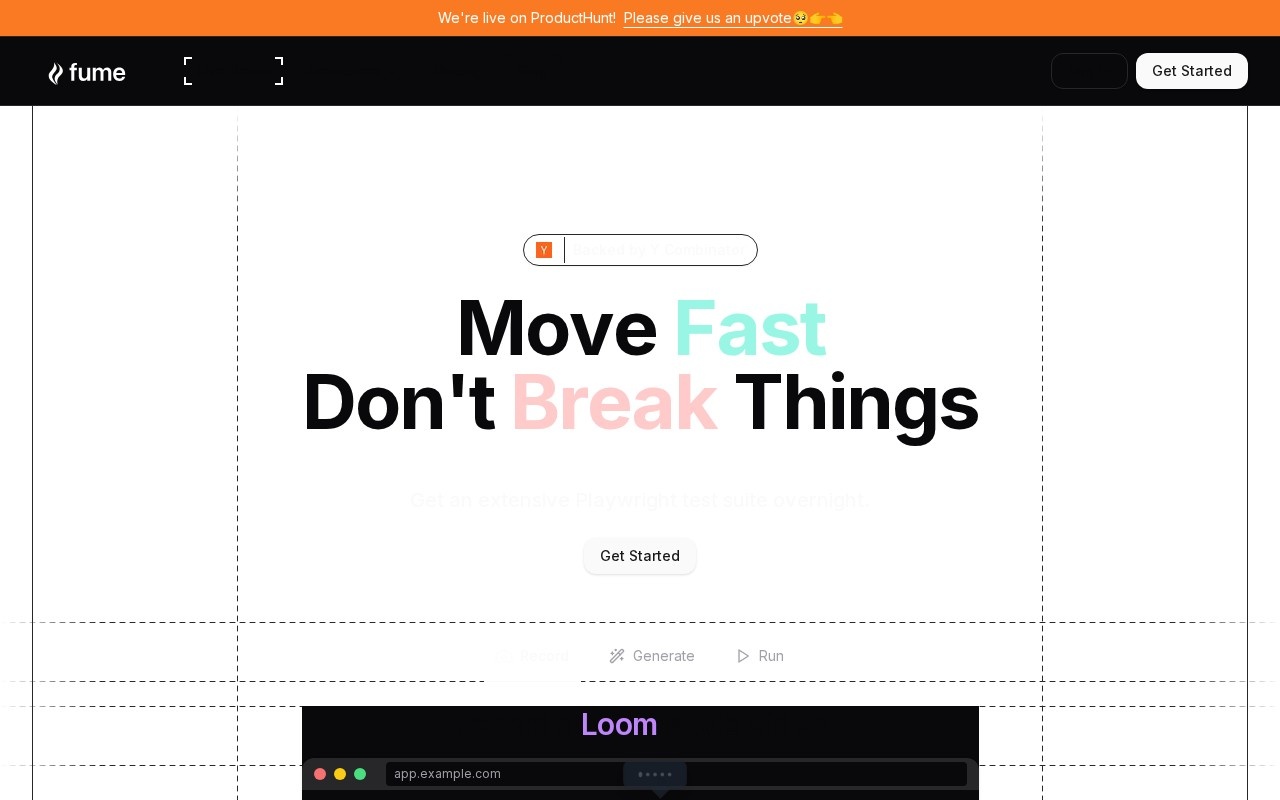
Fume Converts a screen recording of someone clicking through a flow into a working Playwright test. Emre Gucer and Metehan Oz founded the San Francisco company in 2024.
Tests then run twice daily on a schedule, and a browser agent repairs scripts that break rather than failing quietly. You keep the generated Playwright code even after cancelling, which is rare here.
The team plan is $500 a month after a 30-day trial, with No permanent free tier. Coverage also depends on how completely the recorded session captured the flow.
10. Autosana
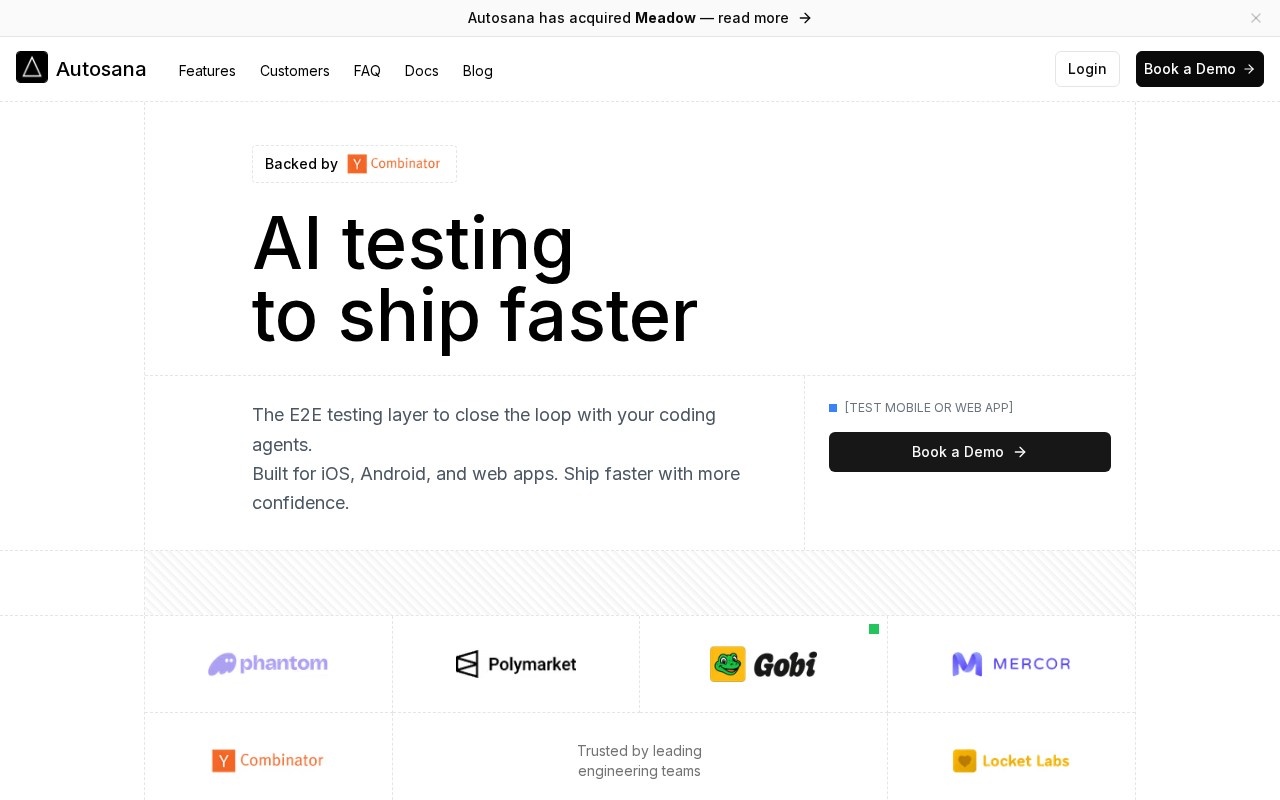
Autosana Runs a cloud-hosted agent that taps through mobile and web apps the way a person would. Yuvan Sundrani and Jason Steinberg launched it in June 2025.
It covers iOS and Android across Flutter, React Native, Swift and Kotlin, and Attaches video proof to a pull request Showing the fix working end to end. The company says it already backs apps serving 100 million daily users.
Pricing starts at $500 a month and There’s no free trial, only a 30-day money-back guarantee. Broad framework coverage still costs setup time per app.
11. QualGent
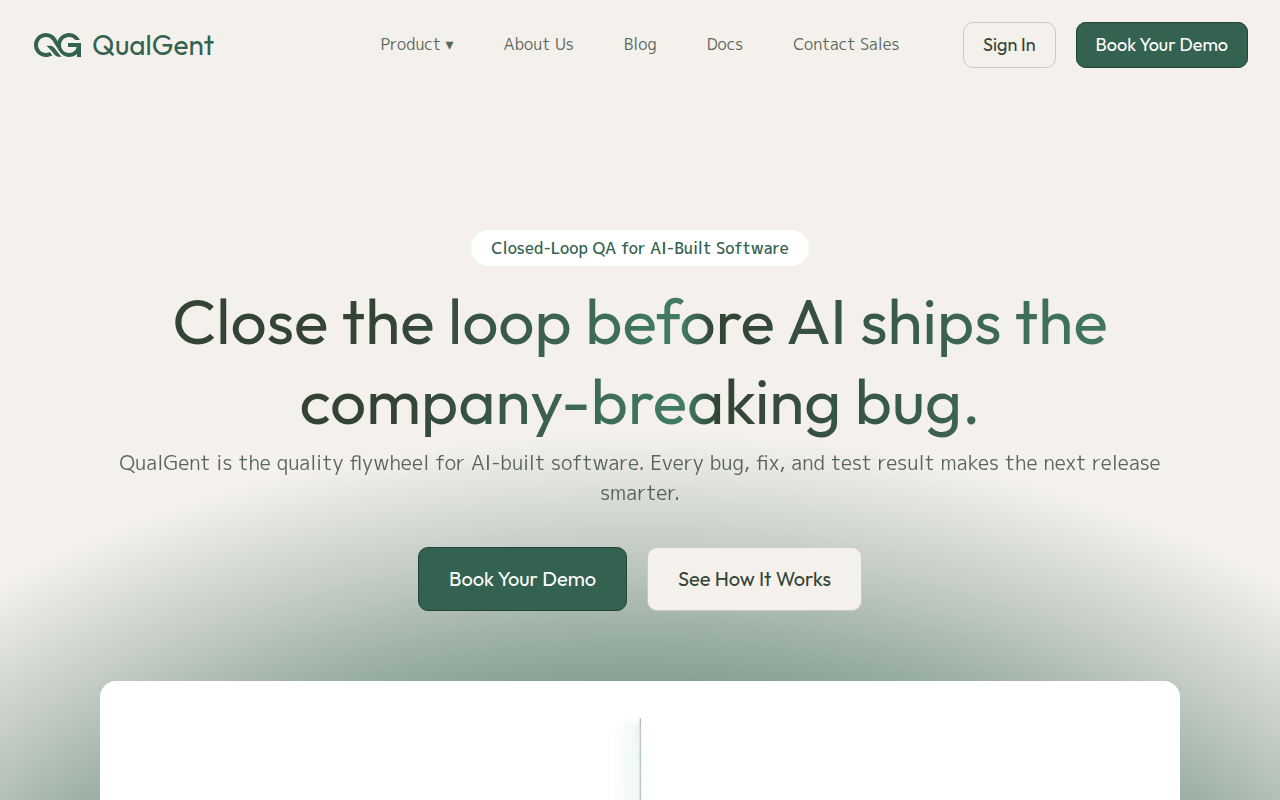
QualGent Starts from a problem worth naming: code now ships faster than teams can test it. Generation moved the bottleneck downstream, onto mobile suites that were already brittle.
Its agents run against mobile apps with an emphasis on deterministic results. Flaky tests are the stated enemy, because a suite that fails at random teaches engineers to ignore failures.
Pricing goes through sales, with Nothing published. Autonomous agents also need validating against unusual flows, which is where mobile automation promises usually break down.
How to choose one for your pipeline
Start with what you ship. If it’s a phone app, the shortlist is Drizz, Autosana, QualGent and KaneAI, and the rest won’t reach it. If it’s a web service, The spec you already maintain is the cheapest place to start.
Then look at the bill against your team size. Four of these start at $199 a month or higher, which prices out a two-person team before the trial ends.
One habit worth keeping whichever you pick: Read the generated tests before trusting them. Every product here can produce a test that passes while asserting the wrong thing, and each listing says so in its own limitations.
For the code-writing side of the same pipeline, our roundups of AI code generators And AI code assistants Cover that ground. Our piece on Cross-browser testing Explains the problem most of these agents automate.
Questions teams ask before buying
Can these tools replace a QA engineer?
No, and the listings don’t claim it. They remove the scripting and maintenance work, which is what lets a team without a QA function have coverage at all. Judgement about what to test stays with a person.
What is a self-healing test?
A self-healing test re-locates an element after the screen changes, rather than failing because a button moved. Seven of the eleven here advertise it. The risk is a test that heals onto the wrong element and keeps passing.
Do these run inside a CI pipeline?
Most do. Bugster runs on every pull request through GitHub, KushoAI plugs into an existing pipeline, and Autosana loops with cloud agents inside pull requests. Check the listing before assuming your setup is covered.
Which of these have a free plan?
Four: Qodo, Momentic, KushoAI and Bugster. Drizz and Fume offer trials instead, and Autosana offers a money-back guarantee rather than a trial. The remaining four quote through sales.