If you want the best AI agents for real work today, Cursor is the highest-rated in our catalogue at $20 a month. AutoGPT is the one that costs nothing, because you run it yourself.
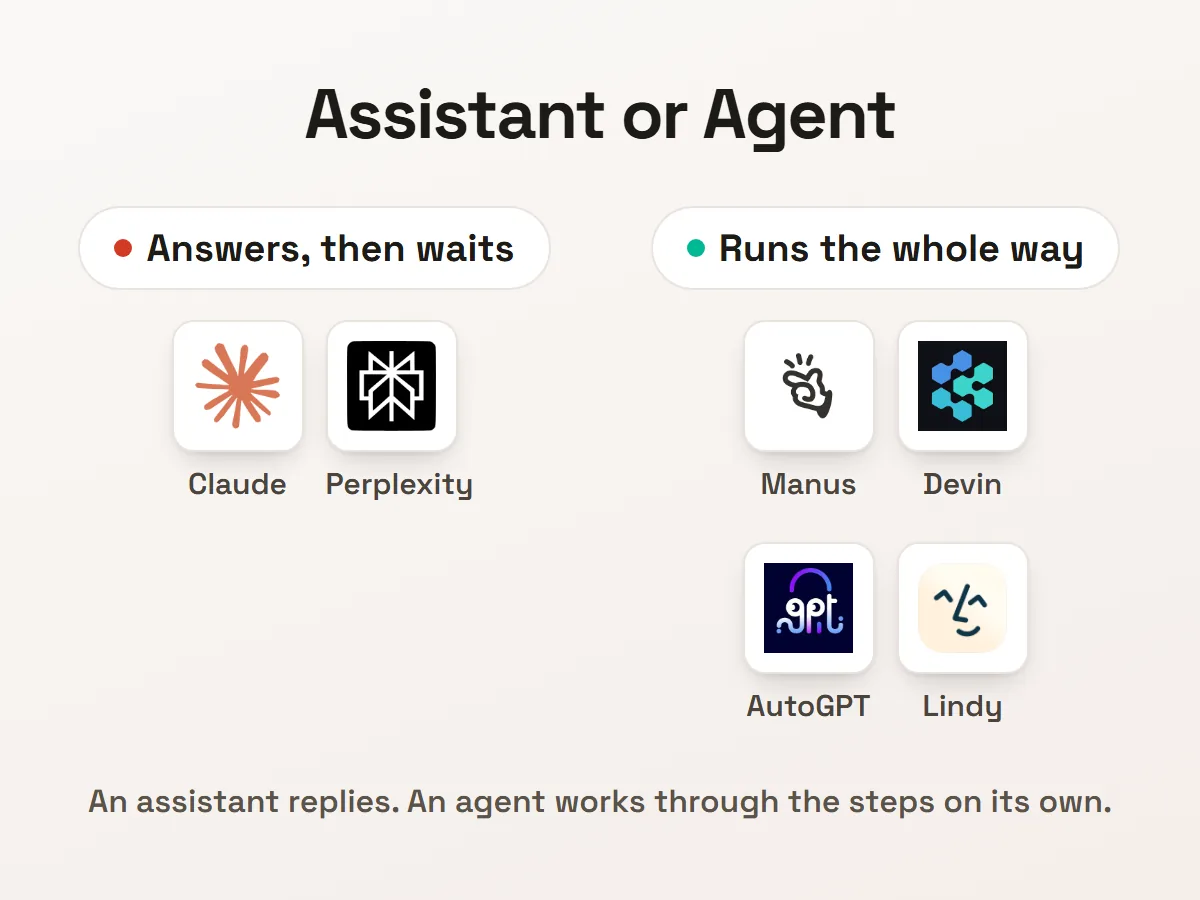
An agent isn’t an assistant that answers you. It takes a goal, then works through the steps without being prompted for each one. That distinction decides everything below, including which well-known products aren’t here.
How this list is ordered, and what it leaves out
These fifteen are ordered by our editorial rating, then by whether a free plan exists, then by starting price. That rating comes from reviewing each product’s features, pricing and positioning against the rest of our agent tooling catalogue.
We don’t run these agents against a shared benchmark task, so you won’t find a success rate from us. Every price and limitation below comes from that product’s listing, each of which carries its own last-reviewed date.
Three groups sit this out. CrewAI, LangGraph, AutoGen and LangChain are frameworks for building agents, which is a developer’s project rather than a product you switch on.
Browserbase is infrastructure agents run on, not an agent. And Claude, Perplexity AI, Zapier and n8n answer questions or move data between apps, which is a different job.
One pattern worth naming before the list: seven of the fifteen write software. Coding is where agents have the tightest feedback loop, because a test either passes or it doesn’t, so that’s where the money and the maturity went first.
| Agent | Rating | Free plan | From | Best for |
|---|---|---|---|---|
| Cursor | 4.7 | Yes | $20 | Editing a real codebase |
| GitHub Copilot | 4.6 | Yes | $10 | Teams already on GitHub |
| Claude Code | 4.6 | No | $20 | Terminal-first developers |
| Sierra | 4.6 | No | On request | Customer service at scale |
| Lindy | 4.5 | Yes | $50 | Delegating admin work |
| Decagon | 4.5 | No | On request | Consumer brand support |
| OpenAI Codex | 4.4 | No | $20 | Handing off a whole task |
| Harvey | 4.4 | No | $4,000 | Large law firms |
| Replit | 4.3 | Yes | $20 | Building an app from a prompt |
| Genspark | 4.2 | Yes | $24 | One account, 100-plus tools |
| Flowith | 4.1 | Yes | Free | Long autonomous runs |
| Relevance AI | 4.1 | Yes | $19 | A team of agents at once |
| Manus | 4.1 | Yes | $39 | General-purpose autonomy |
| AutoGPT | 4.0 | Yes | Free | Self-hosting on your own keys |
| Devin | 4.0 | No | $20 | Whole tickets, start to finish |
1. Cursor
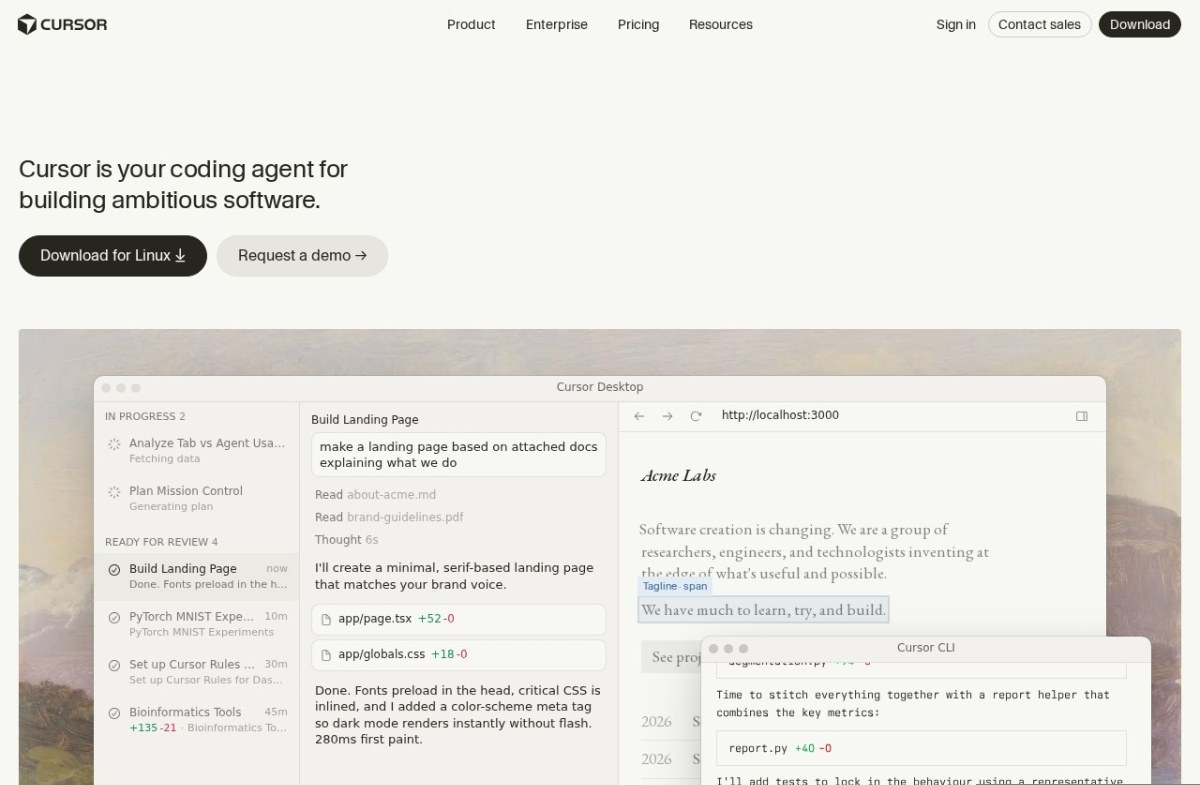
Cursor forks Visual Studio Code and rebuilds the editor around AI rather than bolting it on as a plugin. Anysphere has run it since 2022, and it’s the product most rivals now get measured against.
Its Tab autocomplete predicts multi-line edits across a whole change, not the next few tokens. Composer, its agent mode, works across multiple files from one plain-English instruction.
A free tier exists but paid use arrives quickly, at $20 a month. Pricing shifts have drawn public pushback from long-time users, and moving over means migrating your editor settings.
2. GitHub Copilot
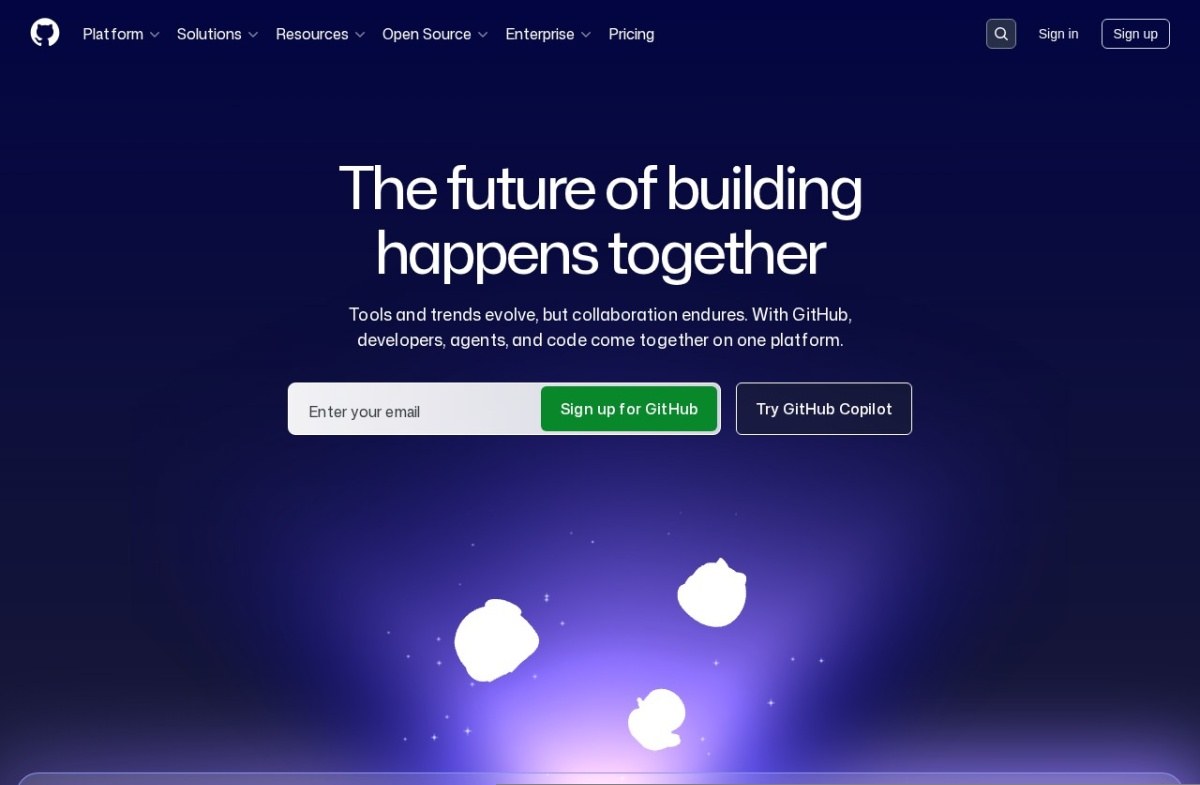
GitHub Copilot shipped in 2021, before ChatGPT existed and before this was a category. That head start came with distribution to every developer already using GitHub daily.
It’s well past autocomplete now, with chat and an agent mode that handles multi-file work. It runs across GitHub, Visual Studio Code and JetBrains, with a choice of underlying models.
The free tier is real but capped, and paid plans start at $10 a month, the cheapest here. Its own limitation is pace: narrower rivals ship agentic features faster.
3. Claude Code
Claude Code runs in the terminal against a real project, with access to the files, the git history and the shell. Anthropic released it in 2025.
It reads across a codebase, makes coordinated edits in multiple files, runs the tests and reads what they say, then commits. Permission levels control how much it does unattended.
There’s no free tier; it needs a paid subscription or API access, from $20 a month. Two costs: the terminal workflow takes learning, and bigger diffs need genuine review attention.
4. Sierra
Sierra builds customer service agents across text, voice, email and messaging. Bret Taylor and Clay Bavor founded it in 2023, and it’s valued near $16 billion.
Its agents take real actions like processing an order or ending a subscription, rather than answering and handing off to a person. It reached $100 million in annual revenue within seven quarters.
Nothing is published on price and there’s no self-serve tier, so evaluating it means a sales process. The valuation and enterprise focus both point at premium pricing.

5. Lindy
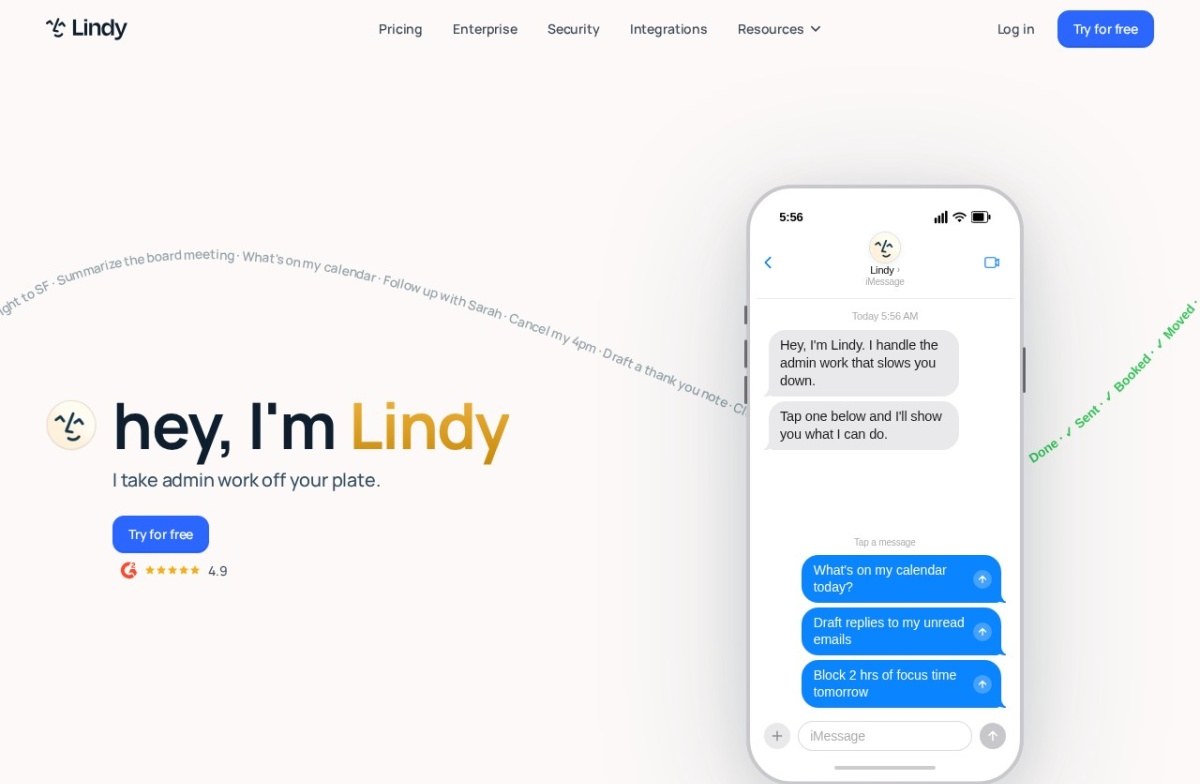
Lindy asks you to hire rather than configure. You create a named AI employee for a job, and templates cover the usual roles: sales outreach, support, executive assistant.
Each one handles email triage, scheduling or inbound calls, and Lindys hand work to each other. The framing sounds cosmetic, and in practice it makes delegation easier to reason about.
A free tier covers limited monthly tasks, with paid plans from $50 a month. That’s steeper than a general workflow builder, and multi-Lindy setups take real configuration time.
6. Decagon
Decagon aims at consumer brands carrying heavy support volume, and it’s grown fast since launching in 2023. Its agents go past answering questions.
They resolve account and order problems directly, and the underlying model is tuned per customer rather than shared across every brand on the platform.
Pricing runs through sales with no self-serve tier. It’s also a young company with a short track record, which matters more when the agent is talking to your customers unsupervised.
7. OpenAI Codex
OpenAI Codex is a 2025 product wearing a 2021 name. The original Codex was the model behind early GitHub Copilot, retired in 2023; this one is a different thing entirely.
It takes a task, works in its own sandboxed environment, runs the tests and returns a pull request when it’s finished. A command-line version brings the same agent to your own machine.
It needs a paid subscription or API access, from $20 a month, with no free tier. The reused name makes research confusing, and sandboxed runs show you less than watching a local session.
8. Harvey
Harvey handles document review, due diligence, contract analysis and legal research for large law firms. Winston Weinberg and Gabriel Pereyra founded it in 2022.
It reached an $11 billion valuation in March 2026 on roughly $190 million in annual recurring revenue, backed by Sequoia, Google Ventures and OpenAI’s own startup fund.
Enterprise pricing starts near $40,000 a year, and per-seat plans run $500 to $1,500 a month. It’s built for big-firm workflows, so a solo practitioner is buying the wrong product.

9. Replit
Replit has been a browser coding environment since 2016, years before agents arrived. No install, no setup, one tab and working code.
Replit Agent came later and generates a whole working application from a plain-English brief, then iterates on it. Its education roots mean a large existing base of people who learned to code there.
A free tier covers standard use, with paid plans from $20 a month. Running in a browser carries its own tradeoffs, and enterprise features are newer additions than the rest of the platform.
10. Genspark
Genspark started in 2023 as an AI search engine and grew into something broader: more than a hundred tools spanning dashboards, documents, design, audio and video.
Its sharpest feature is querying data in plain language, building a dashboard without anyone writing a query. Multiple underlying models sit behind one account.
A free tier covers light use, with paid plans from $24 a month. Breadth is the tradeoff: a hundred tools means less depth in each, and the interface feels crowded because of it.
11. Flowith
Flowith throws out the scrolling chat log. Every prompt and reply becomes a node on an infinite canvas you can branch, drag and compare side by side.
Agent Neo, its execution engine, handles tasks that run for hours or days rather than one exchange. An oracle system breaks a task down and routes it to the right tools.
It’s free to start. The canvas takes learning against a plain chat window, the company is young, and the payoff needs tasks long enough to justify it.
12. Relevance AI
Relevance AI started in 2020 as a vector-database company and pivoted into what it calls an AI workforce: a team of specialist agents under one account.
A researcher, an analyst and an outreach writer pass work between each other instead of running alone. The data-platform origins still show in how well it handles research-heavy jobs.
A free tier covers limited monthly runs, with paid plans from $19 a month. It’s less focused than a specialist on any single job, and that depth costs extra.
13. Manus
Manus arrived in 2025 from Butterfly Effect and drew wide attention for going further on autonomy than most agents had publicly demonstrated.
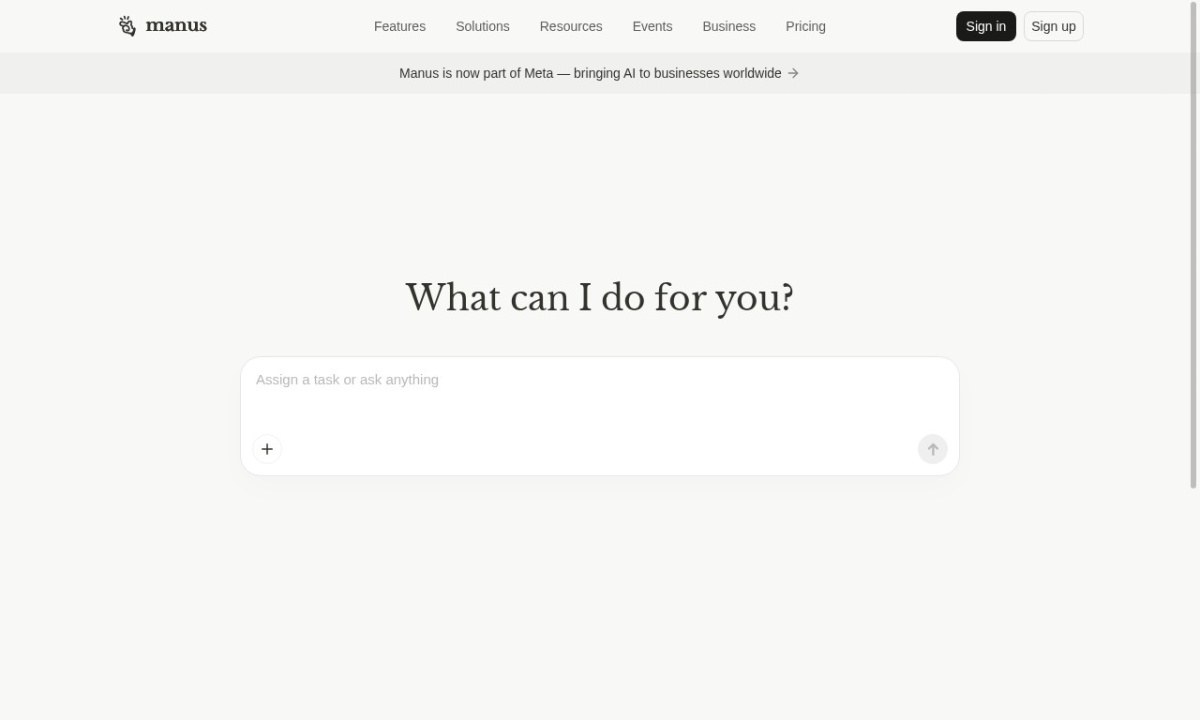
Given a goal, it browses, writes and runs code, creates files and deploys a working result on its own. Its own site now carries a banner reading that Manus is part of Meta, which our listing hasn’t caught up with.
A free tier covers light use, with paid plans from $39 a month. It’s young enough that reliability is unproven, and higher-stakes output needs checking before you act on it.
14. AutoGPT
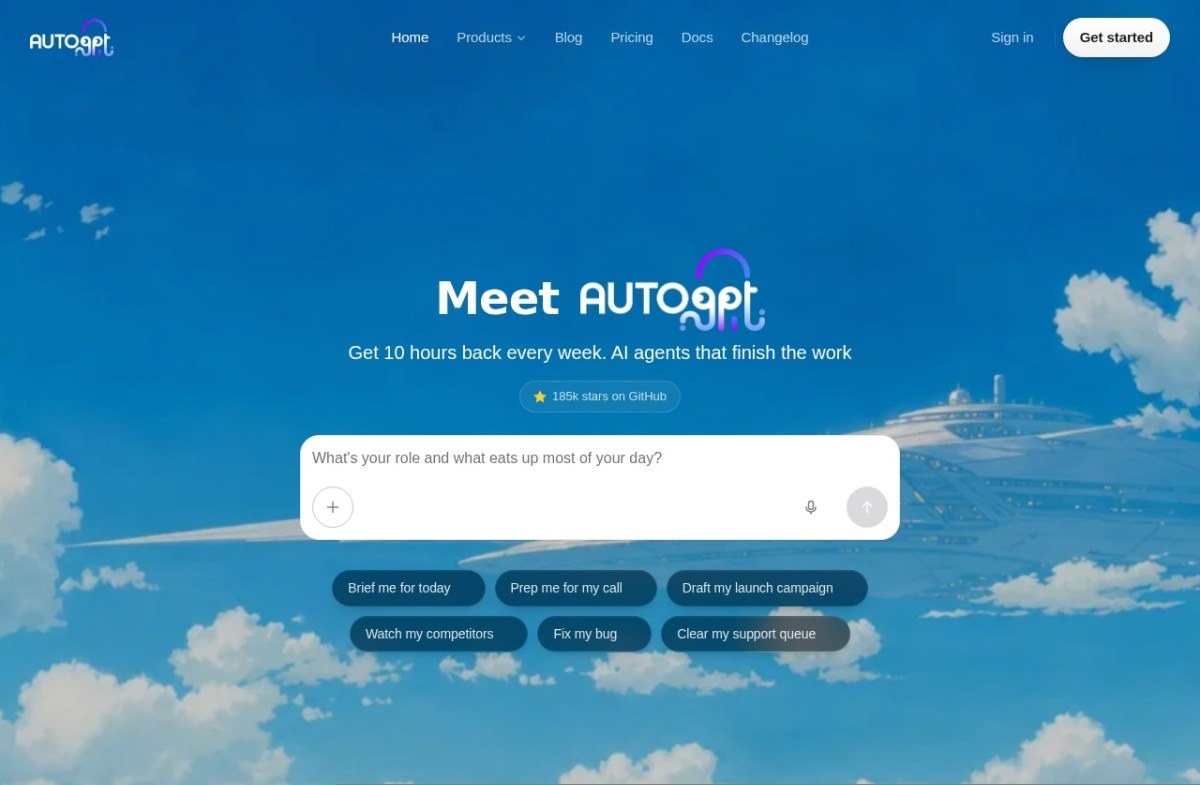
AutoGPT went viral in 2023 as one of the first agents to work without a person between steps. Significant Gravitas released it, and it’s open source.
Give it a goal and it splits that into subtasks, then works through them with web access and tools. You run it on your own model keys, so there’s no subscription.
Free, and the costs are elsewhere: technical setup, plus whatever the model calls cost. Early versions could wander off-task without guardrails, and it’s rougher than commercial platforms.
15. Devin
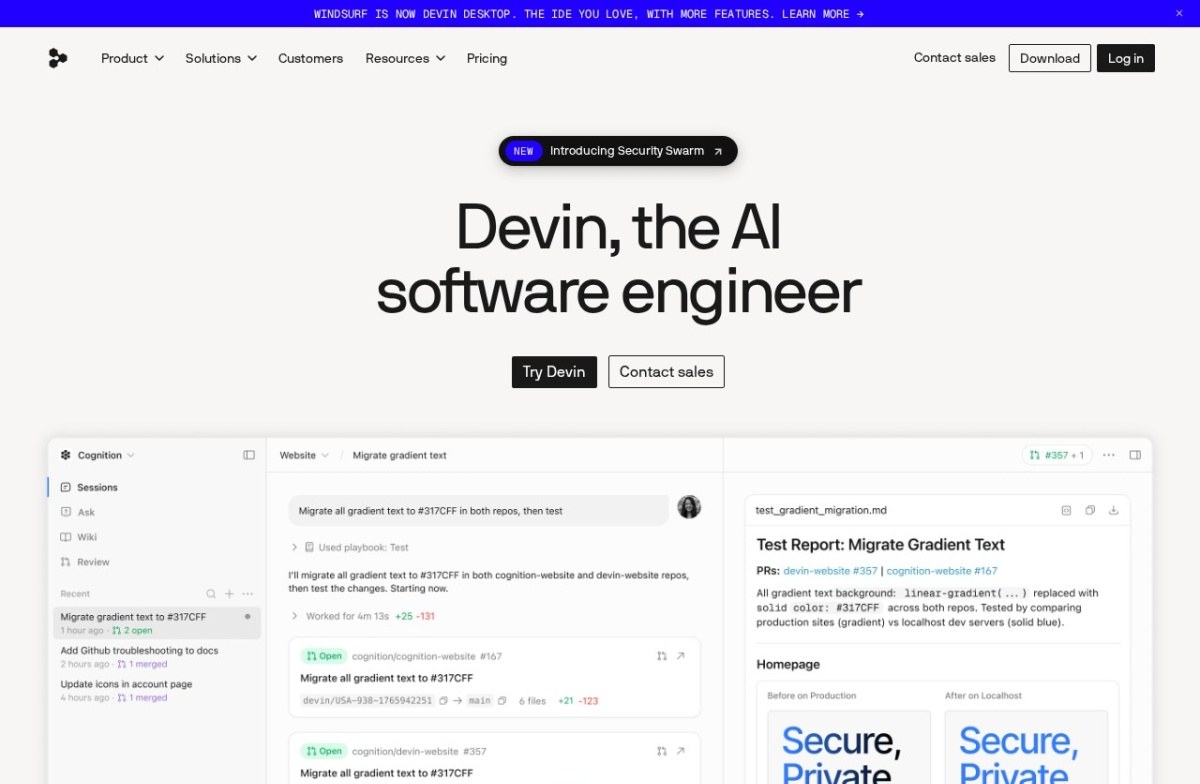
Devin launched in 2023 from Cognition, marketed as the first AI software engineer. It plans, writes, tests and debugs across a whole task in one session.
Read the launch claims carefully: independent researchers publicly disputed its original benchmark numbers. Its own site now presents Windsurf, the editor Cognition acquired, as Devin Desktop.
Plans start at $20 a month with no free tier. Given the launch-era dispute, weigh recent independent reviews over marketing when you evaluate it.
How to choose between them
Start with the job. Seven of these write software, and if that isn’t your problem, the shortlist collapses to Sierra, Decagon, Lindy, Harvey, Genspark, Flowith, Relevance AI, Manus and AutoGPT.
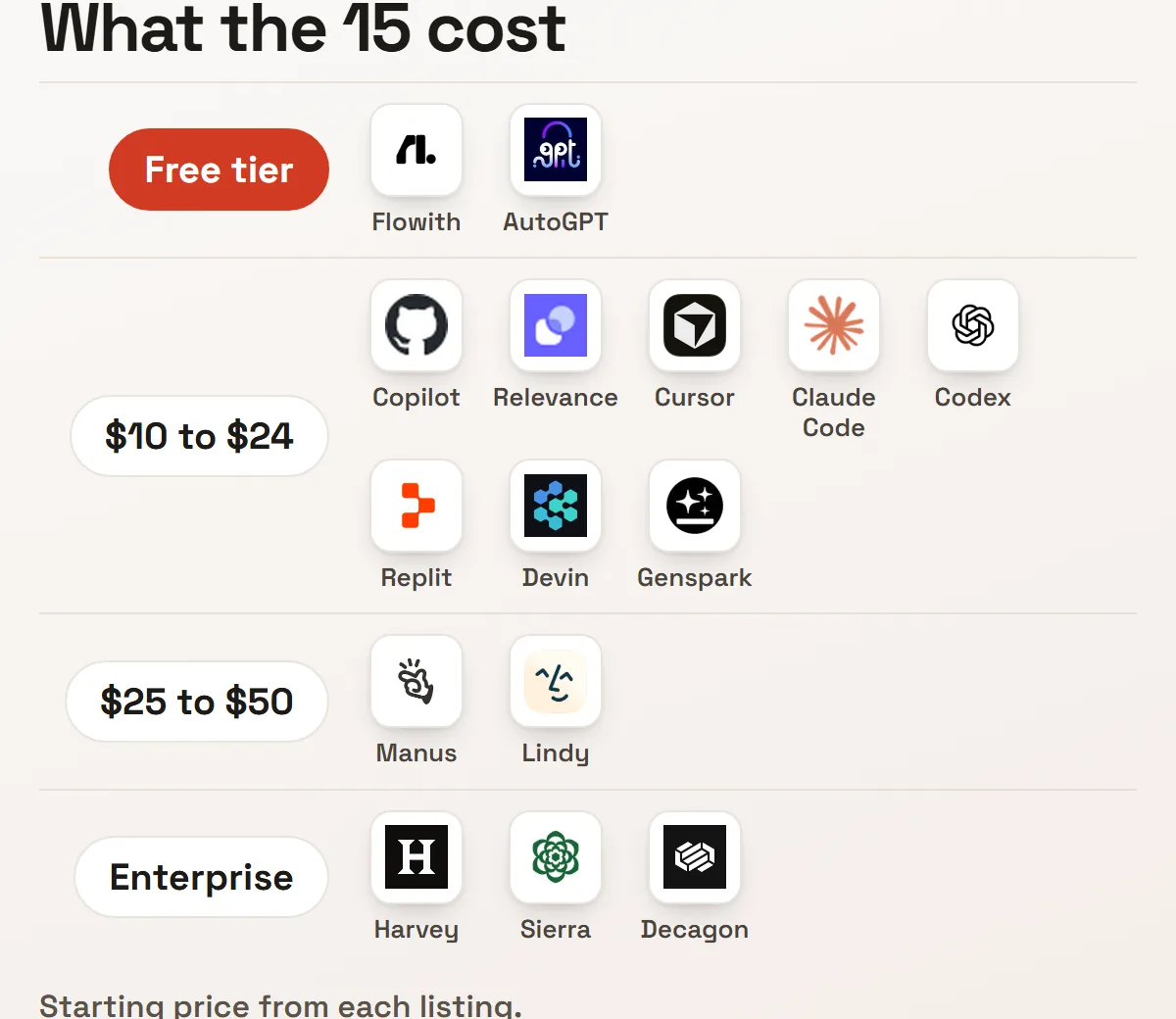
Then decide who carries the risk. Four here quote through sales or need enterprise commitment, and the rest let you test for $20 to $50 a month before anyone signs anything.
One habit matters whichever you pick: read what the agent did before trusting the next run. Every product here can complete a task confidently and get it wrong, and the listings say so themselves.
For the surrounding ground, our roundups of AI workflow automation tools and robotic process automation cover the rule-based end of this. Our code assistants piece goes deeper on the coding half.
Questions buyers ask
What is an AI agent?
An AI agent is software that takes a goal, breaks it into steps and carries them out using tools, without a person prompting each step. A chat assistant answers and stops. That gap is why Claude and Perplexity aren’t on this list.
Which of these have a free plan?
Nine: Cursor, GitHub Copilot, Lindy, Replit, Genspark, Flowith, Relevance AI, Manus and AutoGPT. The free tiers are capped rather than generous. Sierra and Decagon quote through sales instead.
Can an agent run without supervision?
Technically yes, and none of these listings recommends it. Claude Code exposes permission levels, and AutoGPT’s own limitation notes early versions wandering off-task. Set the boundary before the run, not after.
Do I need a framework like CrewAI?
Only if you’re building an agent rather than buying one. Frameworks give a developer the parts to assemble a custom agent, which is worth it when no product fits your workflow. Everyone else should start from this list.